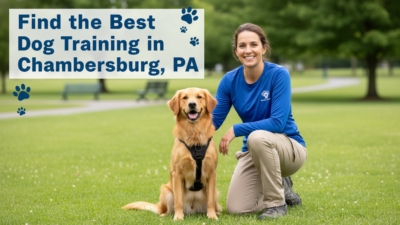
Your Complete Guide to Choosing a Dog Trainer in Chambersburg
Living with a dog in Chambersburg means enjoying walks through historic neighborhoods like the Downtown District, exploring the trails at Norlo Park, and perhaps visiting community events at Memorial Square. Your dog should be able to navigate all of this calmly, from walking politely past Main Street shops to staying focused around families at the pool or sports fields. Finding a professional dog trainer who understands these local settings can make all the difference.
Chambersburg is the county seat of Franklin County, so local rules often align with borough and county guidelines. A trainer familiar with this area will help you meet local expectations while building a better relationship with your dog.
How to Choose the Right Trainer
Start by looking for a professional dog trainer who uses *positive reinforcement* training. This method builds trust and creates a well-behaved dog who can handle Chambersburg’s specific environments. Your dog should learn to walk calmly on a leash downtown, remain settled during a soccer game at Norlo Park, and be comfortable during vet visits at a local clinic.
Credentials offer a good way to gauge a trainer’s education and commitment. Common dog trainer certifications include the CPDT-KA for knowledge assessment, the KPA-CTP for hands-on skills, or the IAABC-CDBC for complex behavior cases.
In-home sessions are excellent for addressing specific issues like door dashing, jumping on guests, or reactivity in your own yard. Group classes provide a controlled setting to practice obedience and socialization skills before heading to busier public spots.
Common Dog Training Methods Explained
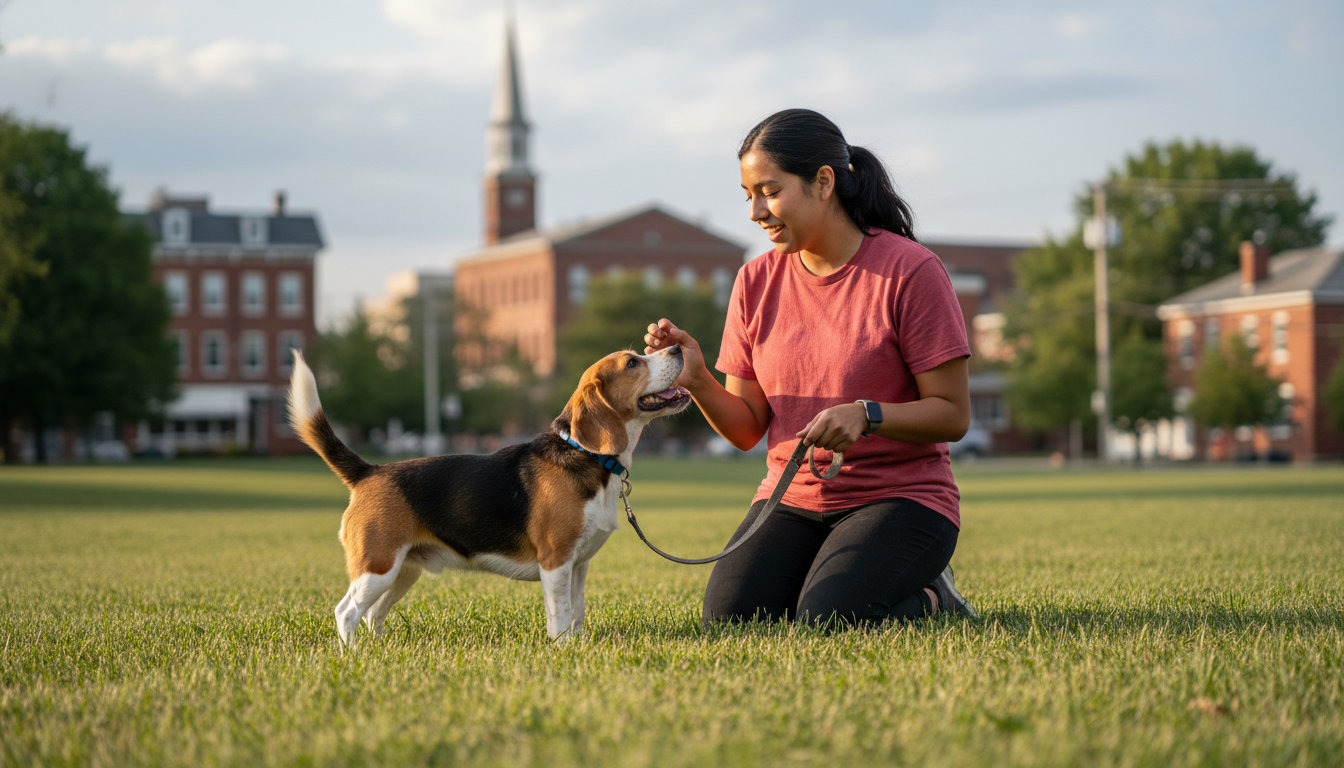
Modern dog training focuses on reward-based methods that teach your dog what to do instead of punishing unwanted behavior. This approach is effective, strengthens your bond, and aligns with creating a peaceful community.
Basic obedience training**** covers sit, down, stay, come, and loose-leash walking. These are the foundational skills every dog needs for safe outings in Chambersburg.
Puppy training prioritizes early socialization, bite inhibition, potty training, and crate acclimation. Starting early prevents problems from becoming ingrained habits.
Behavior modification addresses issues like fear, reactivity, separation anxiety, or resource guarding. This work often involves desensitization and requires patience. For severe cases, a trainer should be willing to collaborate with your veterinarian.
Private lessons offer one-on-one attention tailored to your dog’s unique needs and your schedule. Day training or board and train programs are options where the trainer works with your dog directly, then teaches you how to maintain the skills.
Group classes help your dog learn to listen and behave around other dogs and distractions in a structured setting. Look for classes that manage the environment to set every dog up for success.
Specialized training for service dogs or therapy dogs involves precise task training and public access skills, requiring a trainer with specific experience in these areas.
Average Cost of Dog Training in Chambersburg, PA (Updated for 2026)
Pricing in the Chambersburg and Franklin County area varies based on the trainer’s experience, the type of service, and the program length. The table below reflects current local averages.
| Service Type | Average Cost (Chambersburg Area) |
|---|---|
| Puppy Class (6 weeks) | $140–$220 |
| Group Obedience Class (6 weeks) | $150–$250 |
| Private Lesson (60 min) | $80–$120 |
| In-Home Training Package (4-6 sessions) | $350–$700 |
| Day Training (per week) | $400–$800 |
| Behavior Consultation | $120–$200 |
| Board and Train (2 weeks) | $1,500–$2,800 |
Prices may be higher for complex behavior cases or for trainers with advanced certifications. Always ask what is included in the price and if there are any travel fees for in-home services.
Questions to Ask a Potential Dog Trainer
- What is your primary training philosophy, and how do you use positive reinforcement?
- What professional credentials, like CPDT-KA or KPA-CTP, do you hold? Do you pursue continuing education?
- Can you create a customized training program for my dog’s specific challenges and our lifestyle in Chambersburg?
- What types of services do you offer (in-home, group classes, day training) and which do you recommend for my goals?
- How do you track progress and what does communication look like between sessions?
- What are your total fees, package options, and cancellation policy?
- Do you carry professional liability insurance?
- For behavior issues, are you prepared to work with my veterinarian?
Local Chambersburg Rules and Considerations
Understanding local regulations helps you be a responsible pet owner and informs what skills your dog needs to learn.
Dogs must be leashed and under control when off your property, unless in a designated off-leash area. This is strictly enforced in borough parks and on public sidewalks.
Pennsylvania state law requires all dogs three months and older to be vaccinated against rabies by a licensed veterinarian. You must keep the rabies tag on your dog’s collar. County-level data from the Franklin County Treasurer's office indicates that all dogs must be licensed annually.
Excessive barking that disturbs the peace can be considered a nuisance. Training can help manage alert barking and separation anxiety proactively.
Pennsylvania does not require a specific state license to operate as a dog trainer. However, all businesses in Chambersburg likely need a standard borough business license. Professional trainers should carry liability insurance to protect themselves and their clients.
Local Chambersburg Resources for Dog Owners
These local spots are great for practicing training in real-world settings. Always follow posted rules, clean up after your dog, and be mindful of other users.
- Norlo Park: Features a large, fenced dog park divided for large and small dogs. A great place to practice recalls and polite play in a controlled, off-leash environment.
- Chambersburg Borough Parks: Main Street Park and other local parks are perfect for practicing leash skills and settling around mild distractions, provided your dog is leashed.
- Caledonia State Park (approx. 20 min drive): Leashed dogs are welcome on most trails. This is an excellent higher-difficulty environment to proof obedience skills around nature, wildlife, and other hikers.
- Michaux State Forest: Offers extensive trail systems where leashed dogs are permitted, providing immersive training opportunities for focused hiking.
FAQs
How much does in-home dog training cost?
In the Chambersburg area, a single in-home session typically costs between $80 and $120. Most trainers offer discounted packages of 4 to 6 sessions, bringing the total to between $350 and $700.
Is in-home dog training worth it?
Yes, for many situations. In-home training addresses problems exactly where they happen—jumping on guests, counter surfing, door manners, and reactivity viewed from a window. Your trainer can also help you practice leash skills on your own street, which directly applies to daily walks.
Can you pay someone to house train your dog?
Many trainers offer puppy programs that include a structured plan for potty training. Some day training services can also accelerate the process by implementing a consistent schedule and reinforcing good habits throughout the day.
What is the 3-3-3 rule for dog training?
This is a guideline for adopted or new dogs. It suggests it takes about 3 days to decompress from the transition, 3 weeks to learn your routine, and 3 months to feel fully at home. A good trainer will work with this adjustment period.
How long will it take to reach my training goals?
For basic obedience or puppy training with consistent practice, you can expect significant progress in 4 to 8 weeks. More complex behavior issues like fear or reactivity often require a longer-term commitment of several months.
What should I bring to group classes?
Bring a well-fitted collar or harness, a 6-foot non-retractable leash, high-value treats, and your dog’s vaccination records if required by the trainer. It’s also wise to bring water and a mat or towel for “place” exercises.
What’s the leash law in Chambersburg?
Chambersburg borough code requires dogs to be leashed and under the owner’s control whenever they are off the owner’s property. The only exception is within designated off-leash dog park areas.
Do I need a dog license in Chambersburg or county?
Yes. Franklin County requires all dogs three months and older to be licensed annually through the County Treasurer's office. You will need proof of a current rabies vaccination to obtain the license.
What shots does my dog need in county or PA?
Pennsylvania law mandates a current rabies vaccination. Your veterinarian will also recommend core vaccines like distemper, parvovirus, and adenovirus. Bordetella is often advised for dogs that will be in group classes or boarding.
Are dog trainers required to be licensed in Chambersburg or county or PA?
Pennsylvania does not have a specific state-level license for dog trainers. Trainers must comply with standard business licensing in Chambersburg borough. If a trainer offers board and train services, their facility may need to meet kennel licensing requirements from the Pennsylvania Department of Agriculture.
Where can I practice off-leash recall?
The safest and only legal option within Chambersburg is the fenced dog park at Norlo Park. Practicing in a fully secured area prevents accidents and ensures you are following local laws.
Which dog parks allow training around Chambersburg?
The Norlo Park Dog Park is the primary dedicated off-leash area suitable for training exercises like recall and supervised play. Always be respectful of other park users and their dogs.
What beaches/trails allow dogs for training?
While there are no beaches nearby, many trails in the surrounding state parks and forests welcome leashed dogs. Caledonia State Park and Michaux State Forest offer excellent trail environments for proofing obedience skills around natural distractions.