Your Complete Guide to Choosing a Dog Trainer in Cobb and Surrounding Areas
Finding the right professional dog trainer in Cobb means preparing your dog for a unique Lake County lifestyle. Life here involves navigating quiet mountain roads, encountering wildlife on trails, and managing property where neighbors might be farther away but sounds travel clearly. A local trainer can help your dog learn to be calm during deer sightings, recall reliably near open spaces, and understand boundaries without constant fencing.
Training that fits this environment makes daily life smoother and safer. It also helps you follow local county guidelines designed to keep the community peaceful for everyone, including those with livestock or concerns about wildlife interactions.
How to Choose the Right Trainer
Look for a trainer whose methods build confidence and calmness, not just obedience. Your dog should learn to walk politely on a leash past a grazing horse, ignore distractions from local wildlife, and settle quietly at home. A good training program will be tailored to these rural and semi-rural settings.
Credentials offer a quick way to gauge a trainer’s knowledge. Look for professionals with science-based dog trainer certifications like the CPDT-KA or IAABC-CDBC for complex behavior issues. For basic obedience and puppy training in your home, a certified professional dog trainer with a clear, positive plan is essential.
In-home sessions are incredibly valuable in Cobb for addressing door-dashing, barking at passing cars, and practicing leash skills on your actual property. Group classes can be beneficial for socialization, but ensure they are structured and calm to be effective.
Common Dog Training Methods Explained
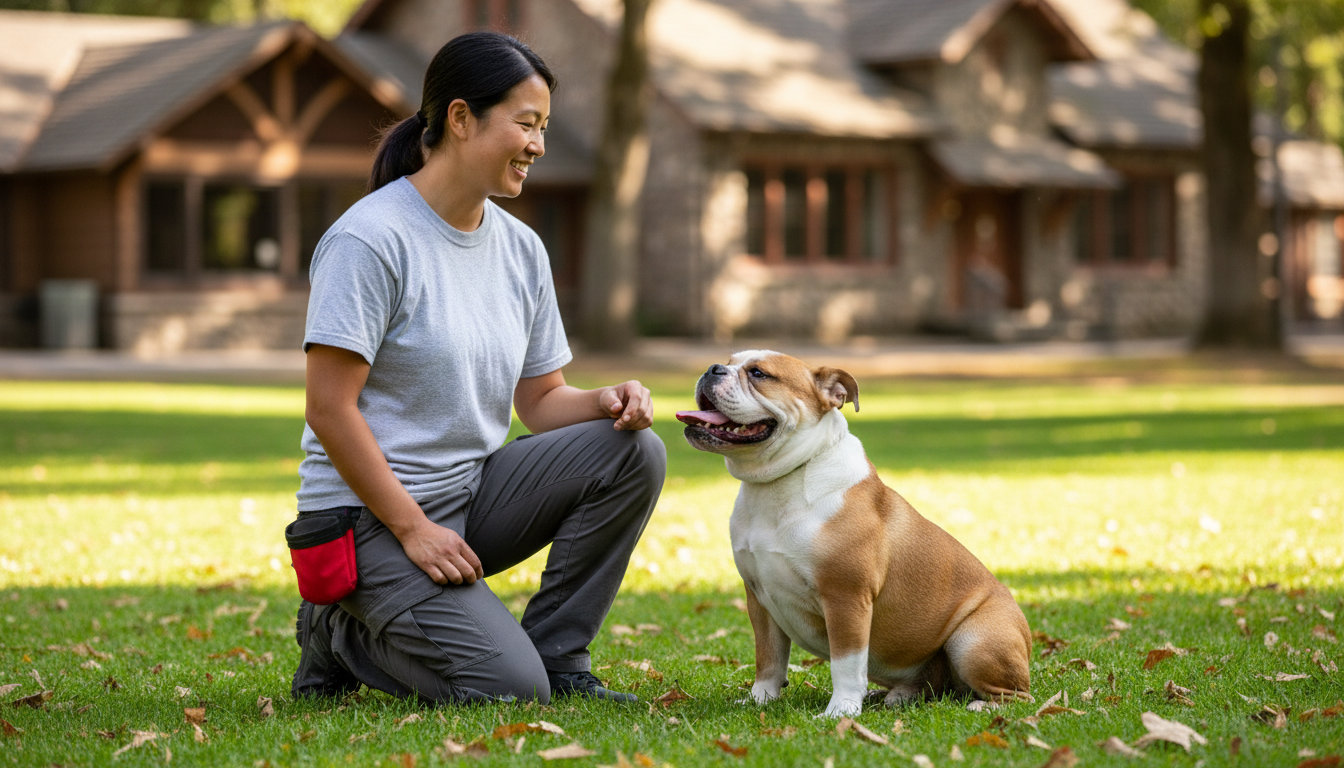
*Positive reinforcement* training is the most effective and humane approach. It rewards your dog for making good choices, which builds a strong bond and reliable behavior. This is especially important in areas without sidewalks, where loose-leash walking is a safety must.
Basic obedience covers sit, down, stay, come, and loose-leash walking. These skills are the foundation for visiting local trails or the post office without stress.
Puppy training focuses on early socialization in a safe manner, potty training, bite inhibition, and crate training. Starting early prevents problems from becoming ingrained habits.
Behavior modification addresses issues like fear of loud noises, reactivity to other animals, or separation anxiety. These methods use desensitization to help your dog feel safer. For serious cases, a trainer should be willing to collaborate with your veterinarian.
Private lessons provide one-on-one attention for specific goals. Day training programs can accelerate learning for busy owners. Group classes offer a controlled setting to practice manners around other dogs and people.
Specialized training, like service dog training or therapy dog training, requires a trainer with specific experience in public access skills and task training.
Avoid any trainer who uses fear, intimidation, or painful corrections. These outdated methods can worsen behavioral problems and damage your dog’s trust.
Average Cost of dog training in Cobb, CA (Updated for 2026)
Pricing in Lake County reflects the trainer’s expertise, travel considerations for the rural area, and the type of service. Here is a look at average costs for dog training services in and around Cobb.
| Service Type | Average Cost (Lake County Region) |
|---|---|
| Puppy Classes (4-6 weeks) | $140 – $260 total |
| Group Obedience Classes (4-6 weeks) | $150 – $280 total |
| Private Lessons (60-90 min) | $100 – $180 per session |
| In-Home Training Packages (4-6 visits) | $400 – $850 total |
| Day Training (per week) | $425 – $900 per week |
| Behavior Consultation | $140 – $240 initial visit |
| Board and Train (2-3 weeks) | $1,800 – $4,000 total |
Travel fees for in-home visits may apply given the spread-out nature of the Cobb area. Always ask what is included in a package and how progress is measured.
Questions to Ask a Potential Dog Trainer
- What is your primary training philosophy, and how do you ensure sessions are positive and stress-free?
- Are you a certified dog trainer? What credentials, such as CPDT-KA, do you hold, and how do you pursue continuing education like CPDT-KSA?
- How do you tailor a training plan for the challenges of living in a rural/mountain community like Cobb?
- What services do you offer (in-home, group classes, day training) and which do you recommend for my goals?
- How do you track progress and communicate between sessions?
- What are your total fees, including any travel charges, and what is your cancellation policy?
- Do you carry professional liability insurance?
- For behavior problems, are you willing to collaborate with my veterinarian?
- What homework or practice will you assign between our sessions?
Local Cobb Rules and Considerations
As an unincorporated community in Lake County, Cobb follows county and state regulations. These rules are important for maintaining safety and good neighbor relations in a close-knit area.
Dogs must be under your direct control at all times in public. While the county does not have a universal leash law for unincorporated areas, dogs must not run at large. If your dog chases livestock, wildlife, or trespasses, you can be held liable. Using a leash is the simplest way to maintain control.
California state law requires all dogs over four months old to be vaccinated against rabies. You must keep the rabies tag on your dog’s collar. County animal services may require proof of vaccination if your dog is involved in an incident.
Excessive or prolonged barking that disturbs neighbors can be cited as a public nuisance under county ordinances. Working on alert barking and separation anxiety with a trainer is a proactive way to prevent complaints.
The State of California does not require a specific license to be a dog trainer. However, trainers operating a business in Lake County must obtain a standard county business license. If a trainer offers board and train services from their property, they may need additional kennel permits from the county.
Professional dog trainers are strongly advised to carry general liability insurance. While not always mandated by law, it protects both the trainer and you, the client, in case of an accident.
Local Cobb Resources for Dog Owners
These local spots provide excellent environments to practice training skills in real-world settings. Always check current access rules and practice good etiquette.
- Anderson Marsh State Historic Park: Leashed dogs are welcome on trails. It’s a fantastic spot to practice calm focus around wetland birds and other hikers.
- Boggs Mountain Demonstration State Forest: Offers miles of trails for leashed dogs. Great for building duration on long walks and practicing recalls in wooded settings (when safe to do so).
- Highland Springs Reservoir: A popular local recreation area where leashed dogs are allowed. Useful for training around mild distractions like fishermen and picnickers.
- Lake County Animal Care and Control: Provides county-level information on licensing, lost pets, and low-cost vaccination clinics.
FAQs
How much does in-home dog training cost?
In the Cobb area, most in-home dog training sessions cost between $100 and $180 per visit. Multi-session packages often provide a better overall value.
Is in-home dog training worth it?
Yes, especially in a rural area. In-home training addresses behaviors exactly where they happen—jumping on counters, barking at the window, door manners, and reactivity on your own property. The trainer can then help you generalize skills to your driveway and nearby roads.
Can you pay someone to house train your dog?
Many trainers offer puppy programs that include structured potty training plans. Some day training services can also accelerate the process by implementing a consistent schedule during the day.
What is the 3-3-3 rule for dog training?
This is a guideline for adopted dogs: 3 days to decompress, 3 weeks to learn routines, and 3 months to feel at home. A good trainer will design a program that respects this adjustment period.
How long will it take to reach my training goals?
For basic manners and puppy training, consistent work over 4-8 weeks typically shows solid results. For fear, reactivity, or aggression, behavior modification is a longer process, often taking several months of dedicated work.
What should I bring to group classes?
Bring a well-fitting collar or harness, a 6-foot leash, high-value treats, and a hungry dog. Avoid retractable leashes. Proof of vaccinations is usually required.
What’s the leash law in Cobb?
Cobb follows Lake County regulations. While there is no blanket leash law for unincorporated areas, dogs must be under the owner’s direct control and cannot run at large. Using a leash is the safest and most responsible choice in public spaces.
Do I need a dog license in Cobb or Lake County?
Lake County does not require a general pet license. However, California law requires a valid rabies vaccination, and the tag must be attached to your dog’s collar.
What shots does my dog need in Lake County or California?
Rabies vaccination is legally required. Your veterinarian will also recommend core vaccines (DHPP) and others like bordetella based on your dog’s risk factors.
Are dog trainers required to be licensed in Cobb or Lake County or California?
California does not have a state license for dog trainers. Trainers must obtain a standard business license from Lake County. Those offering boarding services may need additional permits.
Where can I practice off-leash recall?
For safety and legality, use fully fenced private property. Public off-leash areas are very limited in Lake County, so building a reliable recall on a long line in safe, open spaces is the recommended approach.
Which dog parks allow training around Cobb?
There are no official public dog parks within Cobb itself. Residents often use private land or travel to designated areas in neighboring communities for safe, fenced play and training.
What beaches or trails allow dogs for training?
Leashed dogs are welcome on most trails within the Boggs Mountain Demonstration State Forest and at Anderson Marsh State Historic Park. These are ideal for practicing loose-leash walking and focus around natural distractions.
My dog chases wildlife. Can a trainer help?
Yes. This is a common concern in rural areas. A professional dog trainer can implement a behavior modification plan using management and positive reinforcement to teach your dog to disengage from deer, squirrels, and other animals, which is crucial for their safety and local wildlife.