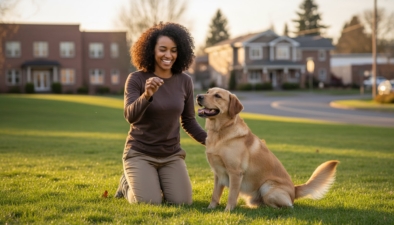
Your Complete Guide to Choosing a Dog Trainer in Coyote and Surrounding Areas
Living in Coyote means enjoying the quiet, semi-rural landscapes of Santa Clara County, where your dog might encounter wildlife, dusty backroads, and relaxed neighborhood walks. Training your dog here is about creating a reliable companion who can ignore squirrels on a trail, walk politely past horses, and stay calm during the occasional trip to a busier area like Morgan Hill or San Jose.
Local regulations are crucial because they ensure your dog’s behavior fits the community. A trainer who understands the specific rules and lifestyle of the Coyote area can provide more relevant and effective guidance for you and your pet.
How to Choose the Right Trainer
Look for a trainer whose methods align with modern, humane practices and who can set goals for your local lifestyle. This includes preparing your dog for safe hikes in the surrounding hills, being calm around farm animals, and having excellent manners for visits to more urban parts of Santa Clara County.
Checking a trainer’s credentials is a smart way to gauge their education and commitment. Reputable dog trainer certifications include the KPA-CTP, CPDT-KA, or IAABC-CDBC for complex behavior issues. For serious cases, a CBCC-KA credential is valuable.
In-home sessions are excellent for addressing behaviors in your own environment, like door dashing or reactivity at your property line. Group classes provide vital practice for focus around other dogs, which is important before visiting any public spaces.
Common Dog Training Methods Explained
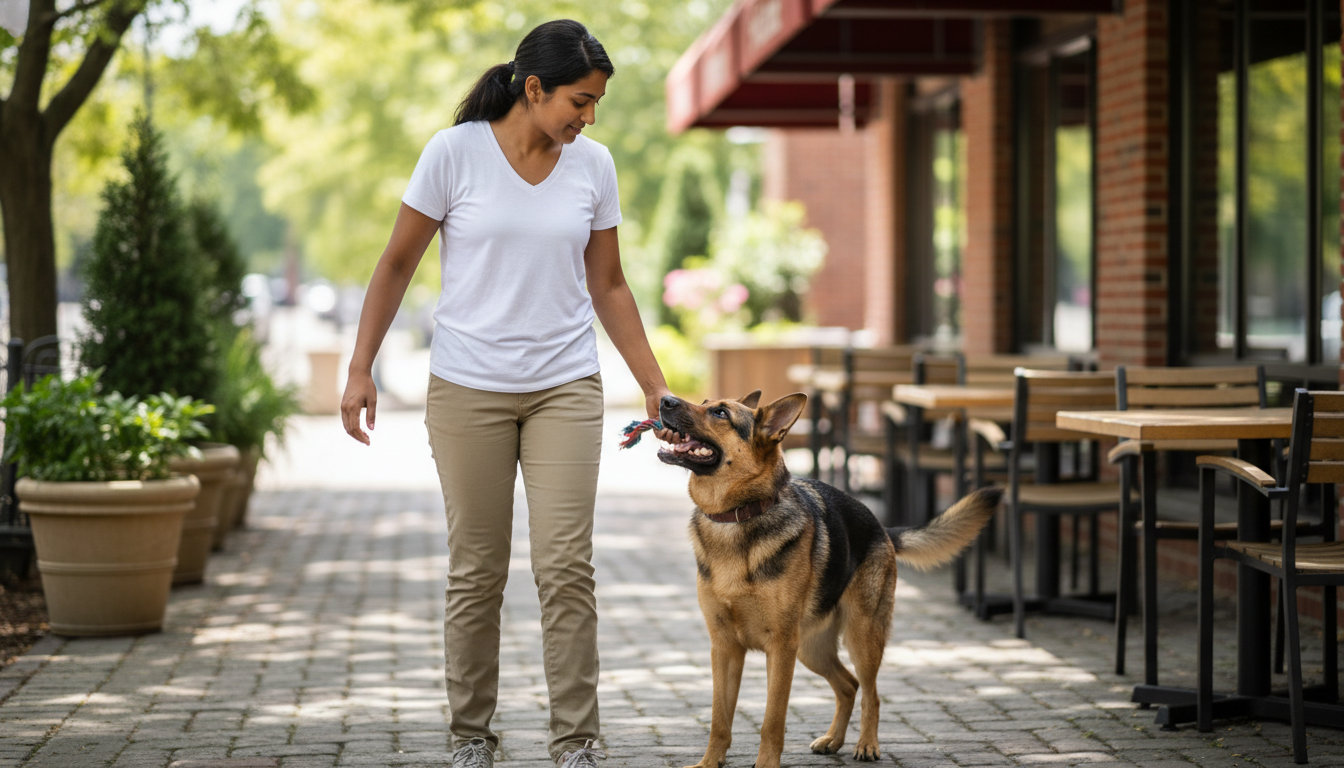
*Positive reinforcement* training builds trust and reliable behavior by rewarding your dog for making good choices. This approach is effective and helps ensure you can meet local expectations for pet behavior.
Basic obedience covers sit, down, stay, recall, and loose-leash walking. These skills are the foundation for safe walks along Coyote Creek or visits to local parks.
Puppy training focuses on socialization, bite inhibition, potty training, and crate training. Starting early prevents problems from becoming ingrained habits.
Behavior modification addresses issues like fear, reactivity, or separation anxiety through careful, structured plans. For significant behavioral concerns, a trainer should be willing to collaborate with your veterinarian.
Private lessons offer personalized attention for your dog’s unique needs. Group classes provide controlled environments to practice manners around distractions. Day training programs can accelerate learning for busy owners.
It is important to avoid trainers who use intimidation, fear, or pain to suppress behavior. These methods can worsen problems and damage your relationship with your dog.
Average Cost of dog training in Coyote, CA (Updated for 2026)
Pricing in the Coyote area and greater South Santa Clara County is influenced by the trainer’s experience, travel distance, and the type of service. The table below reflects current local averages.
| Service Type | Average Cost (Coyote/South County Area) |
|---|---|
| Puppy classes (6 weeks) | $175–$300 total |
| Group obedience classes (6 weeks) | $180–$320 total |
| Private lessons (60 min) | $100–$160 per session |
| In-home training packages (4-6 sessions) | $450–$850 total |
| Day training (per week) | $500–$1,000 |
| Behavior consultation | $150–$250 initial |
| Board and train (2-3 weeks) | $2,200–$4,800 total |
Trainers serving rural areas like Coyote may add a travel fee. Always clarify what is included in any package and ask about their policy for measuring progress.
Questions to Ask a Potential Dog Trainer
- What is your primary training philosophy, and how do you ensure sessions are positive for my dog?
- What professional credentials, like CPDT-KA or KPA-CTP, do you hold? Do you pursue continuing education?
- How will you tailor the training plan for my dog’s personality and our daily life in Coyote?
- What services do you offer (in-home, group classes, day training) and which do you recommend for my goals?
- How do you track progress, and what does “success” look like in your program?
- What are all costs, including travel fees or package discounts? What is your cancellation policy?
- Do you carry professional liability insurance?
- For behavior issues, will you coordinate with my veterinarian if needed?
- What homework will you assign between sessions to help us succeed?
Local Coyote Rules and Considerations
Coyote follows Santa Clara County's animal control ordinances. These rules are designed to keep pets, people, and local wildlife safe.
Dogs must be on a leash no longer than six feet and under direct control when off the owner’s property. This is strictly enforced to protect livestock and wildlife.
California state law requires all dogs over four months old to be vaccinated against rabies. A current rabies tag must be attached to the dog’s collar.
Excessive barking that disturbs neighbors is considered a nuisance. Addressing alert barking and separation anxiety through training is important in a close-knit, quiet community.
California does not have a state-level license for dog trainers. However, any business operating in unincorporated Santa Clara County (which includes Coyote) must have a county business license. Professional dog trainers are strongly advised to carry liability insurance. There are no specific county insurance mandates for trainers, but it is a critical marker of a professional operation.
The Santa Clara County Animal Care and Control center provides resources for licensing, lost pets, and low-cost vaccination clinics.
Local Coyote Resources for Dog Owners
These local spots provide excellent settings to practice training in real-world environments. Always follow posted rules and practice good etiquette.
- Coyote Creek Trail: This extensive trail system runs near Coyote and is perfect for leashed walks to build focus and endurance around cyclists, joggers, and wildlife.
- Harvey Bear Ranch County Park (near San Martin): A short drive away, this park offers miles of trails where leashed dogs can practice around open spaces and livestock.
- Morgan Hill Dog Park: Located at Morgan Hill’s Community Park, this fenced area is ideal for safe off-leash play and recall practice.
- Coyote Valley Open Space Preserve: Leashed dogs are welcome on designated trails, offering a great natural environment for distraction training.
FAQs
How much does in-home dog training cost?
In the Coyote area, a single in-home session typically costs between $100 and $160. Most trainers offer discounted packages of four to six sessions.
Is in-home dog training worth it?
Yes, especially for addressing specific issues in the environment where they happen. A trainer can help with door manners, counter surfing, or reactivity on your property, then transition to practicing leash skills on your quiet rural road.
Can you pay someone to house train your dog?
Many trainers offer puppy programs that include structured potty training plans. Some day training services can also implement a consistent schedule to accelerate the house training process.
What is the 3-3-3 rule for dog training?
This is a general guideline for adopted dogs: 3 days to decompress, 3 weeks to learn your routines, and 3 months to feel fully at home. A good trainer will design a program that supports this adjustment period.
How long will it take to reach my training goals?
For basic obedience and puppy manners, consistent practice over 6-8 weeks usually yields solid results. Addressing fear or reactivity is a longer process, often requiring several months of careful behavior modification.
What should I bring to group classes?
Bring a standard 6-foot leash, a well-fitting collar or harness, high-value treats, and your dog’s vaccination records. Avoid retractable leashes in class settings.
What’s the leash law in Coyote?
In unincorporated Santa Clara County, which includes Coyote, dogs must be on a leash not exceeding six feet in length whenever they are off the owner’s private property.
Do I need a dog license in Coyote or county?
Yes. Santa Clara County requires all dogs over four months old to be licensed. Proof of a current rabies vaccination is required to obtain the license.
What shots does my dog need in county or CA?
Rabies vaccination is mandated by California state law. Your veterinarian will also recommend core vaccines (DHPP) and others like bordetella based on your dog’s risk factors.
Are dog trainers required to be licensed in Coyote or county or CA?
California does not license dog trainers as a profession. However, trainers operating a business in unincorporated Santa Clara County must obtain a county business license.
Where can I practice off-leash recall?
The safest and only legal places are fully fenced, designated dog parks like the one in Morgan Hill. Practicing off-leash in open areas is unsafe and violates leash laws.
Which dog parks allow training around Coyote?
The Morgan Hill Dog Park is the closest dedicated, fenced facility. Using it during less busy times can provide a good environment for training exercises around other dogs.
What trails allow dogs for training?
The Coyote Creek Trail and the Coyote Valley Open Space Preserve allow leashed dogs on trails. These are excellent for practicing loose-leash walking and focus amid natural distractions.
What are the rules for dogs on local hiking trails?
On all Santa Clara County trails and open space preserves, dogs must remain on a leash no longer than six feet. Owners must clean up after their pets and keep them from disturbing wildlife or other trail users.
The right training approach will help your dog become a confident and well-mannered member of the Coyote community. A knowledgeable trainer who uses positive methods can make all the difference in achieving your goals.