Your Complete Guide to Choosing a Dog Trainer in Downey
Life with a dog in Downey means navigating family-friendly trails along the Rio San Gabriel Riverbed, visiting bustling shopping areas like Downey Landing, and enjoying sunny days in local parks. A well-trained dog makes all these experiences better for everyone. Finding the right professional dog trainer is about matching their skills to your dog’s personality and your Downey lifestyle.
Downey is part of Los Angeles County, so many rules and resources are shared across the region. A good trainer will understand these local details, helping you meet city ordinances while building a strong, positive relationship with your pet.
How to Choose the Right Trainer
Start by looking for a trainer who uses *positive reinforcement* training methods. This approach is effective and humane, and it helps ensure your dog remains a good neighbor in close-quarters living situations common in Downey. Look for someone who can set clear goals, whether it’s basic obedience for walks around Stonewood Center or behavior modification for reactivity on the riverbed path.
Credentials from reputable organizations provide a benchmark for a trainer’s knowledge. Common dog trainer certifications include the CPDT-KA for general obedience or the KPA-CTP for a hands-on science-based approach. For serious issues like aggression or severe anxiety, seek out a professional with a CBCC-KA or an IAABC-CDBC credential.
Consider the training format that fits your life. In-home dog training is excellent for addressing specific issues like door-dashing, jumping on guests, or leash reactivity right where they happen. Group classes are perfect for socialization and practicing obedience around distractions, which is key for visits to Furman Park.
Common Dog Training Methods Explained
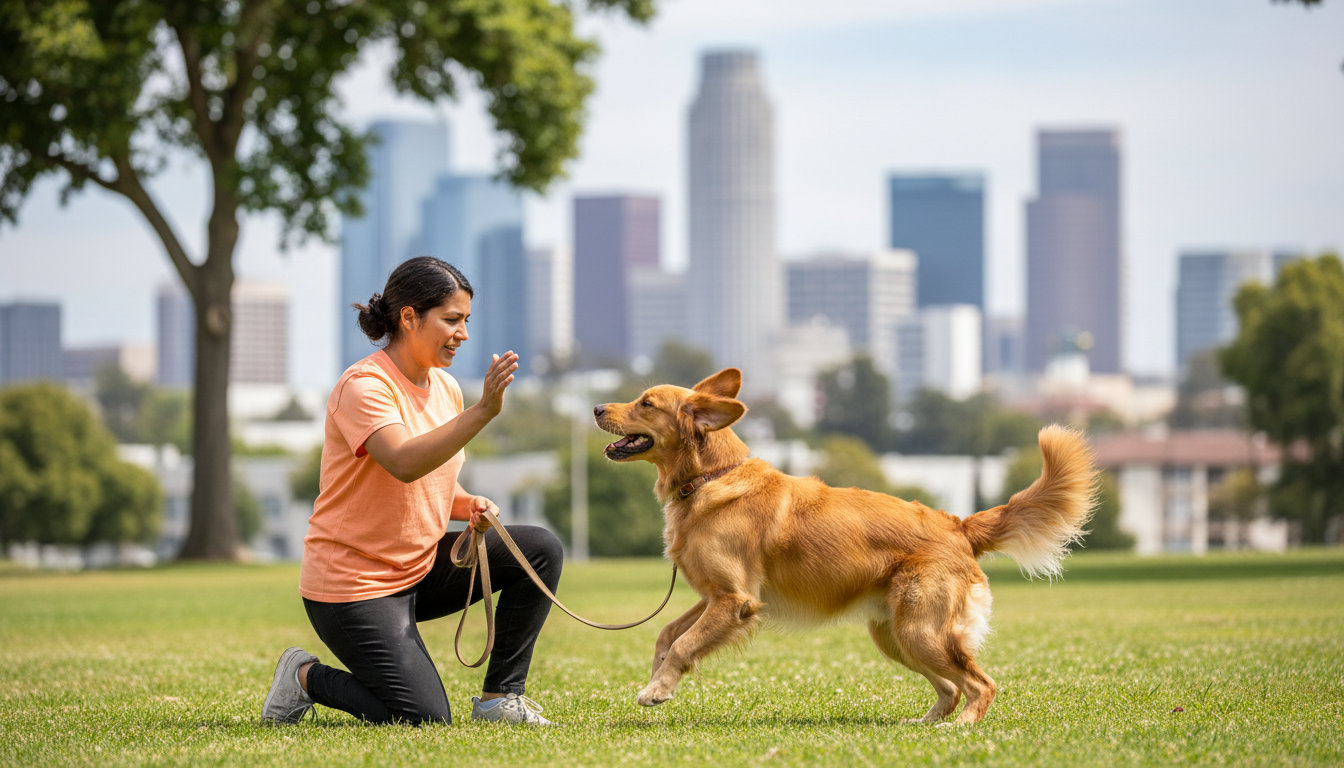
Modern, reward-based training focuses on teaching your dog what to do instead of punishing unwanted behaviors. This builds trust and is highly effective for long-term learning. It’s also the best way to ensure your dog can calmly handle Downey’s community events and shared public spaces.
Basic obedience includes skills like sit, down, stay, recall, and loose-leash walking. Mastering these makes everyday life smoother, from patio dining to vet visits. Puppy training focuses on early socialization, potty training, bite inhibition, and crate training to prevent future problems.
Behavior modification addresses deeper issues like fear, separation anxiety, or leash reactivity. This requires a careful, structured plan to change your dog’s emotional response to triggers. Specialized training like service dog training or therapy dog training involves teaching advanced public access skills and specific tasks.
Be wary of any trainer who promotes quick fixes using fear, intimidation, or physical corrections. These methods can worsen behavior problems, damage your bond with your dog, and potentially lead to incidents that violate local nuisance laws.
Average Cost of Dog Training in Downey, CA (Updated for 2026)
The cost of professional dog training services in Downey and the greater Los Angeles area varies based on the trainer’s experience, the type of service, and the complexity of your dog’s needs. The table below reflects current local averages.
| Service Type | Average Cost (Downey/LA Area) |
|---|---|
| Puppy classes (6-week session) | $180–$320 total |
| Group obedience classes (6-week session) | $200–$350 total |
| Private lessons (60-minute session) | $100–$180 per session |
| In-home training packages (4-6 sessions) | $500–$1,100 total |
| Day training (per week) | $600–$1,200 |
| Behavior consultation (initial) | $175–$300 |
| Board and train (2-3 weeks) | $2,500–$6,000+ |
Many trainers offer a free consultation to discuss your goals and provide a detailed quote. Be sure to ask what is included, such as follow-up support or handouts, and if there are any travel fees for in-home visits within Downey.
Questions to Ask a Potential Dog Trainer
- What is your primary training philosophy, and can you describe a typical training session?
- What professional certifications, like CPDT-KA or KPA-CTP, do you hold? How do you continue your education?
- Do you have experience with my dog’s specific breed or behavior challenge?
- What does your training program include, and how do you measure progress?
- Will training take place in my home, a public location, or your facility?
- What are your total fees, payment policies, and cancellation terms?
- Are you insured for liability, and can you provide proof?
- For behavior issues, are you willing to collaborate with my veterinarian?
- What will I need to do between sessions to support my dog’s learning?
Local Downey Rules and Considerations
Understanding local regulations helps you be a responsible dog owner and informs the goals of your training program. Downey’s municipal code aligns with many Los Angeles County ordinances.
All dogs must be kept on a leash no longer than six feet when in public areas, except in designated off-leash zones. This is strictly enforced in city parks and on trails. California state law and Los Angeles County regulations require all dogs over four months old to be vaccinated against rabies and to wear the issued license tag. Failure to comply can result in fines.
Excessive, persistent barking that disturbs neighbors is considered a nuisance. Training can help manage alert barking and separation anxiety proactively. While California doesn’t license dog trainers specifically, professionals operating a business in Downey must have a city business license. Responsible trainers also carry liability insurance to protect themselves and their clients.
Local Downey Resources for Dog Owners
These local spots provide excellent environments to practice and proof your dog’s training in real-world settings. Always observe posted rules and practice good etiquette.
- Furman Park: Features a large, fully fenced dog park divided for large and small dogs. It’s a great controlled environment to practice recalls and polite play.
- Apollo Park: While it doesn’t have a dedicated dog park, its wide-open spaces on-leash are good for practicing focus and obedience around mild distractions.
- Rio San Gabriel Riverbed Trail: This popular paved trail is perfect for working on structured loose-leash walking and passing other people and dogs calmly.
- Downey Dog Owners Group: While not a training organization, local social media groups can be a resource for learning about dog-friendly events and locations.
FAQs
How much does in-home dog training cost?
In Downey, a single in-home training session typically costs between $100 and $180. Most trainers offer package discounts, bringing the per-session cost down when you commit to a multi-session program.
Is in-home dog training worth it?
Yes, for many situations. In-home training addresses behaviors in the exact environment where they occur, such as jumping on the couch, barking at the doorbell, or reactivity in your own yard. The trainer can also tailor the program to your specific home layout and routine.
Can you pay someone to house train your dog?
Many trainers offer puppy programs that include comprehensive potty training plans. Some day training services will also work on this skill as part of a broader curriculum, but owner consistency is always the key to long-term success.
What is the 3-3-3 rule for dog training?
This is a guideline for newly adopted dogs. It suggests it takes about 3 days to decompress, 3 weeks to learn your routines, and 3 months to feel fully at home. Effective training respects this adjustment period.
How long will it take to reach my training goals?
For basic obedience with a motivated dog, you might see reliable results in 4-8 weeks with consistent practice. Behavior modification for issues like fear or reactivity is a longer process, often taking several months of dedicated work.
What should I bring to group classes?
Bring a well-fitting collar or harness, a 6-foot non-retractable leash, high-value treats, and your dog’s vaccination records. Wear comfortable shoes and be ready to learn.
What’s the leash law in Downey?
Downey requires dogs to be on a leash no longer than six feet in all public areas. The only exception is inside the designated off-leash dog park at Furman Park.
Do I need a dog license in Downey or county?
Yes. All dogs in Los Angeles County, including Downey, must be licensed with the county. You must provide proof of a current rabies vaccination to obtain the license.
What shots does my dog need in county or California?
Rabies vaccination is legally required. Your veterinarian will also recommend a core vaccine series (DHPP) and may suggest others like bordetella based on your dog’s risk factors. Always consult with your vet.
Are dog trainers required to be licensed in Downey or county or California?
The state of California does not have a specific license for dog trainers. However, trainers operating a business in Downey must obtain a standard city business license. They should also carry professional liability insurance.
Where can I practice off-leash recall?
The safest and only legal place for off-leash practice in Downey is inside the fenced dog park at Furman Park. Visit during off-peak hours for lower-distraction training sessions.
Which dog parks allow training around Downey?
The Downey Dog Park at Furman Park is the city’s primary off-leash area where training is appropriate, provided you are not disrupting other park users. For on-leash training, any city park or trail is suitable.
What beaches or trails allow dogs for training?
While Downey isn’t coastal, several nearby beaches like Rosie’s Dog Beach in Long Beach offer off-leash areas. Closer to home, the Rio San Gabriel Riverbed Trail is an excellent on-leash location for building focus and obedience during walks.
Choosing a dog trainer is an important decision for your family and your pet. By focusing on positive, science-based methods and a trainer who understands life in Downey, you can build a strong foundation for a lifetime of good behavior and shared adventures. If credentials are important to you, don’t hesitate to ask about dog trainer certifications and how they apply to your dog’s specific needs.