Your Complete Guide to Choosing a Dog Trainer in Granite Bay
Life in Granite Bay often means beautiful trails, lakeside outings, and a community that values its peaceful, family-friendly atmosphere. For your dog, this means needing reliable skills to enjoy the Douglas Boulevard corridor, navigate the bustling parking lots of local shopping centers, and remain calm around the equestrian and recreational activities common in the area. A professional dog trainer who understands this specific lifestyle can make all the difference.
Granite Bay is an unincorporated community within Placer County. This means local rules are governed by county ordinances, which shape the environment where you and your dog live and train.
How to Choose the Right Trainer
Look for a trainer whose methods align with creating a calm, confident companion for Granite Bay’s active yet orderly setting. Effective training should translate to polite behavior at outdoor patios, reliable recall near open spaces like the lake, and calmness during encounters with horses or cyclists on multi-use trails.
Credentials offer a clear way to gauge a trainer’s knowledge and commitment to modern, humane practices. Look for professionals with certifications such as CPDT-KA, KPA-CTP, or IAABC-CDBC for complex behavior issues. These dog trainer certifications indicate dedicated education.
In-home sessions are invaluable for addressing specific household behaviors like door-dashing, counter-surfing in spacious kitchens, or reactivity at your property line. Group classes provide essential practice for focusing around other dogs and people, a must before visiting busier community spots.
Common Dog Training Methods Explained
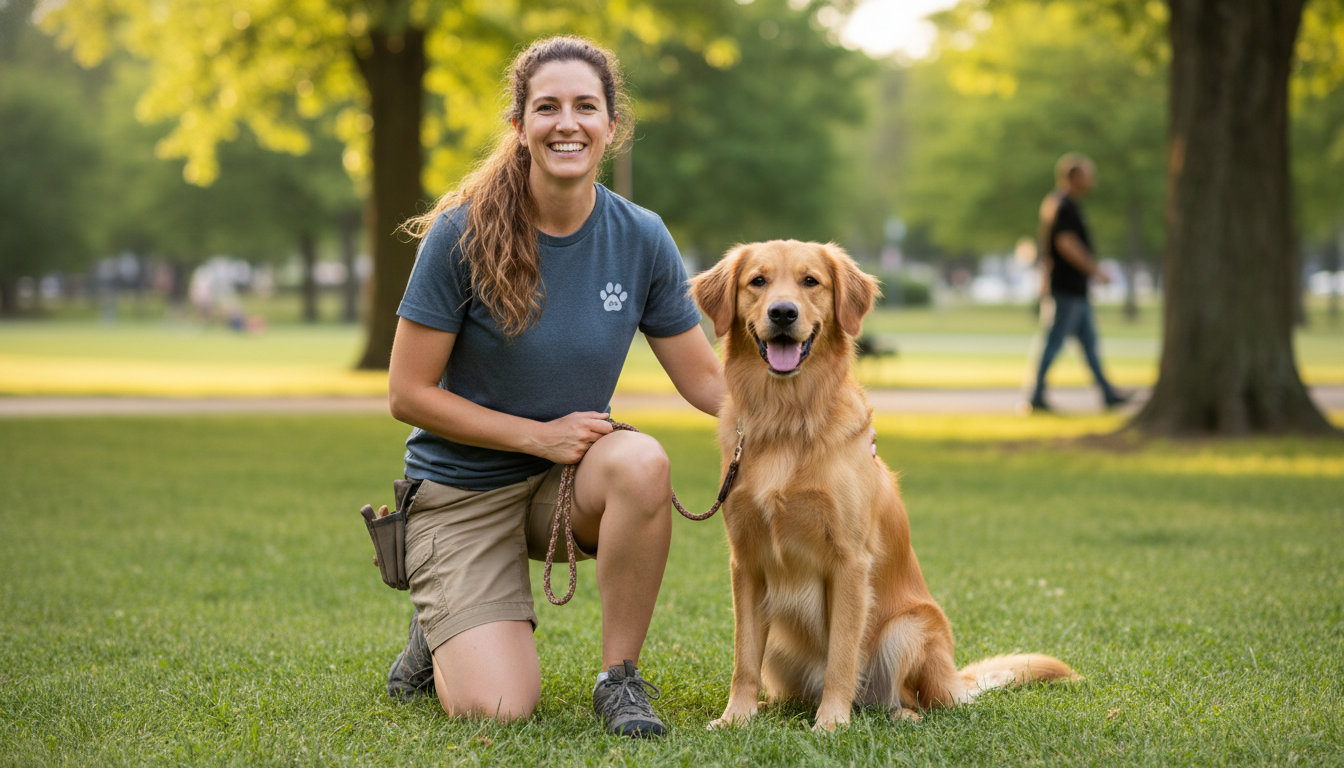
*Positive reinforcement* training is the most effective and ethical approach. It builds a strong bond with your dog and ensures they are a welcome part of the community, helping you comply with local nuisance ordinances.
Basic obedience covers sit, down, stay, loose-leash walking, and a reliable recall. These are the foundation for safely enjoying Folsom Lake State Recreation Area or walking through Granite Bay’s neighborhoods.
Puppy training focuses on critical early socialization, bite inhibition, potty training, and crate training. Starting early prevents problems and sets up a lifetime of good manners.
Behavior modification addresses issues like fear, reactivity, separation anxiety, or resource guarding through structured desensitization. For severe cases, a trainer should be willing to collaborate with your veterinarian.
Private lessons offer a customized plan for your dog’s unique needs and your family’s schedule. Day training programs can accelerate learning for busy households.
Group classes are excellent for proofing skills around distractions in a controlled setting. Look for classes that manage the environment to keep all dogs successful.
Specialized training, such as service dog training or therapy dog training, requires a trainer with specific experience in public access skills and rigorous task training.
Avoid any trainer who uses intimidation, fear, or pain to suppress behavior. These outdated methods can worsen problems and are not suitable for a community focused on safety and harmony.
Average Cost of Dog Training in Granite Bay, CA (Updated for 2026)
As an affluent community, dog training costs in Granite Bay and greater Placer County tend to be at the higher end of the regional scale. Prices reflect the trainer’s expertise, program length, and service type.
| Service Type | Average Cost (Granite Bay/Placer County) |
|---|---|
| Puppy Classes (6 weeks) | $200–$350 total |
| Group Obedience Classes (6 weeks) | $225–$400 total |
| Private Lessons (60-75 min) | $120–$200 per session |
| In-Home Training Packages (4-6 sessions) | $500–$1,200 total |
| Day Training (5-day week) | $600–$1,100 per week |
| Behavior Consultation (initial) | $175–$300 |
| Board and Train (2-3 weeks) | $2,500–$5,000+ total |
Many trainers serving Granite Bay may charge a travel fee. Always clarify what is included in a quoted price and ask about follow-up support.
Questions to Ask a Potential Dog Trainer
- What is your primary training philosophy, and how do you ensure sessions are positive and stress-free?
- What professional certifications, like CPDT-KA or KPA-CTP, do you hold? Do you pursue continuing education, such as CPDT-KSA?
- Can you create a plan tailored to my dog’s challenges and our active Granite Bay lifestyle?
- Do you offer in-home, group, or day training, and which do you recommend for my goals?
- How will progress be measured, and how do you help transition skills to real-world settings?
- What is the total cost, including any travel fees? What is your cancellation policy?
- Do you carry professional liability insurance? Can you provide proof?
- For behavior issues, are you willing to collaborate with my veterinarian?
- What will I need to practice between sessions to ensure success?
Local Granite Bay Rules and Considerations
Placer County ordinances directly impact dog owners in Granite Bay. Understanding these rules helps you train for real-world compliance and community safety.
Dogs must be on a leash not exceeding six feet in length in all public areas, unless in a designated off-leash zone. This is strictly enforced in parks and on trails.
California state law and Placer County require all dogs over four months old to be vaccinated against rabies and to wear the current rabies tag. County animal services provides information and low-cost clinic options.
Excessive barking is considered a public nuisance under county code. Training to manage alert barking and separation anxiety is important for maintaining good neighbor relations.
California does not require a specific state license to operate as a dog trainer. However, trainers operating a business in Placer County must have a standard business license. There is no state-mandated insurance requirement for trainers, but reputable professionals carry liability insurance.
Placer County Animal Services is the local authority for licensing, stray animals, and reporting issues.
Local Granite Bay Resources for Dog Owners
These locations provide excellent settings to practice training in real-world environments. Always observe posted rules and practice good etiquette.
- Folsom Point at Lake Natoma: A large, leashed-dog-friendly area perfect for practicing long-line recalls and focus around water and foot traffic.
- Granite Bay Beach (Folsom Lake): Leashed dogs are welcome. It’s a fantastic but distracting environment to proof obedience skills.
- Johnson-Springview Park (Rocklin): Features a large, fully fenced dog park divided for large and small dogs, ideal for safe off-leash play and recall practice.
- Placer County Parks: Many, like Horse Arena Park, allow leashed dogs on trails for structured walking practice.
- Granite Bay Dog Walking Trails: The extensive network of neighborhood trails and paths provides endless opportunities for daily loose-leash walking practice.
FAQs
How much does in-home dog training cost?
In Granite Bay, a single in-home session typically costs between $120 and $200. Most trainers offer package discounts for booking multiple sessions upfront.
Is in-home dog training worth it?
Yes, especially for behaviors that are specific to your home environment. A trainer can help with issues like barking at gardeners through the window, jumping on guests in your entryway, or boundary training in your yard before moving lessons to community trails.
Can you pay someone to house train your dog?
Many trainers offer potty training as part of puppy programs or day training services. They will establish a schedule and teach you the consistent routine needed to maintain success.
What is the 3-3-3 rule for dog training?
This is a general guideline for a newly adopted dog’s adjustment: 3 days to decompress, 3 weeks to learn your routine, and 3 months to feel fully at home. A good training plan respects this timeline.
How long will it take to reach my training goals?
For basic obedience and puppy training, consistent practice over 6-8 weeks typically yields solid results. Addressing fear or reactivity is a longer process, often requiring 3-6 months of dedicated behavior modification.
What should I bring to group classes?
Bring a well-fitting collar or harness, a 6-foot leash, high-value treats, and your dog’s vaccination records. Avoid retractable leashes for the safety of all participants.
What’s the leash law in Granite Bay?
Placer County leash law applies. Dogs must be on a leash no longer than six feet in all public spaces, including parks and trails, unless in a signed off-leash dog park area.
Do I need a dog license in Granite Bay or county?
Granite Bay follows Placer County regulations. While a general pet license is not required, a valid rabies vaccination and tag are mandatory by law.
What shots does my dog need in county or CA?
Rabies vaccination is legally required in California. Your veterinarian will also recommend core vaccines (DHPP) and others like bordetella based on your dog’s exposure risk.
Are dog trainers required to be licensed in Granite Bay or county or CA?
No specific “dog trainer” license exists in California. Trainers must have a standard local business license to operate legally in Placer County. Reputable trainers also carry liability insurance.
Where can I practice off-leash recall?
The safest places are fully fenced dog parks, like the one at Johnson-Springview Park in nearby Rocklin. Always ensure your dog has a reliable recall before attempting off-leash work in any open area.
Which dog parks allow training around Granite Bay?
The fenced dog park at Johnson-Springview Park is the closest dedicated facility. Using a quiet corner during off-peak hours is a great way to work on focus and cues around mild distractions.
What beaches or trails allow dogs for training?
Leashed dogs are welcome at Granite Bay Beach on Folsom Lake and on most trails within Folsom Lake State Recreation Area. These are excellent for proofing obedience around wildlife, boats, and other people.