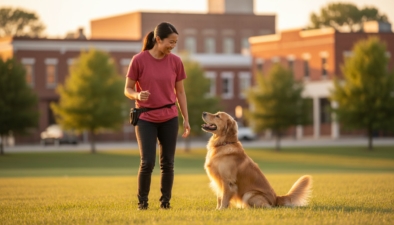
Your Complete Guide to Choosing a Dog Trainer in Hampton Bays
Life with a dog in Hampton Bays is defined by quiet canals, bustling Main Street in summer, and easy access to some of the best beaches on the East End. A well-trained dog can enjoy all of it, from calm walks past the marinas to behaving politely at a local farm stand. Finding the right professional dog trainer here means finding someone who understands this unique coastal lifestyle and can help your dog thrive in it.
Hampton Bays is located within Suffolk County on Long Island. Many local rules and resources are managed at the county level, which is important for dog owners to know. A trainer familiar with these specifics can better prepare you and your pet for life in the community.
How to Choose the Right Trainer
Start by looking for a trainer who uses positive reinforcement methods and can set goals that fit the Hampton Bays pace. This could mean training a solid recall for safe beach visits, teaching polite greetings for busy summer sidewalks, or managing alert barking in a quiet neighborhood.
Checking a trainer’s credentials is a smart way to gauge their expertise. Look for professionals who hold respected dog trainer certifications like the KPA-CTP or CPDT-KA. For serious behavior issues like aggression or severe anxiety, a certification such as the IAABC-CDBC indicates specialized knowledge.
In-home training sessions are excellent for addressing behaviors specific to your home and yard, like door-dashing or reactivity at the fence line. Group classes provide a controlled setting to practice obedience around other dogs, a crucial skill before heading to a popular spot like the Hampton Bays Beach.
Common Dog Training Methods Explained
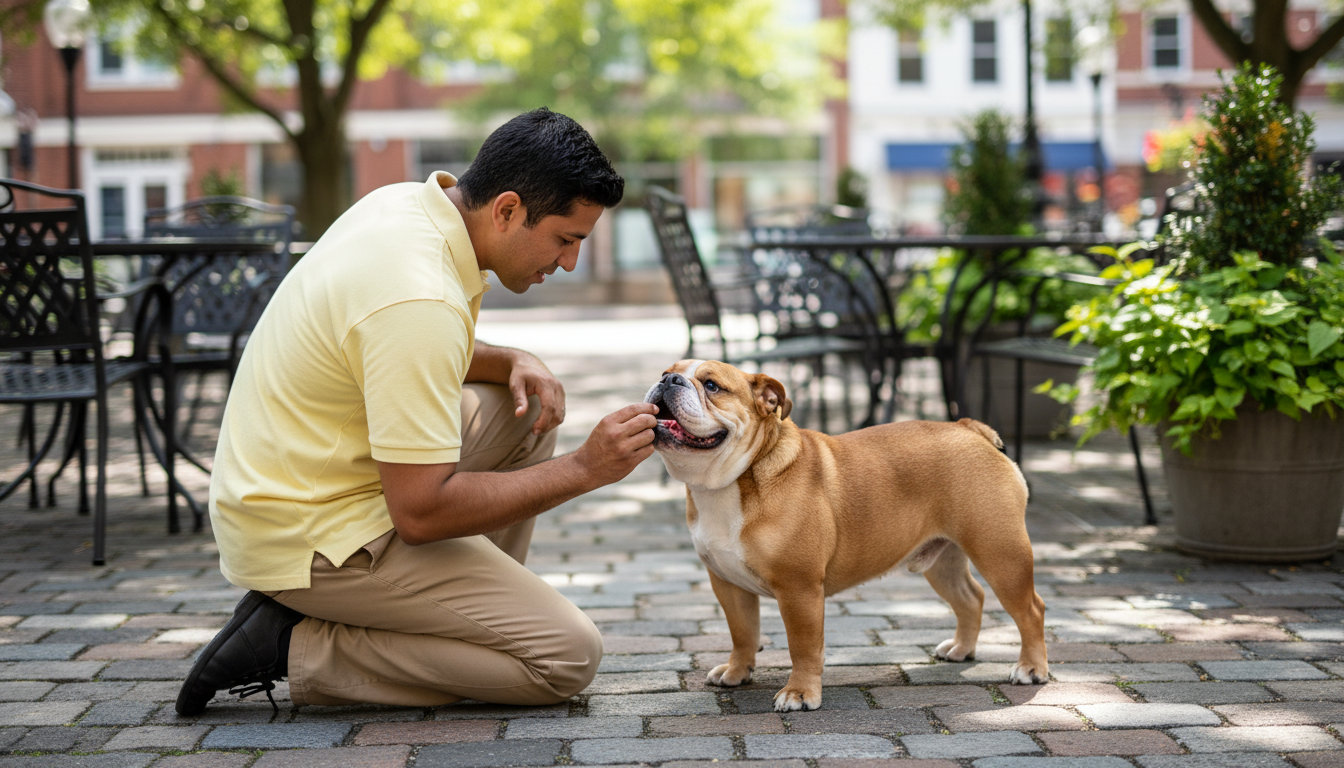
Reward-based training builds a strong bond and reliable behaviors, which is essential for complying with Suffolk County’s leash laws and maintaining good relationships with neighbors.
Basic obedience includes skills like sit, down, stay, and loose-leash walking. These are the foundation for any outing, whether it’s a walk down Ponquogue Avenue or a visit to a restaurant patio.
Puppy training focuses on critical early lessons: socialization to new sights and sounds, potty training, bite inhibition, and crate training. Starting early prevents problems from becoming ingrained habits.
Behavior modification addresses issues like fear, reactivity, or separation anxiety through careful, structured plans. For complex cases, a certified professional dog trainer should be willing to collaborate with your veterinarian.
Private lessons offer a customized approach for your dog’s unique needs and your schedule. Day training programs, where the trainer works with your dog directly, can accelerate learning for busy households.
Group classes help your dog learn to listen and behave even with the distractions of other dogs and people. A good class will emphasize calm behavior and provide adequate space for all participants.
Specialized training, such as service dog training or therapy dog training, requires a structured, goal-oriented program to teach specific tasks and public access manners.
Avoid any trainer who uses fear, intimidation, or pain to control your dog. These outdated methods can worsen behavior problems, damage your dog’s trust, and lead to issues with local nuisance ordinances.
Average Cost of Dog Training in Hampton Bays, NY (Updated for 2026)
Pricing in Hampton Bays and the surrounding Suffolk County area is influenced by the trainer’s experience, the type of service, and travel distance. The following table reflects current local averages for dog training services.
| Service Type | Average Cost (Hampton Bays/Suffolk County) |
|---|---|
| Puppy Class (6 weeks) | $175–$320 total |
| Group Obedience Class (6 weeks) | $180–$350 total |
| Private Lesson (60 min) | $120–$200 per session |
| In-Home Training Package (4-6 sessions) | $500–$1,100 total |
| Day Training (per week) | $500–$1,100 |
| Behavior Consultation | $175–$300 initial |
| Board and Train (2-3 weeks) | $2,500–$5,500+ |
Travel fees may apply for in-home services, especially to areas further from a trainer’s base. Prices for behavior modification work are typically at the higher end of these ranges.
Questions to Ask a Potential Dog Trainer
- What is your primary training philosophy, and how do you ensure sessions are positive and stress-free?
- What professional certifications, like CPDT-KA or KPA-CTP, do you hold? Do you pursue continuing education, such as CPDT-KSA?
- How will you tailor a training program to my dog’s personality and our daily life in Hampton Bays?
- Do you offer in-home sessions, group classes, or day training, and which do you recommend for my goals?
- How do you measure progress and help us transition skills to busier environments?
- What are your total fees, including any travel charges, and what is your cancellation policy?
- Do you carry professional liability insurance?
- For behavior issues, are you willing to collaborate with my veterinarian?
- What homework will you provide between sessions to help my dog succeed?
Local Hampton Bays Rules and Considerations
Suffolk County and New York State have specific regulations that every dog owner should follow. A good trainer will help you navigate these rules through effective training.
Dogs must be leashed in all public spaces unless in a designated off-leash area. A standard 6-foot leash is required on all county beaches, parks, and trails during allowable hours.
New York State law mandates a rabies vaccination for all dogs over four months old. You must keep proof of vaccination, and your dog must wear its rabies tag. Suffolk County provides resources and low-cost clinic information.
Excessive barking can be considered a nuisance under local ordinances. Training can help manage alert barking and separation anxiety proactively.
New York State does not require a specific license to operate as a dog trainer. However, all businesses in Hampton Bays must have a general business license from the Town of Southampton. Trainers offering board and train services must comply with New York State’s boarding kennel regulations and may require a separate kennel license.
Professional dog trainers are not legally required to carry insurance, but it is a strong indicator of a reputable, responsible business. Liability insurance protects you, the trainer, and your dog in case of an accident.
Local Hampton Bays Resources for Dog Owners
These local spots provide excellent environments to practice your training in real-world settings. Always follow posted rules, including seasonal leash restrictions and clean-up requirements.
- Good Ground Park: A popular local park with sports fields and walking paths. It’s a great place to practice leash skills and focus around mild distractions.
- Hampton Bays Beach (Ponquogue Beach): Dogs are typically prohibited during peak summer daytime hours. However, it can be a valuable training location in the off-season or very early/late in the day (where allowed) for desensitization to sand, water, and wind.
- Meschutt Beach County Park: This Suffolk County park has specific hours when leashed dogs are permitted. It’s an ideal spot for practicing polite manners around other beachgoers and picnickers.
- Sears Bellows County Park: Located nearby in Hampton Bays, this park offers trails and open spaces where leashed dogs are welcome, perfect for building focus in a natural setting.
- Southampton Animal Shelter Foundation: While not a training organization, they are a valuable local resource for adoption, low-cost vaccination clinics, and microchipping events.
FAQs
How much does in-home dog training cost?
In the Hampton Bays area, a single in-home session typically costs between $120 and $200. Most trainers offer package discounts for booking multiple sessions upfront.
Is in-home dog training worth it?
Yes, it is highly effective for addressing behaviors in the context where they happen. A trainer can help with jumping on guests, counter-surfing in your kitchen, reactivity at your front window, and leash skills on your specific neighborhood streets.
Can you pay someone to house train your dog?
Many trainers offer puppy programs that include a structured plan for potty training. Some day training services can also implement a consistent schedule to accelerate the house training process.
What is the 3-3-3 rule for dog training?
This is a guideline for adopted dogs. It suggests it takes about 3 days to decompress, 3 weeks to learn your routines, and 3 months to feel fully at home. A good training plan respects this adjustment period.
How long will it take to reach my training goals?
For basic obedience and polite manners, most dogs show significant improvement within 4 to 8 weeks with consistent practice. More complex behavior modification for fear or reactivity often requires a commitment of several months.
What should I bring to group classes?
Bring a well-fitting collar or harness, a 6-foot leash, high-value treats, and your dog’s vaccination records if required by the trainer. Leave retractable leashes at home.
What’s the leash law in Hampton Bays?
Suffolk County law requires dogs to be leashed in all public areas. The only exceptions are inside designated, signed dog parks or runs.
Do I need a dog license in Hampton Bays or Suffolk County?
Yes. All dogs in the Town of Southampton (which includes Hampton Bays) must be licensed. You must provide a current rabies certificate to obtain the license.
What shots does my dog need in Suffolk County or New York?
Rabies vaccination is legally required. Your veterinarian will also strongly recommend core vaccines for distemper, parvovirus, and adenovirus, as well as bordetella if your dog is social or boarded.
Are dog trainers required to be licensed in Hampton Bays or Suffolk County or New York?
New York State does not license dog trainers specifically. However, they must have a general business license from the local town. Those offering boarding services need to follow state kennel regulations.
Where can I practice off-leash recall?
The safest places are fully fenced dog parks. While Hampton Bays does not have a public dog park, nearby options exist in other Suffolk County towns. Always verify rules before visiting.
Which dog parks allow training around Hampton Bays?
There are no public dog parks within Hampton Bays town limits. Residents often use fenced areas at parks in neighboring communities or practice long-line recalls in large, permitted open spaces like certain county parks during off-peak times.
What beaches or trails allow dogs for training?
Leashed dogs are allowed on many Suffolk County beaches and trails outside of peak summer hours (usually before 9 AM and after 6 PM, from Memorial Day to Labor Day). Always check the latest Suffolk County Parks regulations for specific locations like Meschutt Beach or Sears Bellows Park before you go.
The right dog trainer will help you build a confident, well-behaved companion ready to enjoy everything from a quiet bay-side walk to the lively summer atmosphere. By focusing on humane methods and local knowledge, you can find a professional dog trainer who is the perfect fit for your life in Hampton Bays.