
Your Complete Guide to Choosing a Dog Trainer in Hilo and Surrounding Areas
Living with a dog in Hilo means navigating a unique lifestyle. Your daily walks might take you past historic downtown storefronts, through lush rainforest trails, or along the coast at Richardson Ocean Park. Training a dog here isn’t just about basic commands. It’s about preparing them for the relaxed but sometimes unpredictable island rhythm, from quiet neighborhood streets to bustling farmers markets.
Hilo is located in Hawaii County, and most local animal regulations are set at the county level. A trainer who understands these local rules, like the strict leash laws aimed at protecting wildlife and livestock, can provide more relevant guidance. Finding the right professional dog trainer means finding someone who can help your dog thrive in this specific environment.
How to Choose the Right Trainer
Look for a trainer whose methods align with creating a confident, well-behaved dog for Hilo’s setting. This includes skills like walking politely on a leash through the Hilo Farmers Market, staying calm during passing rain showers, and having a reliable recall near ocean fronts or farm boundaries.
Credentials offer a reliable way to gauge a trainer’s education. Look for professionals with certifications like the CPDT-KA or KPA-CTP. For more serious behavior issues, such as severe fear or aggression, a credential like the CBCC-KA or IAABC-CDBC indicates specialized knowledge.
In-home sessions are excellent for addressing behaviors in your actual living space, like barking at passing neighbors or door-dashing. Group classes provide a controlled setting to practice skills around other dogs, which is great preparation for busier public spaces.
Common Dog Training Methods Explained
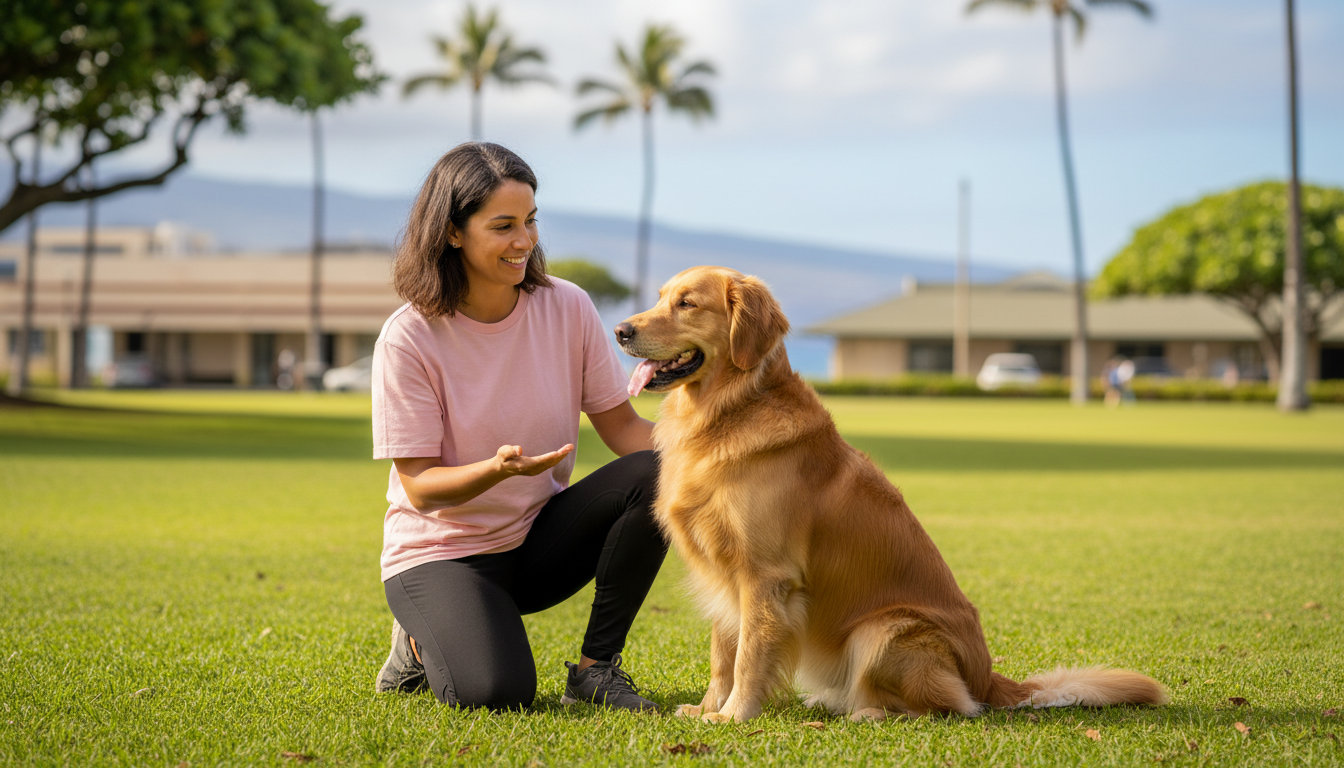
Modern, reward-based training is the most effective and humane approach. It builds a strong bond with your dog and helps ensure they can meet Hawaii County’s expectations for pet behavior in public spaces.
Basic obedience covers essential skills like sit, down, stay, and loose-leash walking. These are the foundation for any outing, whether it’s a stroll through Liliuokalani Gardens or a visit to a cafe.
Puppy training focuses on early socialization, bite inhibition, crate training, and potty training. Starting early in Hilo helps puppies adapt to common sights and sounds, from geckos on the lanai to the sound of frequent rain.
Behavior modification addresses issues like reactivity on trails, separation anxiety, or resource guarding. This work is done through careful, positive steps to change your dog’s emotional response.
Private lessons offer a customized plan for your dog’s unique needs and your schedule. Day training programs can accelerate learning if your time is limited.
Group classes help your dog learn to listen and perform skills even with the distraction of other dogs and people nearby. Look for classes that manage the environment to keep all participants successful.
Specialized training, such as service dog or therapy dog training, requires a very structured program to teach advanced public access skills and specific tasks.
It’s important to avoid trainers who use intimidation, fear, or physical corrections. These methods can worsen behavioral problems, increase stress, and damage your relationship with your dog. Positive, science-based methods are safer and create lasting results.
Average Cost of Dog Training in Hilo, HI (Updated for 2026)
Pricing for dog training services in Hilo and Hawaii County is influenced by the trainer’s expertise, program length, and travel considerations across the larger district. The following table reflects current local averages.
| Service Type | Average Cost in Hilo/Hawaii County |
|---|---|
| Puppy Class (6-week series) | $180 – $300 total |
| Group Obedience Class (6-week series) | $200 – $350 total |
| Private Lesson (60 min) | $90 – $150 per session |
| In-Home Training Package (4-6 sessions) | $400 – $850 total |
| Day Training (per week) | $500 – $1,000 |
| Behavior Consultation | $150 – $250 initial |
| Board and Train (2-3 weeks) | $2,200 – $5,000 total |
Travel fees may apply for services in outlying areas of the county. More complex behavior cases typically start at the higher end of the price range. Always clarify what is included in any package and ask about the trainer’s process for tracking progress.
Questions to Ask a Potential Dog Trainer
- What is your primary training philosophy, and how do you use positive reinforcement?
- What professional certifications, like CPDT-KA or KPA-CTP, do you hold? Do you pursue continuing education?
- How do you tailor a training program for life in Hilo, considering our local environment and rules?
- What types of services do you offer (in-home, group classes, day training) and which do you recommend for my goals?
- How do you measure progress and help generalize skills to real-world settings?
- What are your total fees, and what is your cancellation policy?
- Do you carry professional liability insurance?
- For behavior issues, are you willing to collaborate with my veterinarian?
- What will I need to practice between sessions to ensure success?
Local Hilo Rules and Considerations
Hawaii County enforces ordinances designed to protect people, pets, and the island’s unique ecosystem. A good trainer will help you navigate these rules seamlessly.
Dogs must be on a leash no longer than 10 feet and under direct control whenever they are off your private property. This is strictly enforced on beaches, parks, and trails to protect native wildlife and prevent conflicts.
Hawaii is the only state in the U.S. that is rabies-free. There is no state requirement for rabies vaccination for dogs living their entire lives in Hawaii. However, if you plan to travel with your dog to the mainland and return, strict quarantine and vaccination rules apply. All dogs over 4 months old must be licensed with Hawaii County, which requires proof of a current distemper/parvovirus vaccination.
Excessive barking that disturbs neighbors is considered a nuisance. Training can help manage alert barking and separation anxiety before it becomes a neighborhood issue.
The State of Hawaii does not require a specific license to operate as a dog trainer. However, all businesses must obtain a general business license. Trainers offering board and train services must comply with Hawaii County's animal boarding facility regulations, which include inspections.
Local Hilo Resources for Dog Owners
These locations provide excellent settings to practice training in real-world environments. Always follow posted rules and practice good etiquette.
- Panaewa Rainforest Zoo & Gardens: While dogs are not allowed inside the zoo enclosures, the surrounding gardens and picnic areas on-leash offer a great place to practice calmness around families and unusual sights.
- Richardson Ocean Park: A popular spot where leashed dogs are welcome. It’s a challenging but rewarding place to practice focus with ocean sounds, other dogs, and people nearby.
- Liliuokalani Gardens: These beautiful Japanese gardens are perfect for structured, on-leash walks to build loose-leash skills amid bridges, ponds, and foot traffic.
- Hawaii County Humane Society: Offers resources for pet owners, including information on low-cost microchipping and spay/neuter services.
FAQs
How much does in-home dog training cost?
In Hilo, a single in-home session typically costs between $90 and $150. Most trainers offer package discounts, bringing the per-session cost down for multi-session commitments.
Is in-home dog training worth it?
Yes, especially for behaviors that are specific to your home environment. An in-home trainer can directly address issues like counter-surfing, door-dashing, or reactivity seen from your windows. They can also start leash work right in your own neighborhood.
Can you pay someone to house train your dog?
Many trainers offer puppy programs that include a structured plan for potty training. Some day training services can also implement the schedule and reinforce the behavior, but owner consistency is always the key to long-term success.
What is the 3-3-3 rule for dog training?
This is a general guideline for adopted dogs. It suggests it takes about 3 days to decompress, 3 weeks to learn your routine, and 3 months to feel fully at home. A good training plan respects this adjustment period.
How long will it take to reach my training goals?
For basic manners and puppy training, consistent practice over 6-8 weeks usually shows solid results. For fear-based behaviors or reactivity, a behavior modification plan is often a commitment of several months to see lasting change.
What should I bring to group classes?
Bring a well-fitting collar or harness, a 4-6 foot leash, high-value treats, and your dog’s vaccination records. Avoid retractable leashes, as they are not suitable for training classes.
What’s the leash law in Hilo?
Hawaii County law requires dogs to be on a leash no longer than 10 feet and under the owner’s direct control at all times when off the owner’s property.
Do I need a dog license in Hilo or county?
Yes. All dogs over 4 months old in Hawaii County must be licensed annually. You will need to provide proof of a current distemper/parvovirus vaccination from a veterinarian to obtain the license.
What shots does my dog need in county or Hawaii?
Rabies vaccination is not required for dogs that live exclusively in Hawaii. However, a current distemper/parvovirus (DHLPP) vaccination is mandatory for county licensing. Your vet may recommend other vaccines based on your dog’s lifestyle.
Are dog trainers required to be licensed in Hilo or county or Hawaii?
There is no specific “dog trainer” license in Hawaii. Trainers must have a standard business license from the state. Those who board dogs as part of a “board and train” service must operate from a licensed animal boarding facility.
Where can I practice off-leash recall?
There are no public, designated off-leash dog parks in Hilo or Hawaii County. The only legal place for off-leash activity is on your own fully enclosed private property. This makes a reliable recall trained in secure, private spaces especially valuable.
Which dog parks allow training around Hilo?
As of 2026, there are no public fenced dog parks in Hawaii County. Training around other dogs must be done in controlled settings like group classes or private sessions arranged by a professional.
What beaches or trails allow dogs for training?
Many beaches and trails allow leashed dogs, making them excellent training grounds. Richardson Ocean Park, Onekahakaha Beach Park, and various trails within the Wailuku River State Park area (like Boiling Pots) permit leashed dogs. Always check for specific park signage first.