
Your Complete Guide to Choosing a Dog Trainer in Irving
Life with a dog in Irving means navigating a unique mix of urban spaces and quiet neighborhoods. You might be walking near the bustling Toyota Music Factory, exploring the Campion Trail, or enjoying a patio in the Las Colinas or Valley Ranch areas. A well-trained dog makes these everyday moments enjoyable instead of stressful.
Since Irving is part of Dallas County, many local regulations align with county and state rules. Choosing a professional dog trainer who understands these local details helps you build good manners that work for Irving’s specific environment.
How to Choose the Right Trainer
Start by looking for a trainer who uses *positive reinforcement* training methods. This approach builds trust and is most effective for creating lasting good behavior. Your goals should fit your local lifestyle, whether that’s walking calmly on the Mandalay Canal boardwalk, behaving at a vet in the Irving Arts District, or not reacting to traffic sounds.
Checking a trainer’s credentials is a smart way to gauge their education and commitment. Look for certifications like the CPDT-KA or KPA-CTP. For serious behavior issues like aggression or severe anxiety, a credential like the CBCC-KA or IAABC-CDBC indicates specialized knowledge.
In-home sessions are excellent for addressing problems right where they happen, like door-dashing or barking at neighbors. Group classes provide a controlled setting to practice manners around other dogs, which is great preparation for busy spots like the North Lake College area or local parks.
Common Dog Training Methods Explained
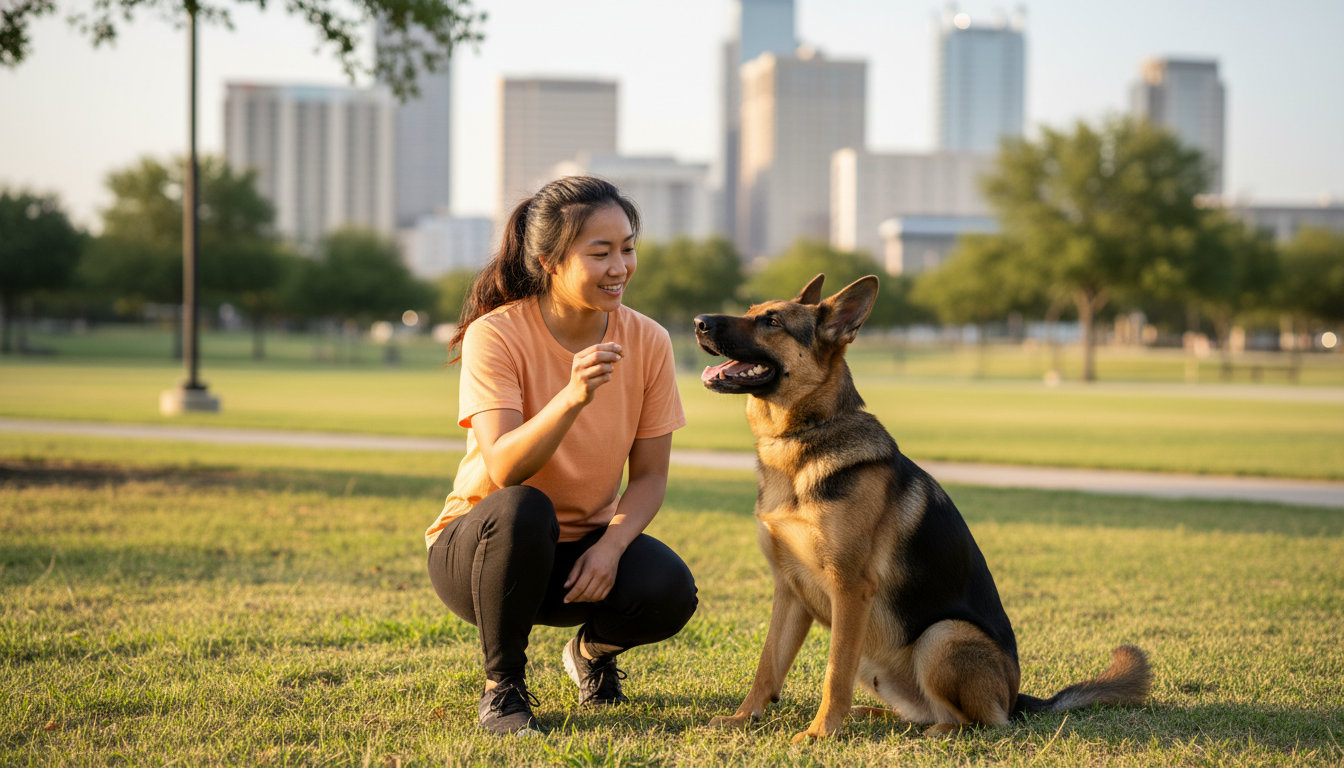
Reward-based training focuses on teaching your dog what to do instead of punishing unwanted actions. This method is not only kinder but also more effective for long-term learning and for complying with Irving’s community standards.
Basic obedience covers essential cues like sit, down, stay, come, and loose-leash walking. These skills are the foundation for any public outing in Irving.
Puppy training prioritizes early socialization, bite inhibition, potty training, and crate acclimation. Starting early prevents problems from becoming ingrained habits.
Behavior modification is a specialized process for issues like fear, reactivity, or separation anxiety. It uses gradual, positive techniques to change your dog’s emotional response to triggers.
Private lessons offer a personalized training program tailored to your home and schedule. Day training can accelerate learning if you have a busy work life.
Group classes help your dog learn to listen and behave even with the distractions of other dogs and people. A good class will manage the environment to set every dog up for success.
Specialized training, such as service dog training or therapy dog training, requires a structured curriculum to teach complex tasks and public access skills.
Always avoid trainers who use fear, intimidation, or pain-based tools. Humane methods are safer, foster a better relationship with your dog, and help maintain good neighborly relations in your community.
Average Cost of Dog Training in Irving, TX (Updated for 2026)
Prices in the Irving and greater Dallas County area vary based on the trainer’s experience, session length, and service type. Below is a snapshot of average costs local pet owners can expect in 2026.
| Service Type | Average Cost (Irving/Dallas County) |
|---|---|
| Puppy Classes (6 weeks) | $165–$300 total |
| Group Obedience Classes (6 weeks) | $175–$350 total |
| Private Lessons (60 min) | $100–$180 per session |
| In-Home Coaching Packages (4-6 sessions) | $450–$1,000 total |
| Day Training (per week) | $500–$1,100 |
| Behavior Consultation | $160–$280 initial |
| Board and Train (2-3 weeks) | $2,200–$5,000 total |
Packages often provide better value than single sessions. Always ask what is included, how progress is measured, and if there are any travel fees for your specific area of Irving.
Questions to Ask a Potential Dog Trainer
- What is your primary training philosophy, and how do you use positive reinforcement?
- What professional credentials, like CPDT-KA, do you hold? Do you pursue continuing education?
- How will you tailor the training plan for my dog’s personality and our daily life in Irving?
- Do you offer in-home, group, or day training, and which do you recommend for my goals?
- What is your process for tracking progress and increasing challenges?
- Can you provide a clear breakdown of all costs and your cancellation policy?
- Do you carry professional liability insurance? Can I see a certificate?
- For behavior issues, are you willing to collaborate with my veterinarian?
- What homework will you give me to practice between our training sessions?
Local Irving Rules and Considerations
Understanding local rules helps you train for real-world situations and avoid fines. Irving follows Dallas County and Texas state statutes for most animal regulations.
Dogs must be on a leash no longer than six feet in all public areas, unless in a designated off-leash dog park. This is strictly enforced on trails and in city parks.
Texas state law requires all dogs to be vaccinated against rabies by a licensed veterinarian. A rabies tag must be attached to the dog’s collar.
Irving’s nuisance ordinance addresses excessive barking. Proactively working on alert barking with a trainer can prevent neighbor complaints. Trainers using city parks for commercial group classes may need a permit and must provide proof of insurance.
The State of Texas does not require a specific license to be a dog trainer. However, all businesses operating in Irving must obtain a general business license from the city. Trainers offering board and train services must comply with Texas Animal Welfare Act kennel regulations.
Local Irving Resources for Dog Owners
These local spots are perfect for practicing your training in different environments. Always follow posted rules and practice good etiquette.
- Northgate Dog Park: A large, fenced park with separate areas for large and small dogs. Ideal for practicing recalls and off-leash manners in a secure setting.
- Central Bark Dog Park: Another well-maintained, fenced option for safe off-leash play and training.
- Campion Trail: This extensive trail system along the Elm Fork of the Trinity River is perfect for leashed walks to practice focus around joggers, cyclists, and wildlife.
- Lively Park: A neighborhood park with open spaces suitable for practicing long-distance cues on a long-line during less busy hours.
FAQs
How much does in-home dog training cost?
In the Irving area, a single in-home session typically costs between $100 and $180. Most trainers offer package discounts for booking multiple sessions upfront.
Is in-home dog training worth it?
Yes, it is highly valuable. Training happens in the exact environment where problems occur, such as jumping on guests, counter surfing, or reacting to yard sounds. The trainer can also help with leash skills right on your neighborhood sidewalks.
Can you pay someone to house train your dog?
Many trainers offer puppy programs that include structured potty training plans. Some day training services can also implement a consistent schedule to accelerate the house training process.
What is the 3-3-3 rule for dog training?
This is a guideline for a newly adopted dog’s adjustment period. It suggests 3 days to decompress, 3 weeks to learn your routine, and 3 months to feel fully at home. A good training plan respects this timeline.
How long will it take to reach my training goals?
For basic obedience and puppy training, consistent practice over 6-8 weeks typically yields strong results. Modifying established behaviors like reactivity or anxiety is a longer process, often taking several months of dedicated work.
What should I bring to group classes?
Bring a well-fitted collar or harness, a 6-foot non-retractable leash, high-value treats, and your dog’s vaccination records if required by the trainer. Always have water available.
What’s the leash law in Irving?
Irving’s ordinance requires dogs to be on a leash not exceeding six feet in length in all public areas, unless inside a designated off-leash dog park.
Do I need a dog license in Irving or Dallas County?
Neither the City of Irving nor Dallas County requires a general pet license. However, you are required by Texas law to keep your dog’s current rabies vaccination tag on its collar at all times.
What shots does my dog need in Dallas County or Texas?
Rabies vaccination is legally mandatory. Your veterinarian will also recommend a core vaccine series (DHPP) and may suggest others like bordetella based on your dog’s exposure risk.
Are dog trainers required to be licensed in Irving or Dallas County or Texas?
There is no specific state license for dog trainers. Trainers must operate with a standard City of Irving business license. Those providing board and train services from a facility must have a kennel license from the Texas Department of Licensing and Regulation.
Where can I practice off-leash recall?
The fenced areas at Northgate Dog Park and Central Bark Dog Park are the only legal public spaces in Irving for off-leash activity. Visiting during off-peak hours can provide a less distracting environment for training.
Which dog parks allow training around Irving?
Both Northgate and Central Bark Dog Parks allow owners to work with their dogs inside the fenced areas. Practicing cues and recalls during calm moments is encouraged.
What beaches or trails allow dogs for training?
While there are no beaches, the Campion Trail system welcomes leashed dogs. It’s an excellent location for proofing leash skills and practicing calm behavior around various distractions in a natural setting.