Your Complete Guide to Choosing a Dog Trainer in Issaquah and Surrounding Areas
Life with a dog in Issaquah means navigating forested trails, busy farmers markets on Gilman Boulevard, and quiet suburban streets. Your dog needs to be a good neighbor, whether you’re hiking Tiger Mountain, visiting the community center, or walking past schools. Finding a trainer who understands the local landscape can make all the difference in creating a well-behaved companion for this unique environment.
Issaquah is part of King County, and many local rules are set at the county level. A trainer familiar with these specifics can help you manage everything from leash laws on the Issaquah-Preston Trail to polite greetings at the dog-friendly shops in Olde Town.
How to Choose the Right Trainer
Look for a professional who uses *positive reinforcement* training and can set goals that fit your Issaquah lifestyle. This means your dog should learn to walk calmly on a leash past busy Front Street, stay focused around wildlife on trails, and be comfortable during visits to the vet or groomer.
Checking a trainer’s credentials is a smart first step. Reputable dog trainer certifications like CPDT-KA or KPA-CTP indicate formal education in modern, science-based methods. For serious behavior issues like aggression or severe anxiety, look for credentials such as IAABC-CDBC or CBCC-KA.
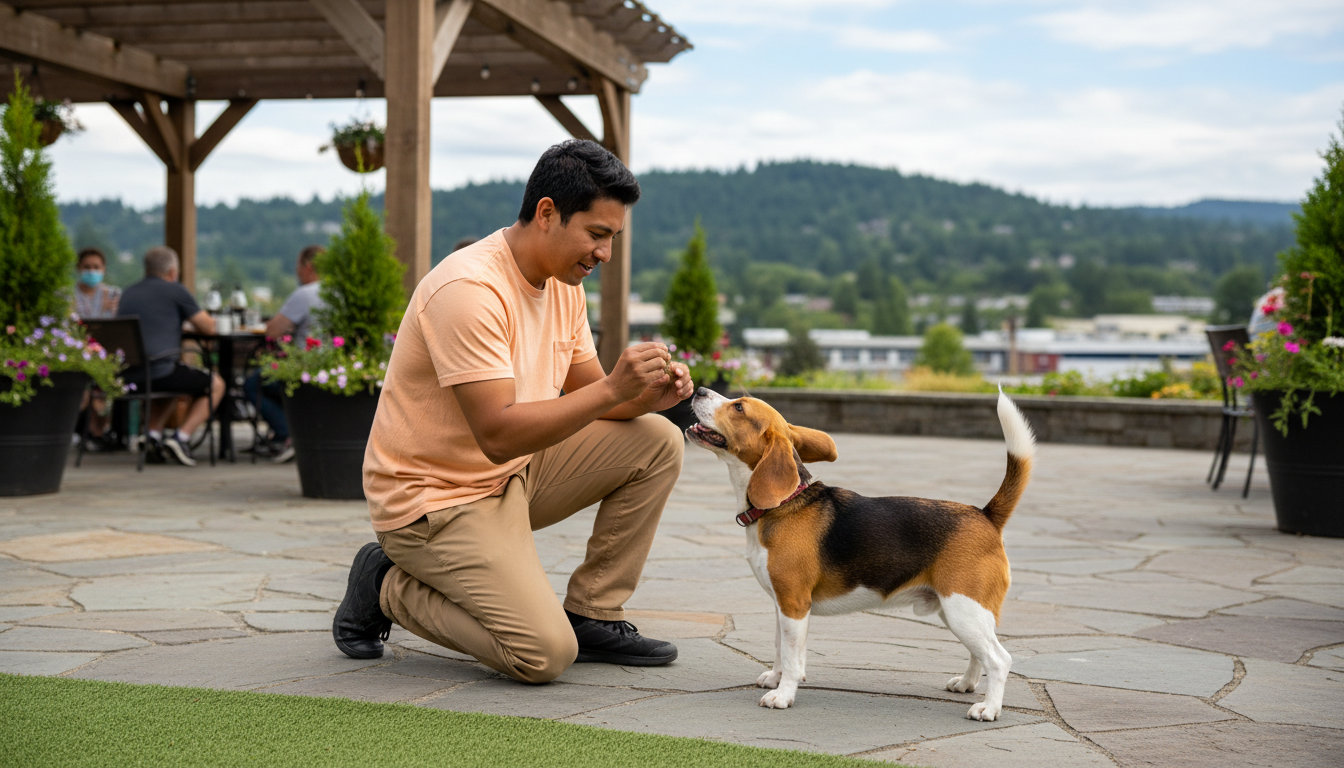
In-home sessions are excellent for addressing specific problems like door-dashing, counter-surfing, or reactivity in your own yard. Group classes provide a controlled setting to practice obedience around distractions, which is great preparation for a busy Saturday in downtown Issaquah.
Common Dog Training Methods Explained
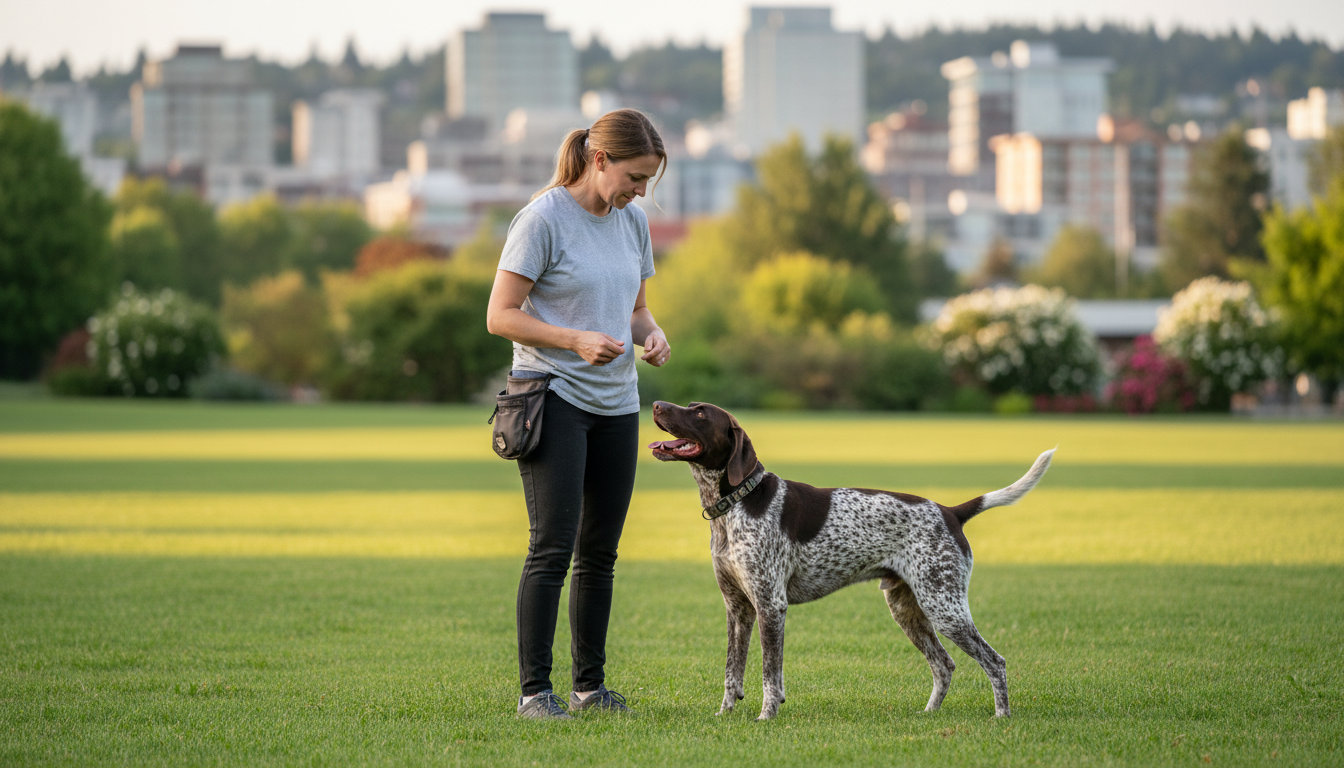
Modern dog training focuses on rewarding the behaviors you want to see. This positive approach builds a strong bond with your dog and is the most effective way to create lasting change. It also aligns with King County’s expectations for responsible pet ownership in public spaces.
Basic obedience includes sit, down, stay, come, and loose-leash walking. These are the foundational skills every dog needs to safely enjoy local parks and trails.
Puppy training prioritizes socialization, bite inhibition, potty training, and crate training. Starting early in Issaquah helps your puppy grow into a confident adult comfortable with varied sights and sounds.
Behavior modification addresses issues like fear, reactivity, or separation anxiety through careful, structured plans. For complex cases, a certified professional should be willing to collaborate with your veterinarian.
Private, in-home lessons allow for a fully customized training program. Board and train programs, where the trainer works with your dog intensively, are another option but require thorough vetting.
Group classes are ideal for practicing obedience and impulse control around other dogs and people in a supervised setting.
Specialized training, such as service dog or therapy dog training, requires a very structured curriculum and proof of public access skills.
Avoid any trainer who uses fear, intimidation, or pain-based corrections. These outdated methods can worsen behavior problems, damage your relationship with your dog, and increase liability risks in your community.
Average Cost of Dog Training in Issaquah, WA (Updated for 2026)
Pricing in the Issaquah and greater King County area reflects the local cost of living and a trainer’s expertise. Costs are typically higher for specialized behavior work. Here is a current overview of average rates.
| Service Type | Average Cost (Issaquah/King County) |
|---|---|
| Puppy Class (6 sessions) | $180–$320 |
| Group Obedience Class (6 sessions) | $200–$350 |
| Private Lesson (60 min) | $120–$200 |
| In-Home Package (4-6 sessions) | $500–$1,100 |
| Day Training (per week) | $500–$1,000 |
| Behavior Consultation | $175–$300 |
| Board and Train (2-3 weeks) | $2,500–$5,000 |
Many trainers offer a free consultation or evaluation to discuss your goals and their approach before you commit. Be sure to ask about any travel fees for in-home visits, especially to areas like the Highlands or Talus.
Questions to Ask a Potential Dog Trainer
- What is your primary training philosophy, and can you describe how you use positive reinforcement?
- What professional credentials, like CPDT-KA or KPA-CTP, do you hold? How do you stay current with new methods, such as through CPDT-KSA continuing education?
- Can you create a customized plan for my dog’s needs and my daily routine in Issaquah?
- What services do you offer (in-home, group classes, day training) and which do you recommend for my goals?
- How do you measure progress and what does communication between sessions look like?
- What is the total cost, including any package fees or travel charges? What is your cancellation policy?
- Do you carry professional liability insurance? Can you provide proof?
- For behavior issues, are you willing to collaborate with my veterinarian?
- What kind of “homework” will you give me to practice between our training sessions?
Local Issaquah Rules and Considerations
King County ordinances apply within Issaquah city limits. Following these rules is part of being a responsible dog owner and helps maintain community harmony.
Dogs must be on a leash no longer than 8 feet and under control in all public areas, unless in a designated off-leash area. This includes all city parks, trails, and sidewalks.
Washington State law and King County Code require all dogs to be vaccinated for rabies and licensed through Regional Animal Services of King County (RASKC). The license tag must be worn.
Excessive barking is considered a noise nuisance. Addressing alert barking and separation anxiety through training is important, especially in close-knit neighborhoods.
The State of Washington does not require a specific license to be a dog trainer. However, all businesses operating in Issaquah must have a City Business License. Professional dog trainers should carry general liability insurance to protect themselves and their clients. If a trainer offers board and train services, their facility must be licensed as an animal care agency through RASKC.
Local Issaquah Resources for Dog Owners
These local spots are perfect for practicing training in real-world settings. Always follow posted rules and practice good etiquette.
- Issaquah Off-Leash Dog Park: Located at 500 1st Ave NE, this fully fenced park is ideal for practicing recalls and polite play in a controlled, off-leash environment.
- Grand Ridge Park: Offers miles of trails where you can practice structured walks and focused heel work with your dog on a leash, surrounded by nature.
- Squak Mountain State Park: Leashed dogs are welcome on most trails. It’s a excellent location for proofing obedience skills around natural distractions like hikers and wildlife.
- Lake Sammamish State Park: A short drive away, this park provides wide-open spaces and busier trails to work on calm behavior around crowds, children, and other dogs on leash.
- Regional Animal Services of King County (RASKC): The county shelter provides licensing, low-cost microchipping clinics, and educational resources for pet owners.
FAQs
How much does in-home dog training cost?
In the Issaquah area, a single in-home private lesson typically costs between $120 and $200. Most trainers offer discounted packages of 4 to 6 sessions, which brings the total cost to between $500 and $1,100.
Is in-home dog training worth it?
Yes, for many Issaquah residents, it is highly valuable. Training happens in your actual living space, addressing problems like counter-surfing, door manners, and specific household anxieties. Your trainer can also help you practice leash skills on your own street, preparing your dog for local walks.
Can you pay someone to house train your dog?
Many professional dog trainers include house training as a core part of their puppy training programs. Some day training or board and train services can also establish a strong foundation, but the owner must be committed to maintaining the routine for long-term success.
What is the 3-3-3 rule for dog training?
This is a general guideline for a newly adopted dog’s adjustment period. It suggests 3 days to decompress from the transition, 3 weeks to start learning your routines, and 3 months to feel fully secure and bonded in their new home. A good training plan respects this timeline.
How long will it take to reach my training goals?
For basic obedience and manners, consistent practice over 6 to 8 weeks usually yields solid results. More complex behavior modification for issues like reactivity or fear often requires a longer-term commitment of several months to see sustained improvement.
What should I bring to group classes?
Bring a well-fitting collar or harness, a 6-foot leash (no retractable leashes), high-value treats, and your dog’s vaccination records if required by the trainer. It’s also wise to bring water and a mat or towel for your dog to settle on.
What’s the leash law in Issaquah?
In Issaquah and throughout King County, dogs must be on a leash no longer than 8 feet and under the owner’s control in all public spaces. The only exceptions are within officially designated off-leash dog areas.
Do I need a dog license in Issaquah or county?
Yes. All dogs in King County, including Issaquah, must be licensed through Regional Animal Services of King County (RASKC). You must provide proof of a current rabies vaccination to obtain the license.
What shots does my dog need in King County or Washington?
Rabies vaccination is legally required for all dogs in Washington State. Your veterinarian will also recommend core vaccines (like DHPP) and may suggest others like Bordetella or Leptospirosis based on your dog’s lifestyle and local risk factors.
Are dog trainers required to be licensed in Issaquah or King County or Washington?
Washington State does not have a specific professional license for dog trainers. However, they must have a standard City Business License to operate legally. If they offer boarding as part of a board and train service, their facility must be licensed as an animal care agency with RASKC.
Where can I practice off-leash recall?
The Issaquah Off-Leash Dog Park is the primary dedicated, fenced space within the city for safe off-leash practice. Visiting during off-peak hours can provide a less distracting environment for initial recall work.
Which dog parks allow training around Issaquah?
The Issaquah Off-Leash Dog Park is the main local option. For more variety, nearby parks like Marymoor Park in Redmond (the renowned “Doggy Disneyland”) offer massive fenced areas perfect for advanced training around high levels of distraction.
What beaches or trails allow dogs for training?
Dogs on leashes are welcome on most trails in the Issaquah Alps, including Squak Mountain and Tiger Mountain state parks. Lake Sammamish State Park has shoreline areas where you can practice heeling and focus around beachgoers and other dogs.