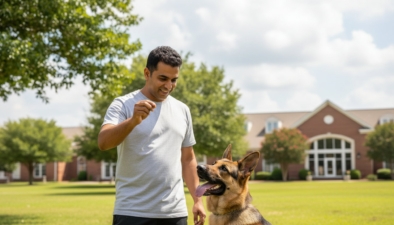
Your Complete Guide to Choosing a Dog Trainer in Lucas and Surrounding Areas
Finding a professional dog trainer in Lucas means preparing your dog for a life that moves between quiet neighborhood streets and the open spaces of the Texas countryside. Your dog needs to be a good neighbor, whether you’re visiting the ponds at Lucas Community Park, walking the trails at nearby preserves, or simply enjoying your backyard. The right trainer will understand how to build a reliable companion for this specific lifestyle.
Since Lucas is located within Collin County, many local regulations align with county and Texas state statutes. A trainer familiar with these rules can help you navigate everything from proper containment to wildlife encounters, ensuring your dog’s training supports a harmonious life in the community.
How to Choose the Right Trainer
Look for a professional dog trainer who uses *positive reinforcement* training methods tailored to life in Lucas. This means your dog should learn to walk calmly on a leash past horses or livestock, remain undisturbed by local wildlife, and be a polite guest in homes that may have larger properties.
Checking a trainer’s credentials is a smart way to gauge their expertise. Common dog trainer certifications include the CPDT-KA for knowledge assessed, the KPA-CTP for practical skills, or the IAABC-CDBC for complex behavior cases. For serious issues like aggression, a CBCC-KA credential is a strong indicator of specialized knowledge.
In-home sessions are excellent for addressing behaviors specific to your property, like boundary training or greeting guests. Group classes provide vital practice for focus around other dogs, which is useful before visiting busier parks in neighboring Allen or McKinney.
Common Dog Training Methods Explained
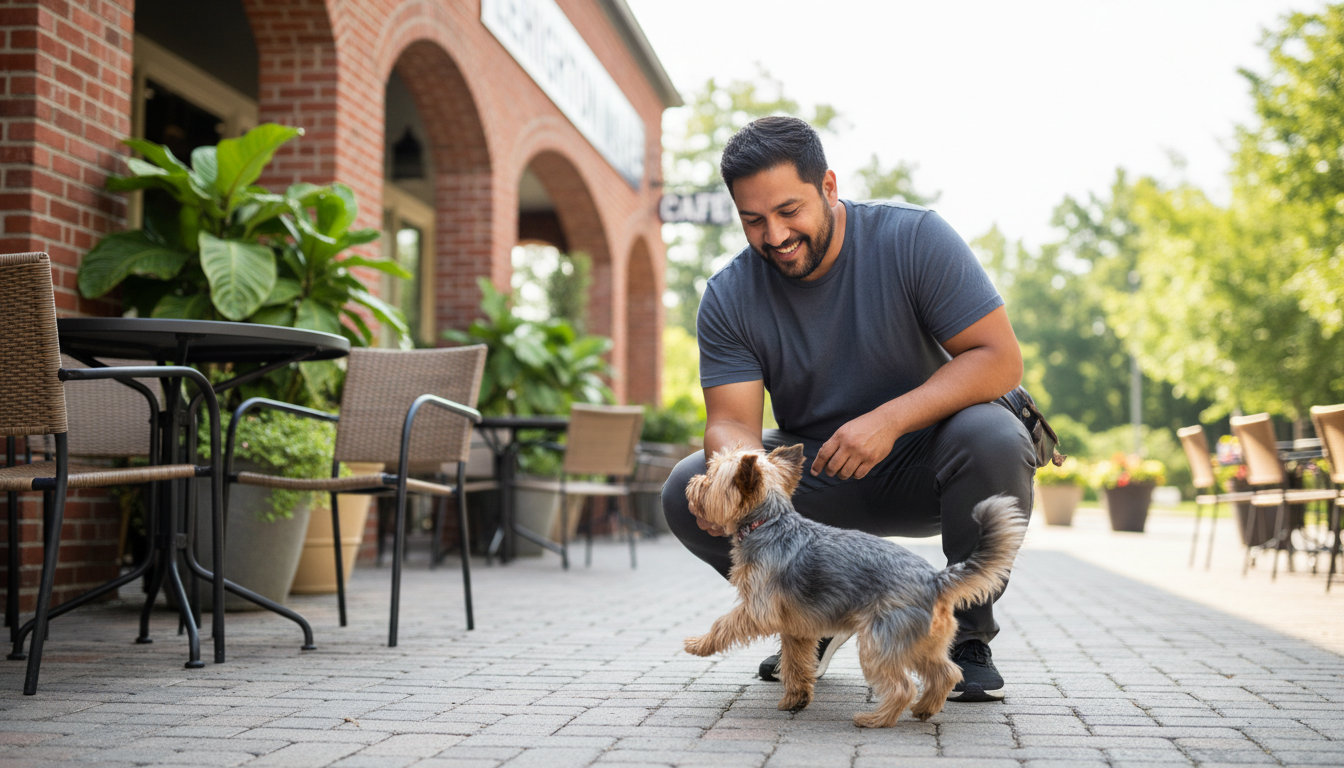
Reward-based training is the most effective and humane approach. It builds a strong bond with your dog and creates behaviors that last. This method is also key to complying with local nuisance ordinances and keeping your dog safe.
Basic obedience covers sit, down, stay, recall, and loose-leash walking. These skills are the foundation for any outing, from a walk in your neighborhood to a trip to a busy farmer’s market.
Puppy training focuses on critical early socialization, potty training, bite inhibition, and crate training. Starting early in Lucas helps prevent future problems with new sights, sounds, and animals.
Behavior modification addresses issues like fear, reactivity, separation anxiety, or resource guarding through structured desensitization. A good trainer will often collaborate with your veterinarian for severe cases.
Private lessons offer personalized attention for your specific goals. Day training programs can accelerate learning if your schedule is tight. Group classes are ideal for proofing obedience skills around distractions in a controlled setting.
Avoid any trainer who relies on fear, intimidation, or pain to control your dog. These methods can worsen behavioral problems, damage your relationship with your pet, and lead to issues with neighbors.
Average Cost of Dog Training in Lucas, TX (Updated for 2026)
Pricing in Lucas and the greater Collin County area varies based on the trainer’s experience, session length, and service type. The following table reflects average costs for the region.
| Service Type | Average Cost (Lucas/Collin County) |
|---|---|
| Puppy Classes (6 weeks) | $175–$300 total |
| Group Obedience Classes (6 weeks) | $180–$325 total |
| Private Lessons (60 min) | $100–$180 per session |
| In-Home Training Packages (4-6 sessions) | $450–$1,000 total |
| Day Training (per week) | $500–$1,000 |
| Behavior Consultation | $150–$275 initial |
| Board and Train (2-3 weeks) | $2,200–$5,000 total |
Travel fees may apply for in-home services depending on your location within the county. Always ask what is included in a package and how progress is measured.
Questions to Ask a Potential Dog Trainer
- What is your training philosophy, and how do you ensure sessions are positive and stress-free?
- What professional credentials, like CPDT-KA or KPA-CTP, do you hold? Do you pursue continuing education such as CPDT-KSA?
- How will you customize a training program for my dog’s needs and our daily life in Lucas?
- Do you offer in-home, group, or day training, and which do you recommend for my goals?
- How do you measure progress and help transition skills to real-world settings?
- What are your total fees, including any travel charges, and what is your cancellation policy?
- Do you carry professional liability insurance, and can you provide proof?
- For behavior issues, are you willing to collaborate with my veterinarian?
- What homework will I have between sessions to ensure success?
Local Lucas Rules and Considerations
Lucas does not have a dedicated animal control department, so enforcement typically falls under Collin County ordinances and Texas state law. Understanding these rules helps you be a responsible dog owner.
Collin County has a leash law. Dogs must be physically restrained by a leash, chain, or lead or be securely confined on the owner’s property at all times when not in a designated off-leash area.
Texas state law mandates a current rabies vaccination administered by a licensed veterinarian for all dogs and cats. The rabies tag must be attached to the animal’s collar or harness.
Excessive barking or noise that disturbs neighbors can be considered a nuisance under county ordinances. Working on alert barking with a trainer can prevent complaints.
Texas does not require a specific state license for dog trainers. However, trainers operating a business in Lucas must comply with standard city and county business registration requirements. If a trainer offers board and train services from a facility, they must adhere to Texas Department of Licensing and Regulation (TDLR) rules for commercial kennels.
Professional dog trainers are not legally required to carry insurance in Texas, but a reputable, professional dog trainer will have liability insurance to protect themselves, their clients, and the dogs in their care.
Local Lucas Resources for Dog Owners
These local spots provide excellent environments to practice training and offer enrichment for your dog.
- Lucas Community Park: Offers open green spaces and a pond for structured, leashed walks to practice focus and obedience.
- Bethany Lakes Park (Allen): A nearby park with trails around lakes, perfect for leashed walking practice with natural distractions.
- Dog Park at Allen Station Park (Allen): A fully fenced, double-gated off-leash area to practice recalls in a secure environment.
- Erwin Park (McKinney): Features multi-use trails where leashed dogs are welcome, ideal for building duration on walks and encountering cyclists or horses.
- Collin County Animal Services: Provides county-level resources for lost pets, low-cost microchipping clinics, and information on local ordinances.
FAQs
How much does in-home dog training cost?
In the Lucas area, a single in-home training session typically costs between $100 and $180. Most trainers offer package discounts for booking multiple sessions upfront.
Is in-home dog training worth it?
Yes, especially in Lucas where many homes have larger properties. In-home training addresses specific issues like door-dashing, boundary awareness, barking at wildlife, and manners with household guests right where they happen.
Can you pay someone to house train your dog?
Yes. Many trainers offer puppy programs that include a structured potty training schedule. Some day training services can also accelerate the house training process while teaching you how to maintain the routine.
What is the 3-3-3 rule for dog training?
It’s a guideline for a newly adopted or rehomed dog’s adjustment period: 3 days to decompress, 3 weeks to learn your routines, and 3 months to feel fully at home. A good training plan respects this timeline.
How long will it take to reach my training goals?
For basic obedience and puppy training, consistent practice over 6-8 weeks usually yields reliable results. Behavior modification for fear or reactivity is a longer process, often taking several months of dedicated work.
What should I bring to group classes?
Bring a standard 6-foot leash, a well-fitted collar or harness, high-value treats, and your dog’s vaccination records. Avoid retractable leashes for group safety.
What’s the leash law in Lucas?
Lucas follows Collin County’s leash law. Dogs must be on a leash or lead and under the owner’s control whenever they are off the owner’s private property, unless in a designated off-leash dog park.
Do I need a dog license in Lucas or county?
Collin County does not issue general dog licenses. However, Texas law requires your dog to have a current rabies vaccination and to wear the corresponding rabies tag on its collar.
What shots does my dog need in county or Texas?
Rabies vaccination is legally required. Your veterinarian will also recommend a core vaccine series (DHPP) and may suggest others like Bordetella or Leptospirosis based on your dog’s exposure risk in the area.
Are dog trainers required to be licensed in Lucas or county or Texas?
Texas does not have a state licensing requirement for dog trainers. They must operate as a legitimate business, but no specific professional license is mandated. Boarding facilities require a kennel license.
Where can I practice off-leash recall?
The safest legal places are fully fenced dog parks. The Dog Park at Allen Station Park is a nearby option where you can practice off-leash recalls in a secure, designated area.
Which dog parks allow training around Lucas?
The Dog Park at Allen Station Park in Allen is the closest dedicated, fenced dog park suitable for training exercises like recalls and supervised socialization during off-peak hours.
What beaches/trails allow dogs for training?
There are no beaches nearby, but many trails in Collin County welcome leashed dogs. Erwin Park in McKinney and the trails at Arbor Hills Nature Preserve in Plano are excellent for practicing loose-leash walking and focus around natural distractions.
Are there local wildlife considerations for training in Lucas?
Yes. Lucas has a rural character with wildlife like coyotes, snakes, and deer. A key part of training should be building a solid “leave it” cue and a reliable recall to keep your dog safe from potential encounters on walks or in your yard.
My HOA has strict rules. Can a trainer help?
Absolutely. Many neighborhoods in Lucas have Homeowners Associations with rules about barking, cleanup, and containment. A trainer can specifically address nuisance barking, reinforce boundary training, and help your dog become a model canine citizen to avoid violations.
Finding the right dog training services in Lucas involves matching a trainer’s expertise with your dog’s personality and your local lifestyle. With consistent, positive training, you can help your dog become a confident and well-mannered member of the community.