Your Complete Guide to Choosing a Dog Trainer in Lyndon Station and Surrounding Areas
Life with a dog in Lyndon Station means enjoying quiet neighborhood walks, exploring the beautiful trails of Juneau County, and perhaps venturing to nearby state parks. For your dog to be a good neighbor and a safe companion on these adventures, they need reliable training. A local trainer who understands the rhythms of small-town life and the specific challenges of rural Wisconsin can make all the difference.
How to Choose the Right Trainer
Finding the right professional dog trainer starts with matching their expertise to your dog’s needs and your lifestyle. Look for someone who uses humane, science-based methods like *positive reinforcement* training. This approach builds trust and is effective for everything from basic obedience to more complex behavior modification.
A good trainer should ask detailed questions about your daily routine. Do you walk along County Road B? Does your dog need to be calm around farm equipment or wildlife? Credentials offer a quick way to gauge a trainer’s commitment to their craft. Look for certifications like the CPDT-KA or KPA-CTP, which signify a foundation in modern, ethical training practices.
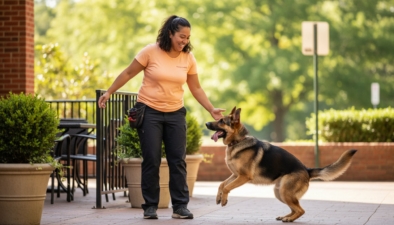
For puppy training or addressing specific in-home issues like door-dashing or counter-surfing, private in-home dog training is often the best fit. If your dog struggles with focus around other animals, a well-managed group class can provide the right level of controlled distraction.
Common Dog Training Methods Explained
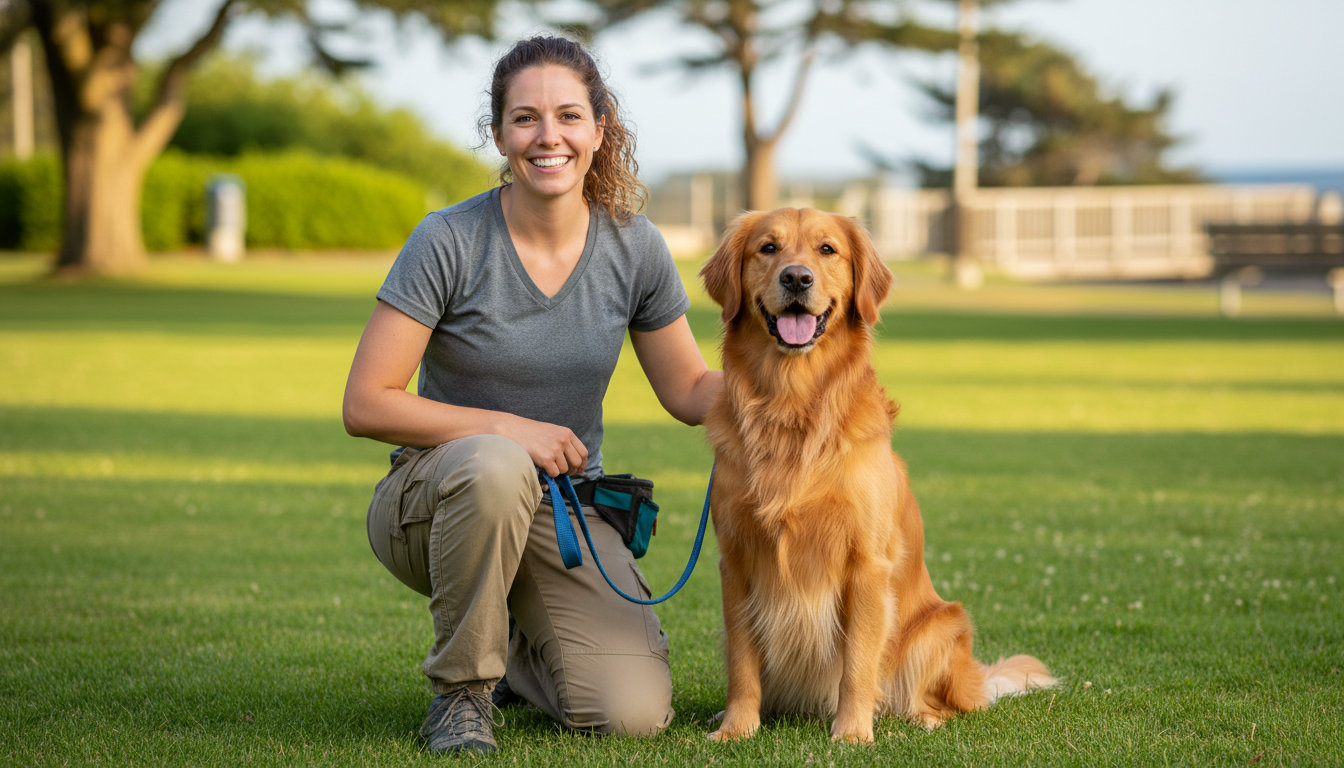
Modern dog training focuses on teaching your dog what to do, rather than punishing what not to do. Reward-based methods are not only kinder but also create lasting, reliable behaviors. This is especially important in a community like Lyndon Station, where a dog that reliably comes when called or walks politely on a leash is a necessity for safety.
Basic obedience covers essential skills like sit, down, stay, and a solid recall. These are the building blocks for a well-behaved dog at home, at the vet, or on a trail. Puppy training focuses on early socialization, bite inhibition, potty training, and crate training to prevent future problems.
Behavior modification addresses issues like fear, reactivity, or separation anxiety through careful, gradual exposure. For serious cases, a certified professional may hold an advanced credential like a CBCC-KA and should be willing to collaborate with your veterinarian.
Specialized training programs, such as service dog training or therapy dog training, require a trainer with specific experience in teaching the advanced public access skills and tasks needed for these roles.
It’s crucial to avoid trainers who rely on fear, intimidation, or pain-based tools. These methods can worsen behavioral problems, damage your relationship with your dog, and are not aligned with building a confident, happy companion for life in Juneau County.
Average Cost of Dog Training in Lyndon Station, WI (Updated for 2026)
Pricing in Lyndon Station and the broader Juneau County area is generally modest, reflecting the local cost of living. Costs vary based on the trainer’s experience, the service type, and travel distance. The table below reflects averages for the region, including services from nearby providers in Mauston, Wisconsin Dells, and Tomah.
| Service Type | Average Cost (Juneau County Region) |
|---|---|
| Puppy classes (6-week group) | $120–$200 total |
| Group obedience classes (6-week group) | $130–$220 total |
| Private lessons (60 min) | $70–$110 per session |
| In-home training packages (4-6 sessions) | $300–$650 total |
| Day training (trainer works your dog) | $400–$700 per week |
| Behavior consultation (initial) | $100–$180 |
| Board and train (2-week program) | $1,200–$2,500 total |
Many trainers offer a free consultation or evaluation to discuss your goals and provide a precise quote. Always ask what is included in the price and if there are any travel fees for coming to Lyndon Station.
Questions to Ask a Potential Dog Trainer
- What is your primary training philosophy, and can you explain how you use positive reinforcement?
- What professional dog trainer certifications do you hold, and how do you continue your education?
- Have you worked with dogs with similar challenges to mine, especially in rural or small-town settings?
- What does a typical training program look like, and how do you measure progress?
- Do you offer support between our training sessions?
- Are you insured to conduct training on my property or in public spaces?
- What are your total fees, and what is your cancellation policy?
Local Lyndon Station Rules and Considerations
Lyndon Station follows Juneau County and Wisconsin state statutes for animal control. Being aware of these rules helps you be a responsible pet owner and informs the skills your dog needs to learn.
Wisconsin state law requires all dogs to be vaccinated against rabies by a licensed veterinarian. A rabies tag must be attached to your dog’s collar. There is no general “dog license” in Juneau County, but the rabies vaccination is mandatory.
Lyndon Station does not have a dedicated animal control ordinance, so county and state laws apply. Dogs must be under the owner’s control at all times. While a physical leash is not universally mandated by statute if the dog is under voice control, practically, a leash is required in any public area or on another person’s property to prevent your dog from being considered “at large.” Using a leash is the safest and most responsible choice.
Excessive barking that disturbs neighbors can be considered a nuisance under Wisconsin law. Training can help manage alert barking before it becomes a neighborhood issue.
Wisconsin does not require a specific state license to operate as a dog trainer. However, any business operating in Lyndon Station must have a standard business license from the village. Reputable trainers should carry liability insurance.
Local Lyndon Station Resources for Dog Owners
These local spots provide excellent environments to practice your dog’s new skills in safe, controlled settings. Always follow posted rules and clean up after your pet.
- Lyndon Station Village Park: A quiet local park ideal for practicing leash walking and basic commands with few distractions.
- Honey Creek Park (Mauston): A short drive away, this park offers more space for structured walks and is a good step up in distraction level.
- Buckhorn State Park (Necedah): Leashed dogs are welcome on trails and in most areas. This is a fantastic “graduation” location to proof obedience skills around wildlife, water, and other hikers.
- Necedah National Wildlife Refuge: Certain areas allow leashed dogs. It’s an unparalleled setting for building focus and calmness in a natural environment with abundant sights and smells.
- Juneau County Veterinary Clinic & Other Local Vets: Establishing care with a local veterinarian is essential for vaccinations, health certificates, and potential referrals for behavioral concerns.
FAQs
How much does in-home dog training cost?
In the Lyndon Station area, most trainers charge between $70 and $110 for a one-hour in-home private lesson. Multi-session packages often reduce the per-session cost.
Is in-home dog training worth it?
For many Lyndon Station residents, yes. It allows the trainer to address behaviors exactly where they happen—jumping on guests, barking at the window, or reacting to the neighbor’s livestock. They can also help you practice leash skills on your own quiet street before venturing to busier areas.
Can you pay someone to house train your dog?
Yes. Many trainers include potty training as a core part of puppy training programs. For adult dogs, a professional can design a consistent schedule and management plan to successfully house train your dog.
What is the 3-3-3 rule for dog training?
This is a guideline for adopted dogs. It suggests 3 days to decompress, 3 weeks to learn your routines, and 3 months to feel fully at home. A good trainer will tailor their approach to respect this adjustment period.
How long will it take to reach my training goals?
For basic manners and puppy skills, you often see significant improvement within 4-6 weeks of consistent practice. More ingrained behaviors like fear or reactivity may require a longer-term behavior modification plan spanning several months.
What should I bring to group classes?
Bring a well-fitting collar or harness, a 6-foot non-retractable leash, high-value treats, and your dog’s vaccination records. Wear comfortable shoes for moving around.
What’s the leash law in Lyndon Station?
While Lyndon Station village code does not have a specific leash law, Wisconsin law requires dogs to be under control. A dog off-leash must respond reliably to voice commands. In any public or unfamiliar space, using a leash is the safest and most legally prudent choice to prevent your dog from being “at large.”
Do I need a dog license in Lyndon Station or Juneau County?
Juneau County does not issue a general pet license. The primary legal requirement is a current rabies vaccination and tag attached to your dog’s collar.
What shots does my dog need in Juneau County or Wisconsin?
Rabies vaccination is required by state law. Your veterinarian will also recommend a core vaccine series (like DAPP) and may suggest others like bordetella or leptospirosis based on your dog’s exposure risk in rural Wisconsin.
Are dog trainers required to be licensed in Lyndon Station or Juneau County or Wisconsin?
The State of Wisconsin does not license dog trainers specifically. Trainers must comply with standard business licensing requirements in the village or town where they operate. They should carry liability insurance for your protection.
Where can I practice off-leash recall?
Due to the control laws, the only truly safe and legal places for off-leash practice are fully enclosed, private properties. Public off-leash dog parks are not currently available within Juneau County.
Which dog parks allow training around Lyndon Station?
There are no dedicated public dog parks within Juneau County. The listed local parks and state lands are the best alternatives for on-leash training and socialization in varied environments.
What beaches or trails allow dogs for training?
Leashed dogs are permitted on trails at Buckhorn State Park and in designated areas of the Necedah National Wildlife Refuge. These are excellent for practicing calm focus around natural distractions. Always check current rules before visiting.