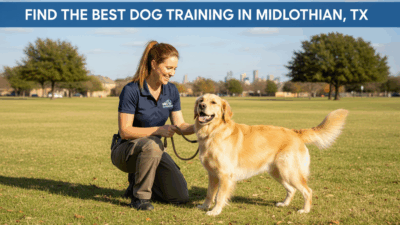
Your Complete Guide to Choosing a Dog Trainer in Midlothian TX and Surrounding Areas
Living in Midlothian means your dog needs to handle a mix of small-town life and growing suburban energy. Whether you’re walking through Heritage Park, visiting local shops along Main Street, or heading to the newer developments off FM 663, your dog should stay calm and focused around traffic, other dogs, and busy families.
Midlothian sits in Ellis County, where most regulations follow county and state guidelines. When you work with a trainer who understands these local details, you’ll get better results both at home and around town.
How to Choose the Right Trainer
Start by looking for someone who uses positive reinforcement training and can help you meet realistic goals for your Midlothian lifestyle. This means teaching your dog to walk politely through the downtown area, stay calm near livestock in surrounding rural areas, and behave well during visits to local businesses that welcome pets.
Credentials give you a quick way to compare experience levels. Common dog trainer certifications include KPA-CTP, CPDT-KA, or IAABC-CDBC for behavior problems. If your dog shows serious aggression or fear issues, look for someone with CBCC-KA or a science-based program like CTC.
In-home dog training works great for puppy manners, door greetings, and neighborhood leash skills. Group classes make sense once your dog can focus around other dogs, especially before you try busier spots around town or nearby areas like Waxahachie.
Common Dog Training Methods Explained
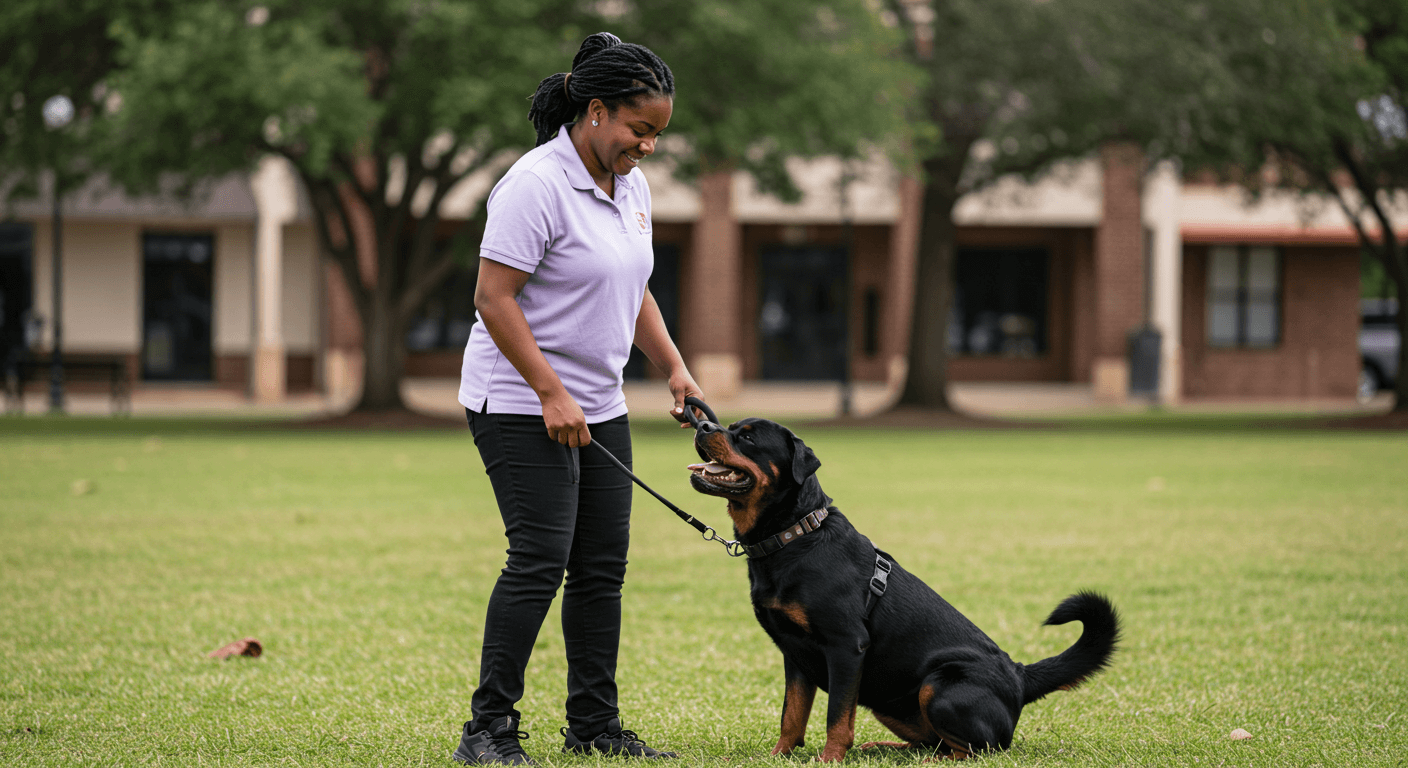
Reward-based methods build the trust you want while creating lasting behavior changes. They also help you follow Ellis County’s rules about keeping dogs under control in public spaces.
Basic obedience covers sit, down, stay, place, recall, and leash training so your dog can handle walks, outdoor patios, and park visits without pulling or jumping on people.
Puppy training focuses on socialization, potty training, bite control, crate comfort, and early leash work. Starting with short, positive training sessions prevents bad habits from forming in the first place.
Behavior modification addresses fear, reactivity, resource guarding, or separation anxiety through careful desensitization and counterconditioning. For serious cases, ask if your trainer works with local veterinarians.
Private lessons and in-home sessions let you customize everything around your daily routines, while day training can speed up results when you’re short on time. Dog obedience training often starts with simple commands at home before moving to more distracting environments.
Dog training classes help your dog practice good manners around other dogs and people. The best group classes give dogs plenty of space, screen participants carefully, and teach calm behavior rather than just excitement.
Specialized programs like service dog training or therapy dog training require extra structure, public-access skills, and a very clear step-by-step training program.
Stay away from trainers who use fear, intimidation, or pain to get results. Humane methods are safer for everyone, easier to maintain long-term, and much better for keeping peace with your neighbors in this friendly community.
Average Cost of Dog Training in Midlothian TX and Surrounding Areas (Updated for 2025)
Prices around Midlothian and Ellis County depend on the trainer’s experience, how long sessions last, and where the training happens. Here’s what most local pet owners are paying in 2025.
| Service Type | Average Cost (Midlothian/Ellis County) |
|---|---|
| Puppy classes (4-6 weeks) | $140-$260 total |
| Group obedience classes (4-6 weeks) | $150-$280 total |
| Private lessons (60-90 min) | $100-$180 per session |
| In-home coaching packages (4-6 visits) | $400-$850 total |
| Day training (trainer works your dog + handoff) | $425-$900 per week |
| Behavior consult for reactivity/anxiety (initial) | $140-$240 |
| Board and train (2-4 weeks) | $1,900-$4,200 total |
You’ll probably pay extra travel fees for longer distances within Ellis County or if you live in the more rural areas surrounding Midlothian. Expect higher rates for complex behavior work or aggressive dog training.
Make sure you understand what’s included, how the trainer tracks progress, and whether they offer a free consultation before you sign up.
Questions to Ask a Potential Dog Trainer
- What training methods do you use, and how do you keep sessions positive and low-stress?
- What credentials do you have, like CPDT-KSA or KPA-CTP? Do you keep up with continuing education?
- How will you customize the training program for my dog’s specific needs and our Midlothian lifestyle?
- Do you offer in-home visits, group classes, or day training, and which approach fits my goals best?
- How will we measure my dog’s progress and know when to add more distractions?
- What are the total costs, including any travel fees, and what’s your cancellation policy?
- Do you carry liability insurance, and can you show me proof?
- For behavior problems, will you work with my veterinarian if needed?
- What should I practice between our training sessions to help my dog keep improving?
Local Midlothian Rules and Considerations
Midlothian enforces leash laws and nuisance rules to keep parks and neighborhoods safe for everyone. Ellis County follows Texas public health requirements too.
Leashes are required in all public spaces except inside designated dog parks. Keep a standard 6-foot leash with you for town trails and community events.
Texas law requires current rabies vaccination for all dogs. You can get these through county clinics or your regular vet, and find more details through the Texas Department of State Health Services Zoonosis Control Branch.
Excessive barking can be considered a nuisance under local ordinances, so work with your trainer on alert barking and separation anxiety before neighbors start complaining. If your professional dog trainer wants to use town parks for commercial sessions, they may need permits and proof of insurance.
Texas doesn’t require special licenses for dog trainers, but if a business boards dogs for payment, the state’s Animal Health Commission oversees kennel licensing and inspection requirements.
Ellis County Animal Control has information and resources regarding lost pets, microchips, and other county services.
Local Midlothian Resources for Dog Owners and Surrounding Areas
These spots give you great places to practice polite manners, work on recalls, and provide safe enrichment for your dog. Always follow the posted rules and etiquette guidelines.
- Mockingbird Nature Park has trails perfect for leash training and building focus around other families and dogs.
- Lions Park offers open spaces where you can practice commands at a distance during quieter times.
- Midlothian Community Park provides walking paths and green areas ideal for socialization and controlled training work.
Cedar Hill State Park is nearby and welcomes leashed dogs on most trails, which gives you perfect opportunities to build focus around wildlife, cyclists, and other park visitors.
FAQs
How much does in-home dog training cost?
Most Midlothian trainers charge $100-$180 per in-home visit, with discounts available when you buy packages. Behavior problems typically start at the higher end of that range.
Is in-home dog training worth it?
Absolutely, because you’re working on problems exactly where they happen. Your trainer can fix door manners, jumping on guests, counter-surfing, and yard reactivity right at home, then step outside to practice leash skills on your actual neighborhood sidewalks.
Can you pay someone to house train your dog?
Yes, many trainers offer puppy classes and programs that include potty training, crate routines, and daily schedules. Day training can speed up the process while teaching you how to maintain the progress.
What is the 3-3-3 rule for dog training?
This is a helpful timeline for new or adopted dogs: expect about 3 days for your dog to decompress, 3 weeks to learn your routines, and 3 months to feel completely settled. Good dog training services work with this natural adjustment period.
How long will it take to reach my training goals?
Most puppies and friendly adult dogs show solid progress within 4-8 weeks if you practice daily. Fear, reactivity, or aggression typically requires several months of careful behavior modification with gradual increases in difficulty. A certified dog trainer can give you a more specific timeline based on your dog’s individual needs.
What should I bring to group classes?
Pack a flat collar or harness, a 6-foot leash, high-value treats, water, and current vaccination records if your trainer requests them. Leave retractable leashes at home for safety reasons.
What’s the leash law in Midlothian?
Dogs must be leashed and under control in all public areas, except inside designated off-leash dog parks. Keep that 6-foot leash handy for town trails, parks, and community events.
Do I need a dog license in Midlothian or Ellis County?
Ellis County doesn’t require general pet licenses, but keep your dog’s rabies vaccination current and the tag on their collar. For county services and microchip information, visit Ellis County Animal Control.
What shots does my dog need in Ellis County or Texas?
Rabies vaccination is required throughout the state. Your veterinarian may also recommend distemper-parvo and bordetella based on your dog’s lifestyle. Check state guidelines on the Texas Department of State Health Services website.
Are dog trainers required to be licensed in Midlothian or Ellis County or Texas?
No special trainer licenses exist in Texas. Expert dog trainers follow normal business regulations, but if they offer board and train services, their facility may need to be licensed as a boarding kennel under the state’s Animal Health Commission regulations.
Where can I practice off-leash recall?
Use fenced dog parks around Midlothian and surrounding areas to keep things safe and legal. Try visiting during quieter hours when you’re starting out. Many trainers also offer training for dogs in controlled environments where you can practice recall safely.
Which dog parks allow training around Midlothian?
While Midlothian has several parks, most are designed for on-leash use. For off-leash practice, you’ll need to look at nearby cities like Cedar Hill or Grand Prairie for dedicated dog parks with fenced areas. Always check with park authorities about commercial training activities.
What trails allow dogs for training?
Leashed dogs are welcome on most trails at Cedar Hill State Park, which is just a short drive from Midlothian. These trails are perfect for teaching calm focus around cyclists, runners, and wildlife. Joe Pool Lake also has trails where leashed dogs can practice good manners.
How do I find the best dog trainer for my needs?
Look for someone who offers a free consultation so you can discuss your goals and see if their approach fits your dog. Ask about their experience with positive reinforcement training and whether they’ve worked with dogs facing similar challenges to yours.
Can training help with separation anxiety?
Yes, behavior modification through gradual desensitization can significantly reduce separation anxiety. This work takes time and consistency, but a professional dog trainer experienced in anxiety issues can create a structured plan to help your dog feel more comfortable when left alone.
What’s the difference between puppy training and adult dog training?
Puppy training focuses on early socialization, preventing bad habits, and building a foundation of basic commands. Adult dog training often addresses established behaviors and may require more patience to change existing patterns. Both benefit from consistent practice and positive methods to help your dog become a well-behaved dog.
The right combination of thoughtful planning, humane methods, and consistent practice around Midlothian’s parks and neighborhoods will help your dog become a confident, well-behaved companion. If credentials matter to you, don’t hesitate to ask about dog trainer certifications and how your trainer stays current with new techniques.