Your Complete Guide to Choosing a Dog Trainer in Mt Pleasant and Surrounding Areas
Life with a dog in Mt Pleasant means enjoying quiet neighborhood walks, weekends at the Titus County Fairgrounds, and outings to local spots like the Mount Pleasant City Lake Park. For your dog to be a good neighbor here, they need reliable skills. They should walk politely on a leash past other homes, stay calm around farm animals at the county fair, and be a polite guest if you visit a friend’s place in the Pecan Acres or Greer addition neighborhoods.
Since Mt Pleasant is the county seat of Titus County, most local animal regulations are set at the city and county level. A trainer familiar with these rules can help you build good habits that keep your dog safe and in compliance, making your life together in East Texas smoother and more enjoyable.
How to Choose the Right Trainer
Look for a professional dog trainer who uses positive reinforcement methods and understands the local lifestyle. Your dog should learn to ignore distractions like wildlife on trails, be calm around passing trucks on Ferguson Road, and have good manners for visits to the town square.
Credentials are a strong indicator of a trainer’s commitment to their craft. Reputable dog trainer certifications include the CPDT-KA for knowledge assessed or the IAABC-CDBC for serious behavior cases. For foundational skills, a trainer with a KPA-CTP certification is an excellent choice.
In-home sessions are perfect for addressing behaviors that happen at home, like door-dashing or barking at the mail carrier. Group classes provide a controlled setting to practice obedience around other dogs before you test skills at a busier public place.
Common Dog Training Methods Explained
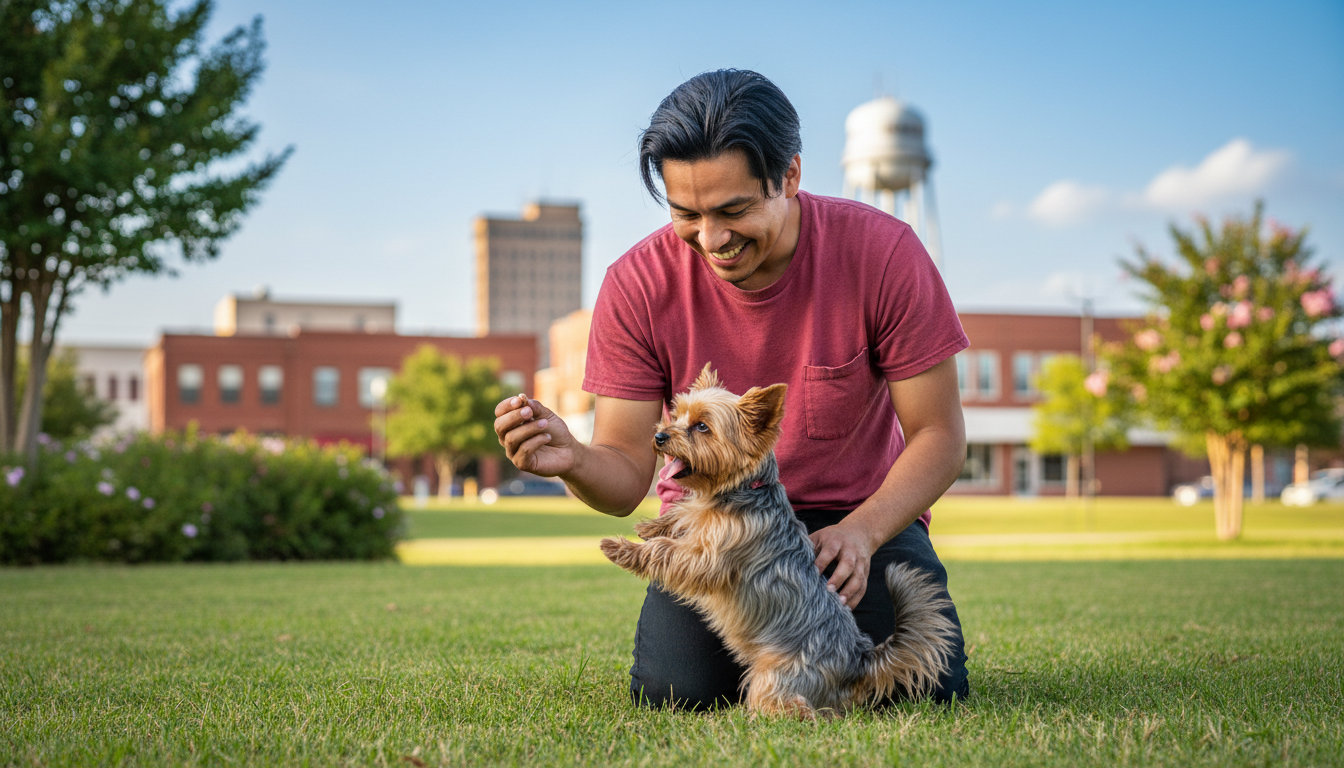
Modern, reward-based training builds a strong bond and reliable behaviors. This approach aligns well with local expectations for quiet, controlled pets in our community.
Basic obedience covers sit, down, stay, come, and loose-leash walking. These are the essential skills for any outing in Mt Pleasant, from a walk in your subdivision to a visit to a park.
Puppy training focuses on socialization, bite inhibition, potty training, and crate training. Starting early prevents problems and sets your puppy up for a lifetime of being a good citizen.
Behavior modification addresses issues like fear, reactivity, or separation anxiety through careful, structured plans. For complex cases, a certified professional dog trainer should be willing to collaborate with your veterinarian.
Private lessons offer one-on-one attention for specific goals. Board and train programs can provide an intensive jumpstart, though it’s crucial the trainer focuses on teaching you how to maintain the training afterward.
Group classes are valuable for practicing obedience and socialization in a semi-distracting environment. The best classes manage the space to keep all dogs comfortable and learning.
Specialized training, like service dog or therapy dog training, requires a trainer with specific experience in public access training and task work.
Avoid any trainer whose methods rely on fear, pain, or intimidation. Humane, science-based methods are safer, more effective for long-term learning, and help maintain good relationships with your neighbors.
Average Cost of Dog Training in Mt Pleasant, TX (Updated for 2026)
Pricing in the Mt Pleasant and greater Titus County area is generally moderate. Costs vary based on the trainer’s experience, session length, and the type of service. The table below reflects current local averages.
| Service Type | Average Cost (Mt Pleasant/Titus County) |
|---|---|
| Puppy classes (4–6 weeks) | $120–$200 total |
| Group obedience classes (4–6 weeks) | $140–$250 total |
| Private lessons (60 min) | $70–$120 per session |
| In-home coaching packages (3–5 visits) | $300–$600 total |
| Day training (per day rate) | $40–$65 per day |
| Behavior consult (initial) | $100–$175 |
| Board and train (2 weeks) | $1,200–$2,500 total |
Travel fees may apply for in-home services outside the immediate city limits. Always clarify what is included in any package and ask about the trainer’s policy for follow-up support.
Questions to Ask a Potential Dog Trainer
- What is your primary training philosophy, and how do you implement positive reinforcement?
- What professional credentials, like CPDT-KA or KPA-CTP, do you hold? How do you pursue continuing education, such as the CPDT-KSA?
- Can you create a training program tailored to my dog’s temperament and our daily routine in Mt Pleasant?
- Do you offer in-home dog training, group classes, or board and train, and which do you recommend for my goals?
- How do you measure progress, and how will you help me maintain my dog’s skills?
- What is the total cost, including any travel fees? What is your cancellation policy?
- Do you carry professional liability insurance?
- For behavior issues, are you willing to collaborate with my veterinarian?
- What homework or practice will you assign between our training sessions?
Local Mt Pleasant Rules and Considerations
Mt Pleasant has ordinances in place to ensure safety and peace in the community. Titus County enforces state laws regarding animal health.
Dogs must be kept under restraint and cannot run at large within the city. A leash is the simplest way to maintain control on public sidewalks, in parks, and on trails.
Texas state law and Titus County require all dogs and cats to be vaccinated against rabies by a licensed veterinarian. Pets must wear a rabies vaccination tag. County-level data shows these regulations are actively enforced.
Excessive or continuous barking that disturbs the peace is considered a nuisance. Working on alert barking with a trainer can prevent neighbor complaints. Dog trainers operating a business within the city should have a general business license and are strongly advised to carry liability insurance.
Texas does not require a specific state license to be a dog trainer. However, any facility offering board and train services may be subject to state kennel regulations.
Local Mt Pleasant Resources for Dog Owners
These local spots provide excellent environments to practice training and provide enrichment. Always follow posted rules, clean up after your dog, and be mindful of other users.
- Kiwanis Park Dog Park: This fenced area is ideal for practicing off-leash recalls and supervised social play in a secure setting.
- Mount Pleasant City Lake Park: Leashed dogs are welcome on the trails and picnic areas here, offering great opportunities for training with distractions like water, wildlife, and people.
- Titus County Cypress Basin: The natural areas around the county provide leashed hiking opportunities to build your dog’s focus in stimulating environments.
- Titus County Animal Shelter: A resource for microchipping, low-cost vaccination clinics, and general animal welfare information.
FAQs
How much does in-home dog training cost?
In the Mt Pleasant area, a single in-home session typically costs between $70 and $120. Most trainers offer discounted packages for multiple sessions, which is common for addressing behavior modification or comprehensive obedience training.
Is in-home dog training worth it?
Yes, especially for behaviors tied to your home environment. An in-home trainer can directly address issues like counter surfing, door manners, or reactivity in your own yard. They can also immediately help with leash skills on your specific street.
Can you pay someone to house train your dog?
Many trainers offer puppy packages that include a structured potty training plan. Some day training or board and train services can also establish a routine, but the owner’s consistent follow-through is always essential for long-term success.
What is the 3-3-3 rule for dog training?
It’s a guideline for adopted or rehomed dogs. Allow 3 days to decompress, 3 weeks to learn your routines, and 3 months to feel fully at home. A good trainer will design a program that respects this adjustment period.
How long will it take to reach my training goals?
For basic obedience and polite manners, you can expect noticeable improvement within 4 to 6 weeks with consistent practice. More complex issues like fear or reactivity often require a longer-term commitment of several months.
What should I bring to group classes?
Bring a well-fitted collar or harness, a 4-6 foot leash (not retractable), high-value treats, and your dog’s vaccination records if required by the trainer. Bring a hungry, motivated dog for the best results.
What’s the leash law in Mt Pleasant?
Mt Pleasant requires dogs to be under restraint and not at large. This effectively means your dog must be on a leash or within a securely fenced area when not on your private property.
Do I need a dog license in Mt Pleasant or Titus County?
Titus County does not issue a general pet license. However, you are required by law to keep your dog’s rabies vaccination current and the tag securely attached to their collar.
What shots does my dog need in Titus County or Texas?
Rabies vaccination is legally required. Your veterinarian will also recommend a core vaccine schedule (like DHPP) and may suggest others like Bordetella based on your dog’s risk of exposure.
Are dog trainers required to be licensed in Mt Pleasant or Titus County or Texas?
No, Texas does not have a state-level license for dog trainers. Trainers should operate with a standard City of Mt Pleasant business license and are highly encouraged to carry professional liability insurance.
Where can I practice off-leash recall?
The only legal and safe place for off-leash practice is inside a fully fenced area like your own yard or the designated Kiwanis Park Dog Park.
Which dog parks allow training around Mt Pleasant?
Kiwanis Park Dog Park is the primary fenced off-leash area suitable for training exercises like recall and supervised play. Always visit during less busy times for focused training work.
What beaches or trails allow dogs for training?
While there are no beaches nearby, leashed dogs are welcome at Mount Pleasant City Lake Park and on many trails within the Cypress Basin area. These are perfect for building focus during walks.