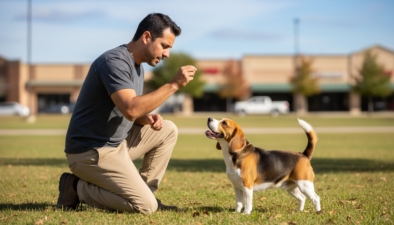
Your Complete Guide to Choosing a Dog Trainer in Nags Head and the Outer Banks
Life with a dog in Nags Head means walks on sandy beaches, visits to soundside parks, and navigating busy seasonal crowds along the bypass. A well-trained dog is essential here, where they need to ignore beachgoers, stay calm around fishing piers, and respond reliably even with the distraction of ocean waves.
Nags Head is part of Dare County, and many local rules, especially for the beaches, are set at the town level. Finding a trainer who understands the unique rhythm of Outer Banks life—from summer tourism to quieter off-season months—will help you build a dog that’s a pleasure at home and a polite visitor in shared spaces.
How to Choose the Right Trainer
Start by looking for a professional dog trainer who uses positive reinforcement methods. Your dog needs to learn skills that work in real Nags Head settings. This includes loose-leash walking on packed sand, ignoring food scraps near restaurants, and coming when called, even with seabirds flying by.
Credentials offer a way to verify a trainer’s education. Look for certifications like the CPDT-KA or KPA-CTP. For serious behavior issues like fear or aggression, a certification such as the IAABC-CDBC indicates specialized knowledge.
In-home sessions are perfect for addressing behaviors that happen at your vacation rental or year-round home, like door-dashing or counter-surfing. Group classes provide controlled practice around other dogs, which is great preparation for a walk at Dowdy Park or the Nags Head Woods Preserve.
Common Dog Training Methods Explained
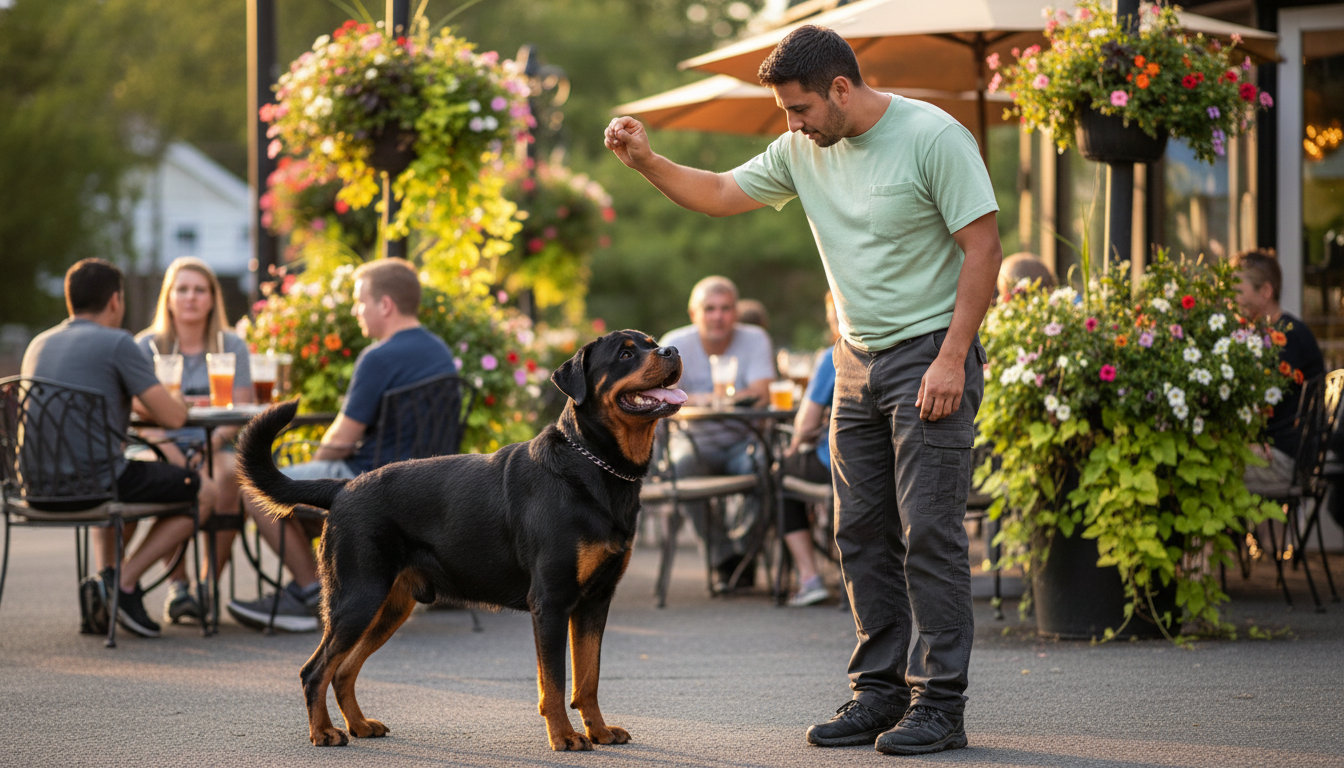
Positive reinforcement training builds a trusting relationship and is the most effective way to create lasting good manners. This approach aligns perfectly with Nags Head’s community standards for peaceful coexistence.
Basic obedience covers sit, stay, recall, and loose-leash walking. These skills are non-negotiable for enjoying the town’s beach accesses and outdoor dining spots safely.
Puppy training focuses on early socialization, bite inhibition, and potty training. Starting early helps your puppy grow into a confident dog that can handle the sights and sounds of the Outer Banks.
Behavior modification addresses issues like reactivity on the beach path, separation anxiety in a rental home, or fear of loud noises. A skilled trainer will use desensitization techniques to help your dog feel safer.
Private lessons offer a customized plan for your dog’s specific challenges. Day training programs can accelerate learning if your schedule is busy.
Group classes are excellent for practicing obedience around polite distractions. A good class will teach calm behavior, not just excited responses.
Specialized training, like service dog training, requires a trainer who can teach advanced public access skills, crucial for navigating busy boardwalks and shops.
Avoid any trainer who uses fear, intimidation, or pain to control behavior. These outdated methods can worsen problems and are unnecessary for creating a well-behaved dog.
Average Cost of Dog Training in Nags Head, NC (Updated for 2026)
Pricing in Nags Head and across Dare County reflects the seasonal tourism economy and the specialized skill set required for effective training. Costs can vary based on a trainer’s experience, travel distance, and the complexity of your dog’s needs.
| Service Type | Average Cost (Dare County Area) |
|---|---|
| Puppy Classes (4-6 weeks) | $175–$300 total |
| Group Obedience Classes (4-6 weeks) | $180–$320 total |
| Private Lessons (60-90 min) | $100–$180 per session |
| In-Home Training Packages (4-6 visits) | $450–$1,000 total |
| Day Training (per week) | $500–$1,100 per week |
| Behavior Consultation | $150–$275 initial visit |
| Board and Train (2-4 weeks) | $2,500–$5,500 total |
Travel fees for in-home services may apply, especially for trainers coming from other towns on the Outer Banks. Always ask what is included in a package and how progress is measured.
Questions to Ask a Potential Dog Trainer
- What is your primary training philosophy, and how do you use positive reinforcement?
- What professional credentials, like CPDT-KA, do you hold?
- How do you tailor a training program for life in a beach community like Nags Head?
- Do you offer in-home sessions, group classes, or both?
- How do you track progress and help generalize skills to busy environments like the beach?
- What are your total fees, including any travel charges for my area?
- Do you carry professional liability insurance?
- For behavior issues, will you collaborate with my veterinarian if needed?
Local Nags Head Rules and Considerations
Nags Head has specific ordinances designed to keep everyone safe and ensure dogs and wildlife can coexist. Dare County also enforces North Carolina state laws.
Dogs are allowed on the town beach year-round but must be on a leash no longer than 10 feet from 9:00 AM to 6:00 PM, from the Friday before Memorial Day through the day after Labor Day. During all other hours and months, dogs may be off-leash if under direct voice command and must not disturb others.
All dogs in North Carolina must have a current rabies vaccination, with the tag attached to their collar. Town ordinances also state that it is unlawful for any animal to create a nuisance by frequent or habitual barking.
Professional dog trainers operating in Nags Head are not required to hold a specific town license, but they must comply with standard business regulations. If a trainer offers board and train services, their facility must be licensed as an animal shelter or boarding kennel by the North Carolina Department of Agriculture.
Trainers using public spaces for commercial group classes may need a town permit and must provide proof of liability insurance.
Local Nags Head Resources for Dog Owners
These locations provide excellent settings to practice training in real-world environments. Always follow posted rules and clean up after your dog.
- Nags Head Town Beaches: The primary training ground for practicing recalls, leash skills, and calm behavior around distractions. Remember seasonal leash hours.
- Dowdy Park: A popular community park where leashed dogs can practice focus around playgrounds, picnickers, and events.
- Nags Head Woods Preserve: Offers miles of trails managed by The Nature Conservancy. Leashed dogs are welcome, providing a serene environment for structured walks.
- Jockey’s Ridge State Park: Leashed dogs are permitted on the park trails, offering a unique setting for training with wide-open spaces and shifting terrain.
FAQs
How much does in-home dog training cost?
In the Nags Head area, most trainers charge between $100 and $180 for a single in-home session. Packages of multiple lessons often reduce the per-session cost.
Is in-home dog training worth it?
For Nags Head residents, it can be very valuable. A trainer can address specific issues in your home environment, like reactivity from a deck or potty training in a beach-house setting, before moving lessons to your local beach access.
Can you pay someone to house train your dog?
Yes, many trainers include potty training as a core part of puppy programs or day training. They will establish a schedule and teach you how to maintain consistency.
What is the 3-3-3 rule for dog training?
It’s a guideline for adopted dogs: 3 days to decompress, 3 weeks to learn your routines, and 3 months to feel at home. A good trainer will work with this adjustment period.
How long will it take to reach my training goals?
For basic manners, you often see solid progress in 4-8 weeks with consistent practice. More complex behavior issues may require a longer-term behavior modification plan.
What should I bring to group classes?
Bring a well-fitting collar or harness, a 6-foot leash, high-value treats, and a toy or mat for settling. Your trainer will likely ask for proof of vaccinations.
What’s the leash law in Nags Head?
Dogs must be on a leash (10-foot maximum) on the town beach from 9 AM to 6 PM during the summer season (Memorial Day weekend through Labor Day). During off-season hours and months, dogs may be off-leash if under direct voice control. Leashes are required in all other public areas.
Do I need a dog license in Nags Head or Dare County?
North Carolina does not have a statewide pet license. The primary requirement is a current rabies vaccination tag on your dog’s collar at all times.
What shots does my dog need in North Carolina?
Rabies vaccination is legally required. Your veterinarian will also recommend core vaccines like distemper-parvo and bordetella based on your dog’s risk factors.
Are dog trainers required to be licensed in Nags Head?
The town does not issue a specific license for dog trainers. They must operate as a legitimate business. Those offering boarding services must have a kennel license from the state.
Where can I practice off-leash recall?
The Nags Head beach is the primary location, but only during permitted off-leash hours (before 9 AM and after 6 PM in summer, anytime in the off-season). Always ensure your dog has a reliable recall before going off-leash.
Which dog parks allow training around Nags Head?
There are no dedicated public dog parks within the town of Nags Head. The wide beach during off-leash hours serves as the main area for off-leash play and training.
What beaches or trails allow dogs for training?
All Nags Head town beaches allow leashed dogs year-round, with off-leash voice control permitted during specific times. The trails at Nags Head Woods Preserve and Jockey’s Ridge State Park are also excellent for leashed training walks.