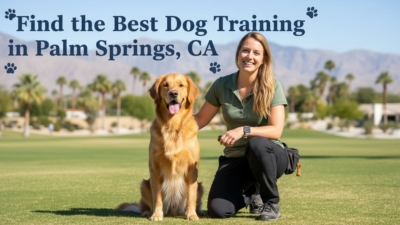
Your Complete Guide to Choosing a Dog Trainer in Palm Springs and surrounding areas
Life with a dog in Palm Springs means navigating vibrant downtown sidewalks, relaxed patio dining, and scenic trails with mountain views. Your dog needs to be comfortable in this unique environment, from staying calm amid the buzz of Palm Canyon Drive to walking politely on the busy paths of Ruth Hardy Park.
Palm Springs is located in Riverside County, and many local regulations align with county and state guidelines. Finding a dog trainer who understands the specifics of desert living and local rules can make a significant difference in your success.
How to Choose the Right Trainer
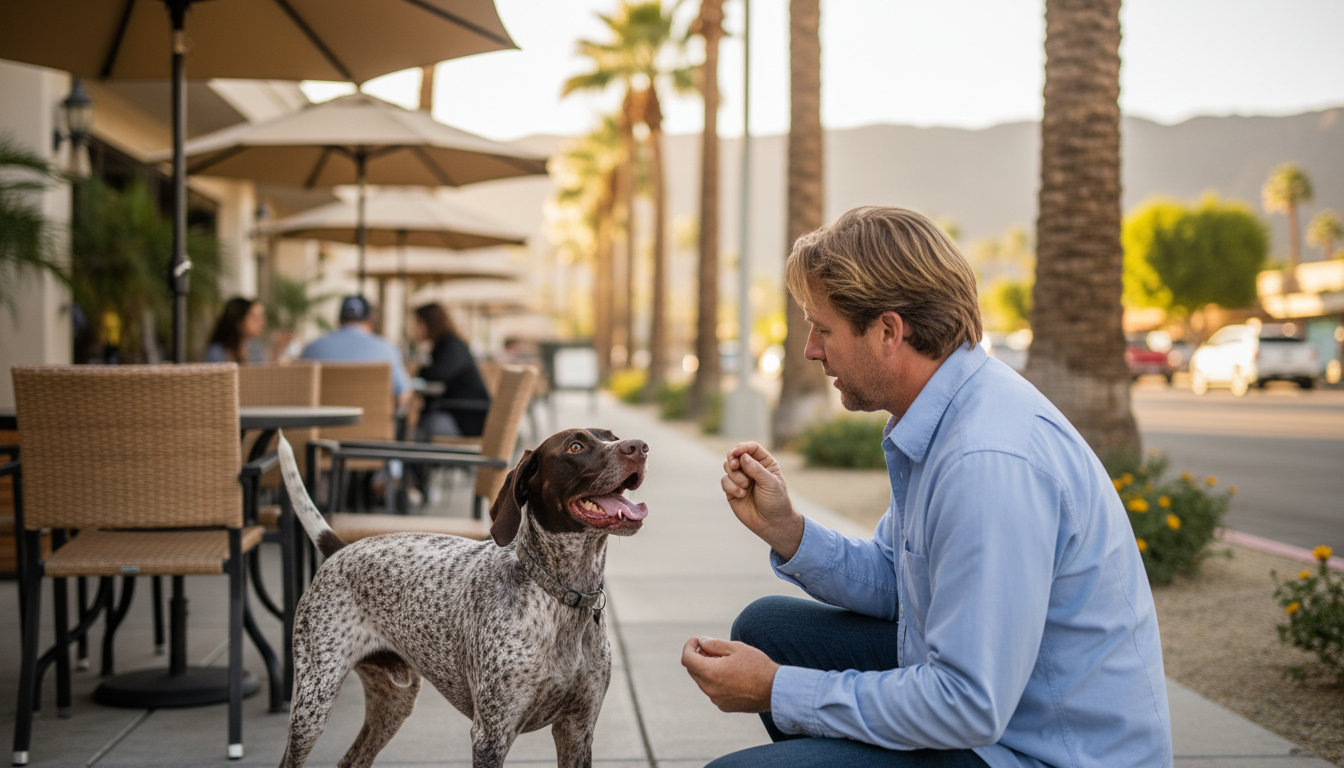
Look for a professional dog trainer who uses *positive reinforcement* training and can tailor a plan for the Palm Springs lifestyle. This includes preparing your dog for outdoor cafes, managing excitement around other dogs on hiking trails, and staying focused during busy season events.
Checking a trainer’s credentials offers insight into their education and commitment. Reputable dog trainer certifications to look for include the CPDT-KA for knowledge assessed or the IAABC-CDBC for complex behavior issues. For serious aggression or anxiety, a credential like the CBCC-KA indicates specialized skill.
In-home sessions are ideal for addressing door-dashing, household manners, and reactivity behind your own gate. Group classes provide a controlled setting to practice skills around distractions, which is great preparation for visits to the Uptown Design District or VillageFest.
Common Dog Training Methods Explained
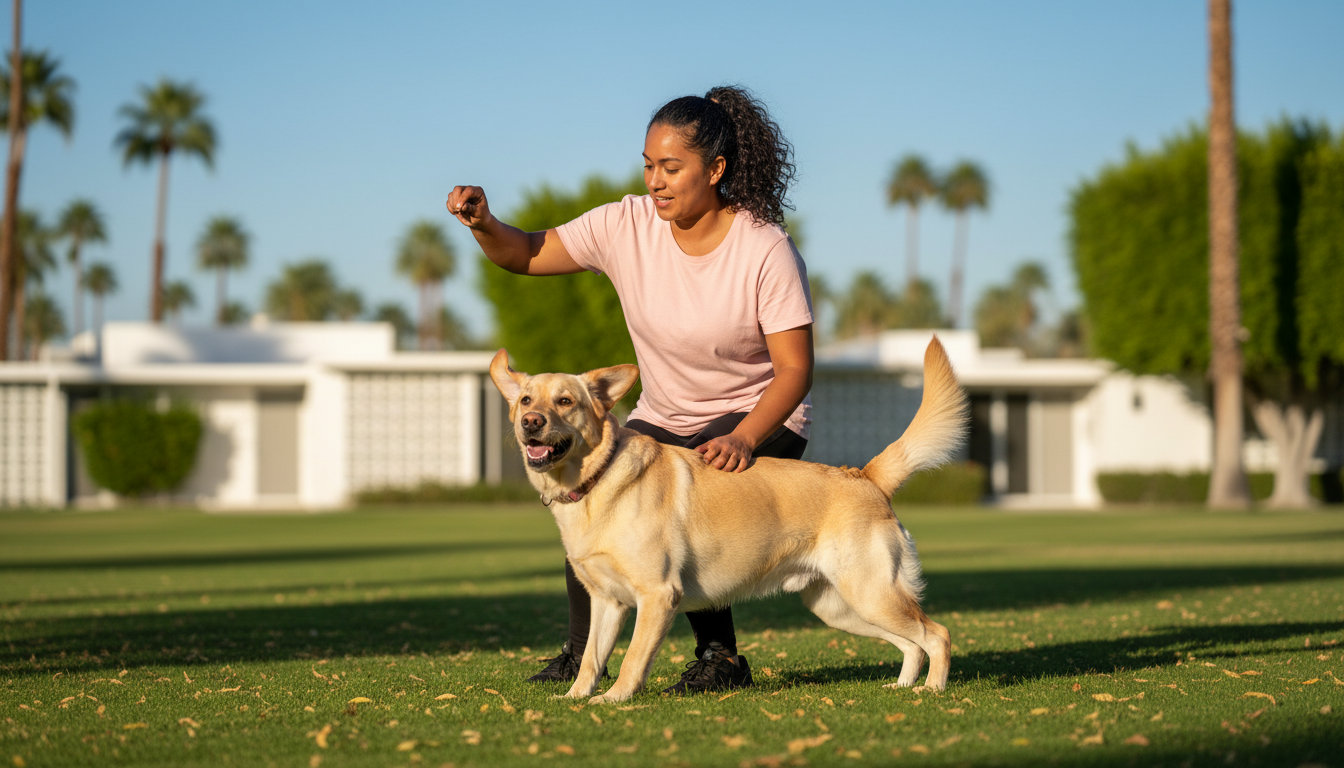
Modern, reward-based methods are effective and humane, building a strong bond while teaching your dog how to behave. These methods also help you comply with local leash and nuisance laws, keeping your community peaceful.
Basic obedience covers sit, down, stay, come, and loose-leash walking. These are the foundation for any outing, whether you’re walking through the Moorten Botanical Garden or waiting at a vet’s office.
Puppy training focuses on critical socialization, bite inhibition, potty training, and crate acclimation. Starting early in our pet-friendly city helps prevent common behavior problems from taking root.
Behavior modification addresses issues like fear, leash reactivity, or separation anxiety through structured programs. A qualified trainer will often collaborate with your veterinarian, especially for problems with a medical component.
Private lessons allow for personalized attention, while day training can accelerate learning if your schedule is busy. Group classes teach your dog to work politely around other dogs and people in a supervised setting.
Specialized programs like service dog training or therapy dog training require meticulous skill-building for public access and specific tasks. Ensure any trainer offering this has a proven, structured curriculum.
Avoid any trainer who relies on intimidation, fear, or pain to suppress behavior. These outdated methods can worsen problems, damage your relationship with your dog, and increase liability risks.
Average Cost of dog training in Palm Springs, CA (Updated for 2026)
Pricing in the Coachella Valley varies based on the trainer’s experience, session length, and service type. The following table reflects average costs for the Palm Springs and greater Riverside County area.
| Service Type | Average Cost (Palm Springs Area) |
|---|---|
| Puppy classes (6 weeks) | $175–$300 total |
| Group obedience classes (6 weeks) | $200–$350 total |
| Private lessons (60 min) | $100–$180 per session |
| In-home training packages (4-6 sessions) | $500–$1,100 total |
| Day training (per week) | $500–$1,000 |
| Behavior consultation | $175–$300 initial |
| Board and train (2-3 weeks) | $2,500–$5,500+ |
Travel fees may apply for in-home services, especially to outlying areas. Complex behavior cases typically command higher rates. Always clarify what is included in any package and ask about the trainer’s policy for measuring progress.
Questions to Ask a Potential Dog Trainer
- What is your primary training philosophy, and how do you ensure sessions are positive and stress-free?
- What professional credentials, like CPDT-KA or KPA-CTP, do you hold? Do you pursue continuing education such as CPDT-KSA?
- How will you customize a training program for my dog’s temperament and our daily life in Palm Springs?
- Do you offer in-home, group, or day training, and which do you recommend for my goals?
- How do you track progress and help us transition skills to busier public settings?
- What is the total cost, including any travel fees? What is your cancellation policy?
- Do you carry professional liability insurance, and can you provide proof?
- For behavior issues, are you willing to collaborate with my veterinarian?
- What homework will you assign between sessions to help us succeed?
Local Palm Springs Rules and Considerations
Palm Springs and Riverside County have specific ordinances designed to keep people, pets, and wildlife safe. A good trainer will help you navigate these local expectations.
Dogs must be on a leash no longer than six feet in all public areas, unless in a designated off-leash zone. This is strictly enforced on downtown streets, in parks, and on most trails.
California state law mandates rabies vaccinations for all dogs over four months old. You must keep the vaccination certificate and attach the current tag to your dog’s collar. Riverside County Animal Services provides low-cost vaccination clinics.
Excessive or continuous barking is considered a public nuisance. Training can help manage alert barking and separation anxiety, which is important for maintaining good relations with neighbors in close-knit communities.
The City of Palm Springs requires all businesses, including dog trainers, to obtain a city business license. While California does not mandate a specific “dog trainer license,” any trainer offering board and train services from a facility must comply with state kennel regulations under the California Department of Public Health.
Professional dog trainers are strongly advised to carry general liability insurance. This protects them and their clients in case of an accident. Reputable trainers will have this coverage.
Local Palm Springs Resources for Dog Owners
These locations offer excellent environments to practice your dog’s new skills in real-world settings. Always follow posted rules, clean up after your pet, and be mindful of other users.
- Palm Springs Dog Park: Located at 222 Civic Drive North, this park features separate areas for large and small dogs. It’s ideal for safe off-leash play and practicing recalls in a fenced environment.
- Ruth Hardy Park: A popular multi-use park where leashed dogs are welcome. The wide, paved paths are perfect for practicing loose-leash walking around moderate distractions like joggers and children.
- Whitewater Preserve: Managed by the Wildlands Conservancy, this stunning preserve (about 20 minutes north) allows leashed dogs on its trails. It’s a fantastic, controlled setting to proof obedience skills around flowing water and new smells.
- Riverside County Animal Services – Palm Springs Shelter: This is your local county resource for licensing information, lost and found pets, and low-cost microchipping services.
FAQs
How much does in-home dog training cost?
In Palm Springs, a single in-home session typically costs between $100 and $180. Most trainers offer discounted packages of 4 to 6 sessions, which range from $500 to $1,100 total.
Is in-home dog training worth it?
Yes, especially for addressing behaviors that happen at home. A trainer can work with you on issues like jumping on guests, counter surfing, or backyard barking right where they occur. They can also help you practice leash skills on your specific neighborhood streets.
Can you pay someone to house train your dog?
Many trainers offer puppy programs that include structured potty training plans. Day training services can also accelerate the house training process by implementing a consistent schedule and teaching your dog the desired habits.
What is the 3-3-3 rule for dog training?
This is a general guideline for a newly adopted or rehomed dog’s adjustment period. It suggests 3 days to decompress, 3 weeks to learn your routines, and 3 months to feel fully secure in their new home. Effective training respects this timeline.
How long will it take to reach my training goals?
For basic manners and puppy training, consistent practice over 6-8 weeks usually yields solid results. More complex behavior modification, like severe reactivity or anxiety, often requires a longer-term commitment of several months.
What should I bring to group classes?
Bring a well-fitting collar or harness, a 6-foot leash, high-value treats, water, and your dog’s vaccination records if required by the trainer. Avoid retractable leashes for class safety.
What’s the leash law in Palm Springs?
Palm Springs enforces a leash law. Dogs must be on a handheld leash no longer than six feet in all public spaces, except inside designated off-leash dog parks.
Do I need a dog license in Palm Springs or Riverside County?
Yes. Riverside County requires all dogs over the age of four months to be licensed. You must provide proof of a current rabies vaccination to obtain the license.
What shots does my dog need in Riverside County or California?
Rabies vaccination is legally required. Your veterinarian will also recommend core vaccines like DHPP (distemper, hepatitis, parainfluenza, parvovirus) and may suggest others like bordetella based on your dog’s exposure risk.
Are dog trainers required to be licensed in Palm Springs or Riverside County or California?
California does not have a state-level license specifically for dog trainers. However, all businesses in Palm Springs must have a city business license. Trainers who board dogs as part of a “board and train” service must operate from a licensed kennel facility.
Where can I practice off-leash recall?
The safest and only legal places are fully fenced dog parks. The Palm Springs Dog Park is the primary local option for practicing off-leash skills in a secure area.
Which dog parks allow training around Palm Springs?
The Palm Springs Dog Park is the main dedicated off-leash area. For on-leash training around distractions, the perimeter and pathways of Ruth Hardy Park are excellent public spaces.
How can I train my dog safely in the Palm Springs heat?
Always train during the cooler early morning or evening hours. Carry ample water, watch for signs of overheating (excessive panting, slowing down), and use shaded areas. Pavement can become extremely hot and burn paw pads, so check the surface temperature with your hand first.
Choosing the right trainer with a solid understanding of positive methods and local Palm Springs life will set you and your dog up for success. A well-behaved dog means more enjoyable adventures together, from sunny patio brunches to peaceful sunset walks in the shadow of the San Jacinto mountains.