Your Complete Guide to Choosing a Dog Trainer in Paris
Finding the right dog trainer in Paris, Texas, means preparing your dog for local life. Your dog needs to be a good neighbor on walks through the historic downtown district, stay calm during events at Love Civic Center, and behave politely on the trails at Pat Mayse Lake. The right training helps your dog enjoy everything Paris has to offer, from quiet neighborhoods to busy community gatherings.
Paris is located in Lamar County, and local rules blend city ordinances with county oversight. A trainer familiar with these details can tailor a program that keeps your dog safe and compliant, whether you’re living near North Main or out in the county.
How to Choose the Right Trainer
Look for a trainer whose methods align with positive reinforcement and whose experience matches your dog’s needs. For Paris residents, this often means a dog that can walk politely on a leash downtown, remain calm around farm animals or wildlife on rural property edges, and not be disturbed by the occasional train whistle.
Credentials offer a clear benchmark for a trainer’s knowledge. Recognized dog trainer certifications like the CPDT-KA or KPA-CTP indicate formal education in modern, science-based methods. For serious behavioral concerns like aggression or severe anxiety, a certification such as the CBCC-KA or IAABC-CDBC is a strong sign of specialized expertise.
Consider your lifestyle. In-home sessions are excellent for addressing specific issues like door-dashing, jumping on guests, or reactivity in your own yard. Group classes provide a controlled setting to practice manners around other dogs, a useful skill before visiting popular local spots.
Common Dog Training Methods Explained
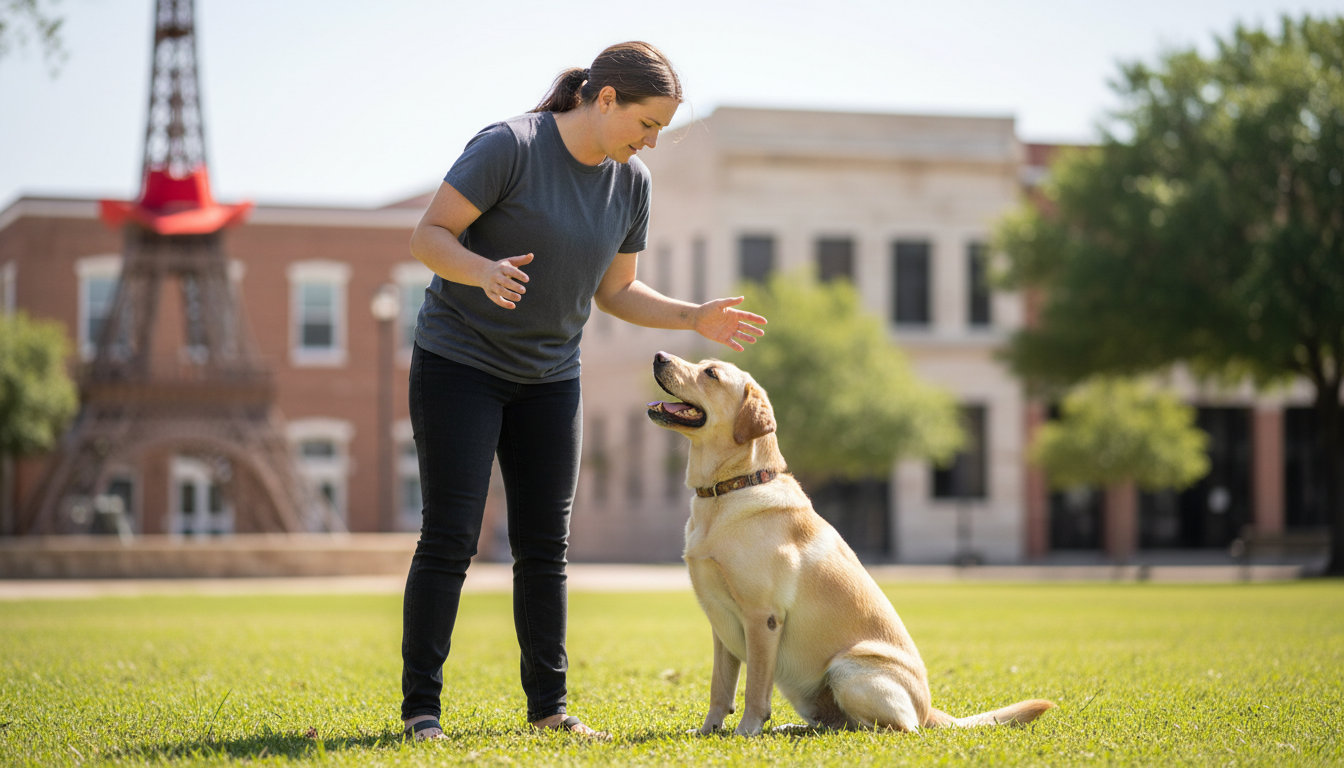
Positive reinforcement training builds a trusting relationship with your dog while effectively teaching new behaviors. It’s the most recommended approach by veterinary and behavioral professionals and aligns well with creating a well-behaved dog in a community setting.
Basic obedience forms the foundation for a polite pet. Skills like loose-leash walking, a reliable recall, sit, and stay are essential for safe outings around the Plaza and other public areas.
Puppy training focuses on critical early learning. Proper socialization, bite inhibition, crate training, and potty training set a young dog up for success in a Paris household.
Behavior modification addresses problems like fear, reactivity, or separation anxiety. This process requires patience and a carefully structured plan to change your dog’s emotional response to triggers.
Private lessons offer one-on-one attention for personalized goals. Board and train programs involve the trainer working with your dog intensively, but a strong owner-education component is crucial for maintaining results at home.
Group classes are valuable for practicing obedience and impulse control around distractions in a safe, supervised environment.
Specialized training, such as therapy dog training or service dog training, involves teaching advanced public access skills and specific tasks to meet defined standards.
Average Cost of Dog Training in Paris, TX (Updated for 2026)
Pricing in Paris and the surrounding Lamar County area is generally reflective of the regional cost of living. Costs vary based on the trainer’s experience, the type of service, and the complexity of your dog’s needs.
| Service Type | Average Cost (Paris/Lamar County Area) |
|---|---|
| Puppy Group Classes (6 weeks) | $120 – $200 total |
| Basic Obedience Group Classes (6 weeks) | $130 – $220 total |
| Private In-Home Lessons (1 hour) | $70 – $110 per session |
| Multi-Session Private Packages (4-6 lessons) | $280 – $600 total |
| Day Training (per day, trainer works your dog) | $40 – $65 per day |
| Initial Behavior Consultation | $100 – $180 |
| Board and Train Programs (2 weeks) | $1,200 – $2,500 total |
Many trainers offer a free consultation or evaluation to discuss your goals and provide a detailed quote. Always ask what is included in the price and if there are any travel fees for locations outside the city.
Questions to Ask a Potential Dog Trainer
- What is your primary training philosophy, and can you explain how you use positive reinforcement?
- What professional credentials or continuing education do you have, such as a CPDT-KSA?
- Have you worked with dogs with challenges similar to mine, especially in rural or semi-rural settings common around Paris?
- What does a typical training program look like, and how do you track progress?
- Do you offer in-home sessions, group classes, or both, and which do you recommend for my situation?
- What are your rates, and what is your cancellation policy?
- Do you carry professional liability insurance?
- For behavior issues, are you willing to collaborate with my veterinarian?
Local Paris Rules and Considerations
Understanding local regulations helps you be a responsible dog owner and informs the skills your dog needs to learn.
Dogs must be kept on a leash and under the owner’s control when off private property. This is strictly enforced in city parks and public spaces. A solid recall is vital for safety, but legally, the leash is required.
Texas state law and local ordinances require all dogs and cats to be vaccinated against rabies by a licensed veterinarian. The rabies tag must be worn on the animal’s collar.
Excessive or continuous barking that disturbs neighbors can be considered a noise nuisance. Training can help manage alert barking and other vocal behaviors.
The State of Texas does not require a specific license to operate as a dog trainer. However, trainers operating a business within the City of Paris must obtain a general business license. Professional liability insurance is a critical standard for any reputable trainer to protect both themselves and their clients.
Local Paris Resources for Dog Owners
These locations provide excellent settings to practice your dog’s training in real-world environments. Always ensure your dog is under control and follow all posted rules.
- Bywaters Park: A popular community park where leashed dogs are welcome. It’s a good spot for practicing loose-leash walking with distractions like kids playing and people fishing.
- Lamar County Dog Park: Located at 2215 Bonham Street, this fenced park offers separate areas for large and small dogs. It’s ideal for practicing off-leash recalls and supervised socialization during non-peak hours.
- Pat Mayse Lake: Managed by the U.S. Army Corps of Engineers, the lake’s recreational areas and trails are great for leashed hiking and building your dog’s focus in nature.
- Trail de Paris: This paved trail system is perfect for building endurance and polite leash manners on longer walks.
- Lamar County Humane Association: A local resource for adoption, low-cost microchipping clinics, and general pet welfare information.
FAQs
How much does in-home dog training cost?
In the Paris area, a single in-home training session typically costs between $70 and $110. Most trainers offer discounted packages for multiple sessions, which brings the average cost per visit down.
Is in-home dog training worth it?
Yes, especially for addressing behaviors that are specific to your home environment. An in-home trainer can work on issues like counter-surfing, door etiquette, and interactions with other family pets right where they happen. They can also help you practice leash skills on your own street.
Can you pay someone to house train your dog?
Many trainers include potty training as a core part of their puppy training programs. For adult dogs, they can create a structured schedule and routine to successfully house train them, teaching you how to maintain it.
What is the 3-3-3 rule for dog training?
This is a guideline for adopted dogs. It suggests it takes about 3 days to decompress from the shelter, 3 weeks to learn your routines, and 3 months to feel fully at home. A good trainer will work with this adjustment period.
How long will it take to reach my training goals?
For basic obedience with a motivated dog, you can see significant progress in 4-6 weeks with consistent practice. More complex behavior modification for issues like reactivity or fear often requires a commitment of several months.
What should I bring to group classes?
Bring a standard 6-foot leash (not retractable), a well-fitted collar or harness, high-value treats, and your dog’s vaccination records if required by the trainer. Bring your patience and a willingness to learn.
What’s the leash law in Paris?
Dogs must be on a leash and under the owner’s control whenever they are off the owner’s private property. This applies to all public streets, sidewalks, and parks within the city.
Do I need a dog license in Paris or Lamar County?
The City of Paris does not issue a general pet license. However, you are required by state and local law to keep your dog’s rabies vaccination current and the tag securely attached to its collar.
What shots does my dog need in Lamar County or Texas?
Rabies vaccination is legally mandatory. Your veterinarian will also recommend a core vaccine series (like DHPP) and may suggest others, such as bordetella or leptospirosis, based on your dog’s risk factors and lifestyle.
Are dog trainers required to be licensed in Paris or Lamar County or Texas?
Texas does not have a state-level license for dog trainers. Trainers must comply with standard business registration requirements in the city. Those offering board and train services from a facility may need to meet county or state kennel regulations.
Where can I practice off-leash recall?
The Lamar County Dog Park is the primary designated, fenced area for safe off-leash practice. Always ensure your dog has reliable basic recall before attempting off-leash work in any unfenced area.
Which dog parks allow training around Paris?
The Lamar County Dog Park is the dedicated public facility. Practicing commands during quieter times is acceptable as long as you are mindful of other park users and their dogs.
What trails allow dogs for training?
The Trail de Paris is a multi-use paved trail where leashed dogs are welcome for long walks. The trails around Pat Mayse Lake also permit leashed dogs, offering excellent natural distractions for training focus.