
Your Complete Guide to Choosing a Dog Trainer in Richmond
Living in Richmond means enjoying a mix of quiet neighborhoods and access to bustling areas like the Historic District and Sugar Land. Your dog needs to be a good neighbor, able to walk calmly on the Brazos River Levee Trail and behave politely at outdoor spots like the Richmond Town Square. Finding a professional dog trainer who understands the specific rhythm of life here in Fort Bend County can make all the difference.
Local rules here focus on safety and being a considerate pet owner. A good trainer will help you meet these community standards while building a stronger bond with your dog. This guide covers what you need to know to find the right help for your dog in Richmond and surrounding areas.
How to Choose the Right Trainer
Start by looking for a trainer whose methods align with modern, science-based practices. The best dog trainers in Richmond use positive reinforcement to build confidence and reliable behaviors. They should offer a clear training program tailored to your dog’s age, temperament, and your specific goals, whether that’s basic obedience for a new puppy or behavior modification for an older dog with anxiety.
Credentials are a strong indicator of a trainer’s commitment to their craft. Look for professionals who hold certifications like the CPDT-KA or KPA-CTP. For serious issues like aggression or severe separation anxiety, a certification such as the CBCC-KA or IAABC-CDBC shows specialized knowledge. Many offer a free consultation to discuss your needs.
Consider the format that fits your life. In-home dog training is excellent for addressing specific household issues. Group classes are great for socialization and practicing skills around distractions. For busy households, day training or board and train programs might be a solution, but require careful vetting.
Common Dog Training Methods Explained
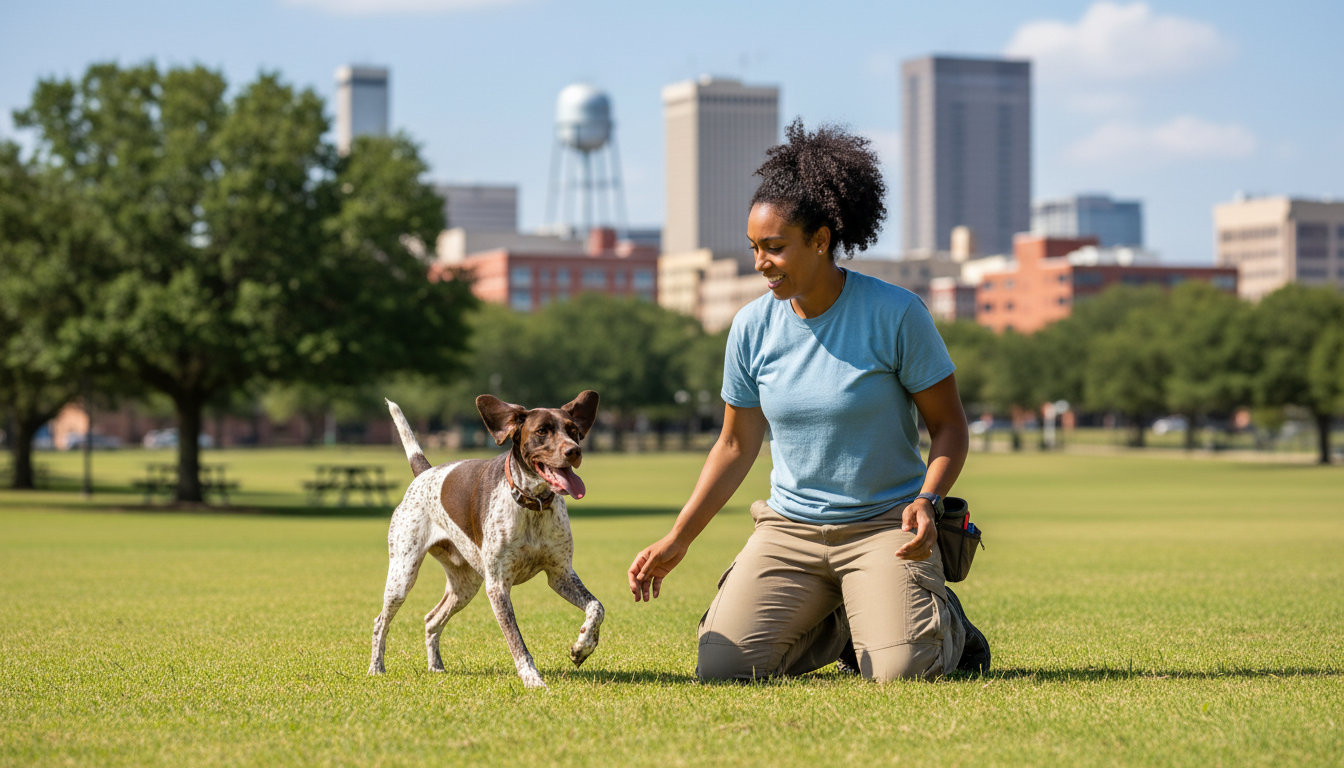
Humane, reward-based training is the most effective and ethical path to a well-behaved dog. These methods focus on teaching your dog what to do, rather than punishing what not to do. This builds trust and is especially important for complying with local leash and noise ordinances.
Puppy training is foundational. It goes beyond simple potty training to include vital socialization, bite inhibition, and crate training. Starting early prevents future problems and sets your puppy up for success in Fort Bend County’s community spaces.
Basic obedience covers essential skills like sit, stay, come, and loose-leash walking. A solid recall is non-negotiable for safety, especially in areas near busy roads or shared pathways.
Behavior modification addresses issues like fear, reactivity, or resource guarding. This requires a careful, structured approach, often involving desensitization. For complex cases, the best trainers will collaborate with your veterinarian.
Specialized training, like service dog training or therapy dog training, involves teaching specific tasks or public access manners. These require a trainer with proven experience in these advanced disciplines.
Average Cost of Dog Training in Richmond, TX (Updated for 2026)
Pricing in Richmond and the wider Fort Bend County area varies based on the trainer’s experience, the type of service, and the complexity of your dog’s needs. The following table reflects current local averages for dog training services.
| Service Type | Average Cost in Richmond/Fort Bend County |
|---|---|
| Puppy Classes (6-week session) | $160 – $300 |
| Group Obedience Classes (6-week session) | $175 – $325 |
| Private Lessons (60-minute session) | $90 – $150 |
| In-Home Training Package (4-6 sessions) | $400 – $850 |
| Day Training (per week) | $450 – $800 |
| Behavior Consultation (initial) | $140 – $225 |
| Board and Train (2-3 weeks) | $1,800 – $3,500 |
Packages often provide better value than single sessions. Always ask what is included, the trainer’s philosophy, and their policy for measuring progress.
Questions to Ask a Potential Dog Trainer
- What is your primary training methodology, and how do you use positive reinforcement?
- What professional dog trainer certifications, like CPDT-KA, do you hold, and how do you pursue continuing education?
- Can you create a customized training plan for my dog’s specific challenges and our Richmond lifestyle?
- Do you offer private lessons, group classes, or board and train, and which do you recommend for my goals?
- How do you handle cases involving fear, reactivity, or separation anxiety?
- What are your total fees, and what is your cancellation policy?
- Do you carry professional liability insurance?
- Will you collaborate with my veterinarian if needed for behavior modification plans?
Local Richmond Rules and Considerations
Richmond’s ordinances, consistent with Fort Bend County, are designed to keep pets and people safe. A good trainer will help you navigate these rules seamlessly.
Dogs must be on a leash no longer than six feet and under control when not on the owner’s private property. This applies to all city parks, trails, and sidewalks. A reliable loose-leash walk is one of the most practical skills you can teach.
Texas state law and local ordinances require all dogs to have a current rabies vaccination administered by a licensed veterinarian. Keep the rabies tag on your dog’s collar at all times.
Excessive or continuous barking that disturbs the peace is considered a nuisance. Training can help manage alert barking and anxiety-related vocalization before it becomes a neighborhood issue.
Texas does not require a specific state license to operate as a dog trainer. However, all businesses in Richmond must have a general business license. Reputable professional dog trainers should also carry liability insurance to protect themselves and their clients.
Local Richmond Resources for Dog Owners
These local spots provide excellent environments to practice your training in real-world settings. Always follow posted rules and practice good etiquette.
- Brazos River Levee Trail: A great on-leash location for practicing loose-leash walking and focus around cyclists, joggers, and wildlife.
- University of Houston Sugar Land Dog Park: Located just south in Sugar Land, this fenced park offers separate areas for large and small dogs to practice off-leash recalls and social skills.
- Fort Bend County Barker Park: A nearby county park in Simonton with open spaces for long-line training and leashed walks in a less crowded environment.
- Richmond Dog Park at Exchange Park: A community off-leash area to work on play skills and recall in a controlled, fenced setting.
FAQs
How much does in-home dog training cost?
In the Richmond area, a single in-home session typically costs between $90 and $150. Most trainers offer packages of 4 to 6 sessions, which range from $400 to $850 and provide a more comprehensive training program.
Is in-home dog training worth it?
Yes, for many situations. In-home training allows a professional dog trainer to address behaviors exactly where they happen—like jumping on guests, door-dashing, or reactivity in your own yard. They can then help you generalize those skills to your immediate neighborhood.
Can you pay someone to house train your dog?
Yes. Many trainers include potty training as a core part of their puppy training programs. Some day training or board and train services can also establish a consistent routine, but the owner must be prepared to maintain and reinforce that training consistently.
What is the 3-3-3 rule for dog training?
This is a guideline for adopted dogs. It suggests it takes about 3 days to decompress, 3 weeks to learn routines, and 3 months to feel at home. A good trainer will design a plan that respects this adjustment period.
How long will it take to reach my training goals?
For basic obedience with a motivated dog, you may see solid results in 6-8 weeks of consistent practice. Behavior modification for issues like reactivity or fear often requires a longer-term commitment of several months to ensure lasting change.
What should I bring to group classes?
Bring a standard 6-foot leash, a well-fitted collar or harness, high-value treats, and your dog’s vaccination records. Avoid retractable leashes for the safety of all participants.
What’s the leash law in Richmond?
Richmond requires dogs to be on a leash no longer than six feet and under the owner’s control in all public areas. The only exceptions are within designated, enclosed dog parks.
Do I need a dog license in Richmond or Fort Bend County?
Fort Bend County does not issue a general pet license. However, Texas state law requires a current rabies vaccination, and you must keep the official rabies tag on your dog‘s collar.
What shots does my dog need in Fort Bend County or Texas?
Rabies vaccination is legally required. Your veterinarian will also recommend a core vaccine series (DHPP) and may suggest others like bordetella or leptospirosis based on your dog’s risk factors.
Are dog trainers required to be licensed in Richmond or Fort Bend County or Texas?
Texas does not have a state-level licensing requirement for dog trainers. They must operate as a legal business within the city and county. Trainers offering board and train services from a facility may need to comply with state kennel regulations.
Where can I practice off-leash recall?
The safest places are fully fenced dog parks, such as the Richmond Dog Park at Exchange Park or the University of Houston Sugar Land Dog Park. Practice during off-peak hours for fewer distractions.
Which dog parks allow training around Richmond?
The Richmond Dog Park at Exchange Park is the primary local option. The University of Houston Sugar Land Dog Park is also a popular nearby choice for off-leash training and socialization.
What beaches or trails allow dogs for training?
While there are no beaches nearby, the Brazos River Levee Trail is an excellent on-leash trail for building focus and impulse control around natural distractions. Always keep your dog leashed as required.