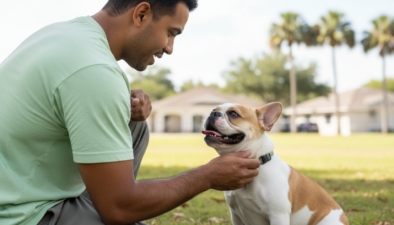
Your Complete Guide to Choosing a Dog Trainer in Rolling Hills Estates and Surrounding Areas
Life with a dog in Rolling Hills Estates means enjoying quiet, hilly streets, neighborhood walks with scenic views, and easy trips to the Palos Verdes Peninsula trails. A well-trained dog is essential for respecting the community’s peaceful atmosphere and navigating local green spaces safely. Finding a professional dog trainer who understands your local environment can make all the difference.
The city falls under Los Angeles County regulations, which include specific animal control ordinances. A trainer familiar with these rules can help you ensure your dog is not only well-behaved at home but also a good citizen in public spaces.
How to Choose the Right Trainer
Look for a trainer whose philosophy aligns with creating a confident, well-behaved dog through *positive reinforcement* training. Your dog should learn to walk politely on leash along the winding roads of the Peninsula, remain calm during visits to the local shopping centers, and respond reliably even with distractions.
Checking a trainer’s credentials is a smart way to gauge their education and commitment. Recognized dog trainer certifications include KPA-CTP or CPDT-KA. For serious behavioral concerns, look for specialists with credentials like CBCC-KA or IAABC-CDBC.
In-home sessions are ideal for addressing specific household behaviors, while group classes provide valuable practice around other dogs before heading to busier areas.
Common Dog Training Methods Explained
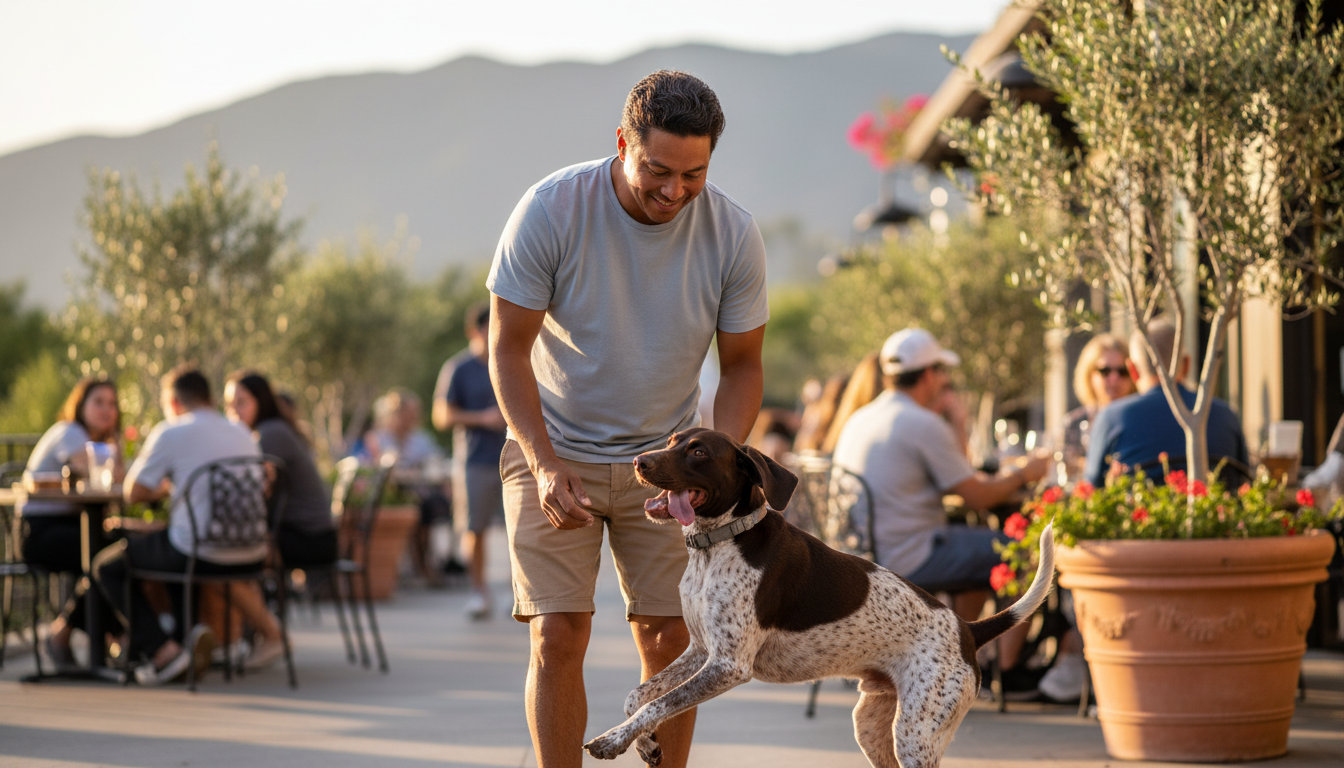
Modern, reward-based methods are effective and build a strong bond with your dog. They help you meet local expectations for controlled pets in shared spaces.
Basic obedience training**** covers sit, stay, come, and loose-leash walking. These skills are the foundation for stress-free outings in your community.
Puppy training focuses on critical socialization, potty training, bite inhibition, and crate training. Starting early in the Palos Verdes area helps prevent future issues.
Behavior modification addresses problems like reactivity, fear, or separation anxiety through careful, structured plans. For complex cases, a trainer should be willing to collaborate with your veterinarian.
Private lessons offer personalized attention for your dog’s unique needs. Group classes help proof behaviors around distractions in a controlled setting. Board and train programs can provide an intensive jumpstart, but ensuring the facility uses humane methods is crucial.
Avoid any trainer who relies on fear, intimidation, or pain to suppress behavior. These outdated methods can worsen problems and damage your dog’s trust.
Average Cost of dog training in Rolling Hills Estates, CA (Updated for 2026)
Pricing in Rolling Hills Estates and the greater South Bay area of Los Angeles County reflects the local cost of living and a trainer’s expertise. Costs are generally higher than national averages.
| Service Type | Average Cost (Rolling Hills Estates / South Bay) |
|---|---|
| Puppy classes (6 weeks) | $200–$350 total |
| Group obedience classes (6 weeks) | $220–$400 total |
| Private lessons (60 min) | $120–$220 per session |
| In-home training packages (4-6 sessions) | $500–$1,200 total |
| Day training (per week) | $600–$1,200 |
| Behavior consultation | $175–$300 initial |
| Board and train (2-3 weeks) | $2,500–$6,000+ total |
Many trainers serving the Peninsula may charge a travel fee. Always clarify what is included in a package and the trainer’s policy for measuring progress.
Questions to Ask a Potential Dog Trainer
- What is your primary training philosophy, and how do you ensure sessions are positive?
- What professional certifications, like CPDT-KA, do you hold, and how do you pursue continuing education such as CPDT-KSA?
- Can you create a customized plan for my dog’s needs and my lifestyle in Rolling Hills Estates?
- Do you offer in-home, group, or day training, and which do you recommend for my goals?
- How do you track progress and communicate between sessions?
- What is the total cost, including any travel fees, and what is your cancellation policy?
- Do you carry professional liability insurance?
- For behavior issues, will you coordinate with my veterinarian if needed?
Local Rolling Hills Estates Rules and Considerations
Rolling Hills Estates has local ordinances in addition to Los Angeles County’s animal control laws. Understanding these helps you be a responsible neighbor.
Dogs must be on a leash not exceeding six feet in length in all public areas, unless in a designated off-leash zone. This is strictly enforced on trails and in parks.
California state law and Los Angeles County ordinance require all dogs over four months old to be vaccinated against rabies and to wear the license tag. County-level data shows this is a core requirement.
Excessive or continuous barking that disturbs neighbors is considered a nuisance. Addressing alert barking and separation anxiety with a trainer can prevent complaints.
While California doesn’t license dog trainers specifically, businesses operating in Rolling Hills Estates must have a city business license. Trainers offering board and train services must comply with state kennel regulations under the California Department of Food and Agriculture.
Professional dog trainers are strongly advised to carry general liability insurance. Many public spaces require proof of insurance for commercial use permits.
Local Rolling Hills Estates Resources for Dog Owners
These local spots are excellent for practicing training in real-world settings. Always follow posted rules and practice good etiquette.
- South Coast Botanic Garden: Dogs are welcome on leash one weekend per month (typically the third weekend). It’s a fantastic, controlled environment for practicing focus around novel sights and smells.
- George F Canyon Preserve: Leashed dogs are allowed on the trails. It’s a great place to work on calm leash walking in a natural setting with mild distractions.
- Polliwog Park (Manhattan Beach): A short drive away, this popular park has large open spaces on leash, perfect for practicing obedience and recalls on a long line during off-peak hours.
- Del Cerro Park: Located nearby, this park offers leashed trail access with beautiful views, suitable for building duration and focus during walks.
- Los Serenos Nature Preserve: Another nearby option for leashed hikes, providing a quiet setting for training around mild wildlife distractions.
FAQs
How much does in-home dog training cost?
In the Rolling Hills Estates area, a single in-home session typically costs between $120 and $220. Most trainers offer package discounts for booking multiple sessions at once.
Is in-home dog training worth it?
Yes, especially for addressing behaviors that occur in your specific home and neighborhood. A trainer can help with door-dashing, jumping on guests, backyard reactivity, and leash skills on your actual street.
Can you pay someone to house train your dog?
Many trainers offer puppy programs that include structured potty training plans. Some day training services can also implement a consistent schedule to accelerate the house-training process.
What is the 3-3-3 rule for dog training?
It’s a guideline for a newly adopted dog’s adjustment: 3 days to decompress, 3 weeks to learn routines, and 3 months to feel at home. A good training plan respects this timeline.
How long will it take to reach my training goals?
For basic obedience and manners, consistent practice over 6-8 weeks usually shows solid results. Behavior modification for fear or reactivity often requires a longer-term commitment of several months.
What should I bring to group classes?
Bring a flat collar or harness, a 6-foot non-retractable leash, high-value treats, and your dog’s vaccination records. Ask your trainer about specific requirements.
What’s the leash law in Rolling Hills Estates?
Dogs must be kept on a leash not longer than six feet in all public places. The only exception is within the confines of a designated, enclosed dog park.
Do I need a dog license in Rolling Hills Estates or county?
Yes. Los Angeles County requires all dogs to be licensed. You must provide proof of a current rabies vaccination to obtain the license tag, which must be worn by your dog.
What shots does my dog need in county or CA?
Rabies vaccination is legally required in California. Your veterinarian will also recommend core vaccines (DHPP) and others like bordetella based on your dog’s risk factors. County-level data emphasizes rabies compliance.
Are dog trainers required to be licensed in Rolling Hills Estates or county or CA?
California does not have a specific state license for dog trainers. However, trainers must have a general business license from the city they operate in. Facilities that board dogs require a kennel license from the state.
Where can I practice off-leash recall?
The safest legal option is a fully fenced private yard. For public practice, use a 30-foot long line in permitted open spaces like Polliwog Park during quiet times, before transitioning to a fully fenced dog park.
Which dog parks allow training around Rolling Hills Estates?
While Rolling Hills Estates itself does not have a public dog park, nearby options include the Redondo Beach Dog Park and Hermosa Beach Dog Park. These fenced areas are suitable for practicing off-leash commands during less crowded hours.
What beaches or trails allow dogs for training?
Dogs are prohibited on most beaches in the immediate Palos Verdes area. For leashed trail training, the preserves listed above (George F Canyon, Los Serenos) are your best local options. Always check for current access rules.