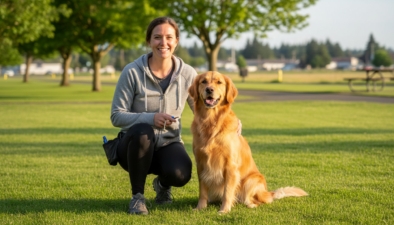
Your Complete Guide to Choosing a Dog Trainer in Scio and Surrounding Areas
Living with a dog in the heart of the Willamette Valley means enjoying life between the river and the foothills. Your daily routine might involve walks along country roads, visits to the Scio Covered Bridge, or trips to nearby Albany. A well-trained dog makes these experiences safe and enjoyable for everyone, from staying calm around farm equipment to having good manners at local events.
As part of Linn County, Scio follows both town and county regulations. Understanding these local rules helps you and your trainer set the right goals for your dog’s behavior at home and in the community.
How to Choose the Right Trainer
Start by looking for a professional dog trainer who uses positive reinforcement methods. Your dog needs to learn skills that fit the Scio lifestyle, like walking politely on a leash without pulling toward livestock, staying calm during windy weather that rattles fences, and being comfortable with visitors at your home.
Credentials are a helpful way to gauge a trainer’s education. Look for someone with reputable dog trainer certifications such as CPDT-KA or KPA-CTP. For serious behavior issues like fear or aggression, a certification like IAABC-CDBC indicates specialized knowledge.
In-home training sessions are excellent for addressing real-life challenges on your property, from door-dashing to barking at delivery trucks. Group classes provide a controlled setting to practice around other dogs, which is great preparation for busier places like Albany’s parks.
Common Dog Training Methods Explained
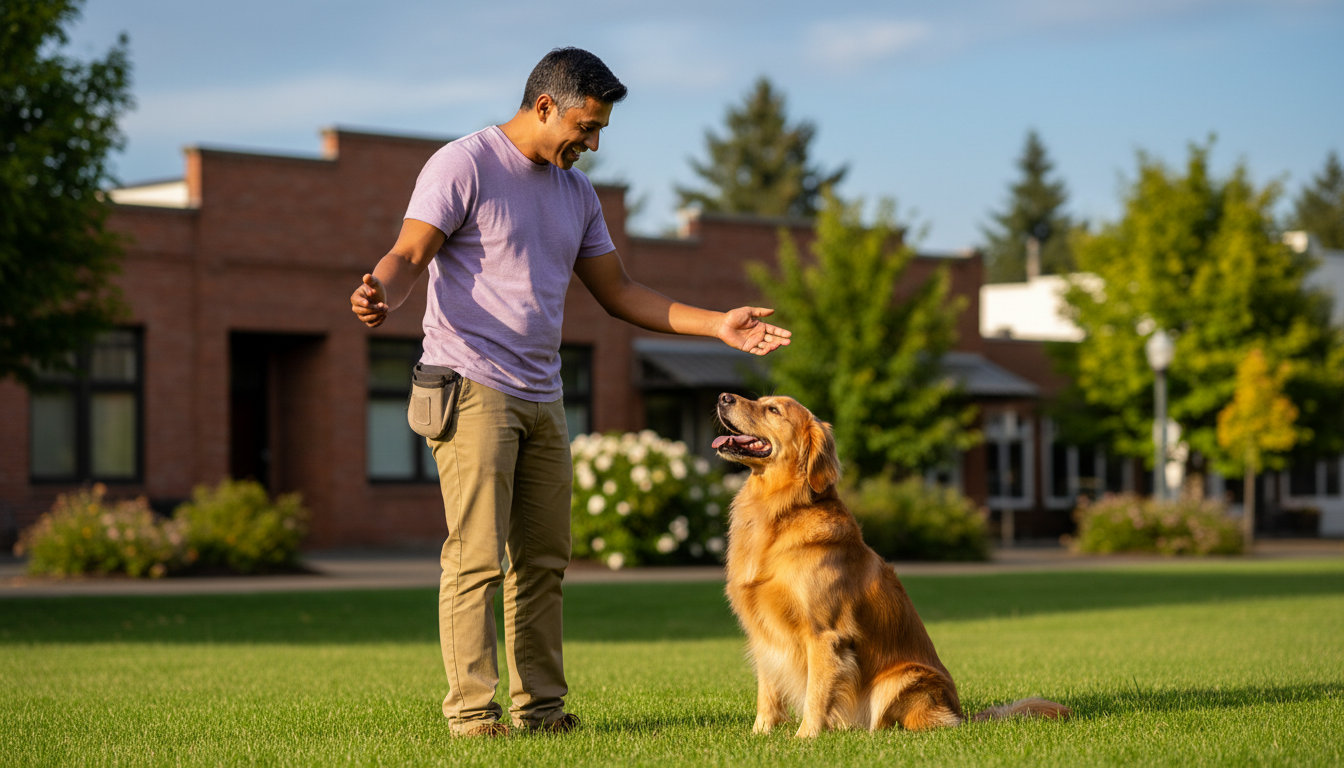
Modern, reward-based training builds a strong bond and reliable behavior. This approach aligns well with local expectations for quiet, controlled pets in a close-knit community.
Basic obedience training**** covers sit, down, stay, come, and loose-leash walking. These are the foundation for safe walks in town or on the many rural trails nearby.
Puppy training focuses on critical early lessons: socialization to novel sights and sounds, potty training, bite inhibition, and crate comfort. Starting early prevents problems before they become habits.
Behavior modification addresses issues like reactivity toward other animals, separation anxiety, or resource guarding. This process requires patience and a tailored plan, often created in partnership with your veterinarian.
Private lessons offer one-on-one attention for specific goals. Day training programs can accelerate learning if your schedule is busy. Group classes teach your dog to listen even with distractions, an essential skill for any public outing.
Specialized training paths include service dog training or therapy dog training, which require advanced skills and public access manners.
Avoid any trainer who uses harsh corrections or intimidation. These outdated methods can worsen fear and aggression, creating more problems for you and your neighbors.
Average Cost of Dog Training in Scio, OR (Updated for 2026)
Pricing in Linn County and the greater Willamette Valley is generally moderate. Costs depend on the trainer’s experience, the program length, and travel distance to your location.
| Service Type | Average Cost (Linn County Area) |
|---|---|
| Puppy Class (6 weeks) | $120–$200 total |
| Group Obedience Class (6 weeks) | $140–$250 total |
| Private Lesson (1 hour) | $80–$140 per session |
| In-Home Training Package (4-6 sessions) | $350–$750 total |
| Day Training (per week) | $400–$800 |
| Behavior Consultation | $120–$200 initial |
| Board and Train (2 weeks) | $1,500–$3,000 total |
Many trainers serving Scio may charge a small travel fee. Always ask what is included in the price and their policy for rescheduling sessions.
Questions to Ask a Potential Dog Trainer
- What is your primary training philosophy, and how do you use positive reinforcement?
- What professional certifications, like CPDT-KA, do you hold, and how do you continue your education?
- Can you create a custom training program for my dog’s needs and my rural/community lifestyle?
- Do you offer in-home sessions, group classes, or both? Which do you recommend for my goals?
- How will we track progress, and what is expected of me between sessions?
- What are your total fees, including any travel charges? What is your cancellation policy?
- Do you carry professional liability insurance?
- For behavior issues, are you willing to collaborate with my veterinarian?
Local Scio Rules and Considerations
Scio and Linn County have regulations designed to keep pets, people, and livestock safe. A good trainer will help you meet these standards.
Dogs must be under control at all times. While Scio doesn’t have a specific “leash law” ordinance, Linn County Code requires that dogs not run at large. This means if your dog is off your property, it must be leashed or under direct voice control. A reliable recall is not just convenient; it’s a legal safety measure.
Oregon state law requires all dogs to be vaccinated for rabies by a licensed veterinarian. A metal rabies tag must be attached to the dog’s collar. Your vet will provide the tag and a certificate.
Excessive barking that disturbs neighbors can be considered a nuisance under county ordinances. Training can help manage alert barking, which is important in quiet, rural neighborhoods.
Oregon does not require a specific state license to operate as a dog trainer. However, any reputable professional should operate as a licensed business in Linn County and carry liability insurance. There are no extra county-level certifications required solely for training.
Local Scio Resources for Dog Owners
These local spots provide excellent environments to practice training in real-world settings. Always follow posted rules and practice good etiquette.
- Takena Landing Park (Albany): A large, popular riverfront park with paved paths. Ideal for practicing focused leash walks with distractions like bikes, people, and other dogs. Dogs must be leashed.
- Waverly Lake Park (Albany): Features a walking loop around a lake. A good step-up for practicing longer “stay” and “heel” commands in a slightly busier setting.
- Willamette Valley Scenic Bikeway: The sections near Scio offer miles of relatively quiet roadside paths for building endurance on leash walks.
- Linn County Animal Services: Provides county-wide animal control, licensing information, and resources for lost pets. It’s a key resource for understanding local laws.
FAQs
How much does in-home dog training cost?
In the Scio area, most trainers charge between $80 and $140 for a one-hour in-home private lesson. Multi-session packages typically offer a lower per-session rate.
Is in-home dog training worth it?
Yes, especially for issues specific to your home environment. A trainer can help with behaviors like barking at farm animals across the fence, jumping on guests at the door, or bolting out of open garage doors, right where they happen.
Can you pay someone to house train your dog?
Many trainers offer puppy programs that include a detailed potty training plan. Some day training services can also implement the schedule for you, accelerating the process while teaching you how to maintain it.
What is the 3-3-3 rule for dog training?
This is a guideline for a newly adopted dog’s adjustment: 3 days to decompress, 3 weeks to learn routines, and 3 months to feel at home. A good trainer will work with this timeline.
How long will it take to reach my training goals?
For basic obedience and puppy manners, consistent practice over 4-8 weeks usually shows strong results. More complex behavior modification for fear or reactivity often requires a commitment of several months.
What should I bring to group classes?
Bring a standard 6-foot leash, a well-fitting collar or harness, high-value treats, and your dog’s vaccination records. Avoid retractable leashes.
What’s the leash law in Scio?
Scio follows Linn County code, which prohibits dogs from running “at large.” For safety and legal compliance, your dog should be on a leash or under immediate voice control whenever off your property.
Do I need a dog license in Scio or Linn County?
Linn County does not require a general pet license. However, you must have proof of a current rabies vaccination and the rabies tag must be on your dog’s collar at all times, as per Oregon law.
What shots does my dog need in Oregon?
Rabies vaccination is legally required. Your veterinarian will also strongly recommend core vaccines for distemper, parvovirus, and adenovirus. Bordetella may be recommended if your dog will be in group classes or boarding.
Are dog trainers required to be licensed in Oregon?
No, the state does not issue a specific dog trainer license. Trainers should have a local business license in their city or county and are strongly advised to carry liability insurance.
Where can I practice off-leash recall?
Your own securely fenced property is the best and only legal place for consistent off-leash work in the Scio area. Always ensure fences are livestock-proof if you have nearby farms.
Which dog parks allow training around Scio?
There are no public dedicated dog parks within Scio city limits. The nearest designated off-leash areas are in Albany or Salem, such as Bryant Park’s off-leash area in Albany. These can be useful for advanced recall practice in a fenced setting.
What trails allow dogs for training?
The many rural trails and country roads around Scio are perfect for leash training. The paved paths along the Willamette River in Albany, like at Takena Landing, are also excellent for practicing around more distractions while leashed.
Finding the right dog trainer in Scio means partnering with someone who understands both effective, humane methods and the specific context of life in Linn County. With consistent, positive training, your dog can become a confident and well-mannered companion for all your Valley adventures.