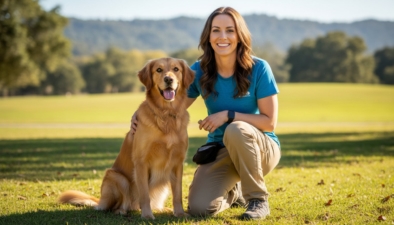
Your Complete Guide to Choosing a Dog Trainer in Smartsville and surrounding areas
Life with a dog in Smartsville offers a unique blend of rural tranquility and access to the wider Yuba County community. Your daily routines might include walks along country roads, visits to the nearby Englebright Lake, or trips into Marysville for supplies. A professional dog trainer can help your dog navigate this environment safely, whether that means ignoring wildlife, walking politely on a leash past farm equipment, or staying calm during errands.
Yuba County provides the framework for most local animal regulations. A trainer familiar with these area-specific considerations can create a more effective training program for your lifestyle, ensuring your dog is not only well-behaved at home but also a good neighbor in the community.
How to Choose the Right Trainer
Look for a trainer whose philosophy aligns with creating a confident, trusting relationship with your dog. In a small community like Smartsville, a trainer who understands local dynamics can be invaluable. They should help you build skills for managing your dog around loose livestock, on quiet country walks, and during occasional encounters with other dogs.
Checking a trainer’s credentials is a smart way to gauge their education and commitment. Look for certifications from reputable organizations, such as the CPDT-KA for knowledge-assessed professionals or the KPA-CTP for graduates of a hands-on curriculum. For serious behavior issues, a certification like the IAABC-CDBC indicates specialized knowledge in behavior consulting.
For many Smartsville residents, in-home sessions are highly effective, addressing behaviors right where they happen. Group classes may require travel to larger nearby towns but are excellent for proofing skills around distractions.
Common Dog Training Methods Explained
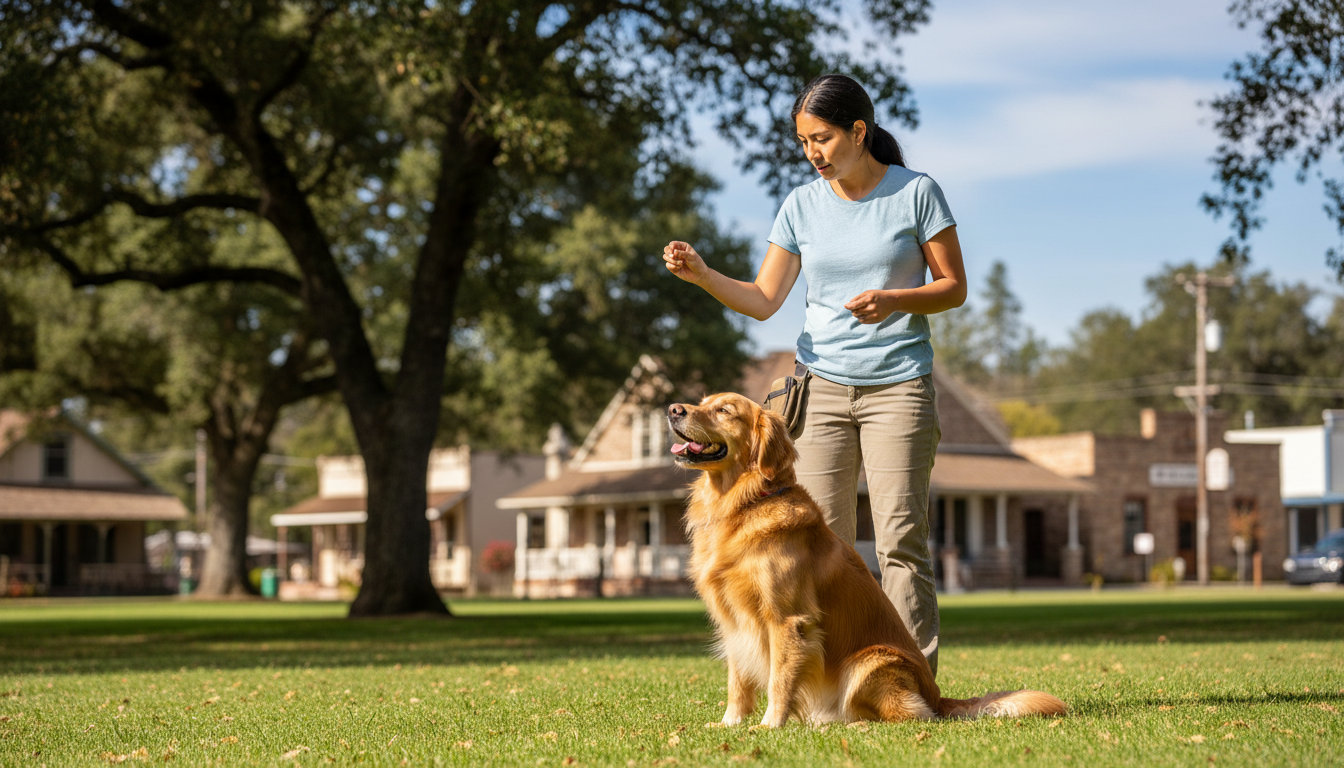
Modern, reward-based training methods are the standard for ethical professionals. These methods use what your dog finds rewarding to teach new behaviors and change emotional responses. This approach is not only kinder but also highly effective for creating reliable obedience and solving common behavior problems.
A solid foundation in basic obedience—sit, down, stay, come, and loose-leash walking—is essential for safety in rural and semi-rural settings. Puppy training focuses on early socialization, potty training, and bite inhibition to prevent future issues. For dogs showing fear, reactivity, or separation anxiety, behavior modification uses careful, gradual exposure to change how your dog feels about triggers.
Private lessons offer one-on-one attention tailored to your home and goals. Group classes provide a controlled environment to practice skills around other dogs and people. Board and train programs, where the trainer works with your dog at their facility, can be an option for jump-starting training, though ensuring the methods align with your values is crucial.
It’s important to avoid trainers who rely on intimidation, fear, or physical correction. These outdated methods can damage your dog’s trust and often worsen behavior problems over time.
Average Cost of dog training in Smartsville, CA (Updated for 2026)
Pricing in the Smartsville and greater Yuba County area is influenced by the trainer’s experience, travel distance, and the type of service. Most trainers service a wide area, so travel fees for remote locations are common. The following table reflects average costs for the region.
| Service Type | Average Cost (Yuba County Area) |
|---|---|
| Puppy Class Series (6 weeks) | $120 – $200 |
| Group Obedience Class (6 weeks) | $140 – $250 |
| Private Lesson (60 min) | $80 – $150 |
| In-Home Training Package (4-6 sessions) | $350 – $750 |
| Day Training (per week) | $400 – $800 |
| Initial Behavior Consultation | $125 – $225 |
| Board and Train (2 weeks) | $1,500 – $3,000 |
Always ask what is included in the quoted price, how progress is measured, and if the trainer offers a free initial phone consultation.
Questions to Ask a Potential Dog Trainer
- What is your primary training philosophy, and can you describe a typical session?
- What professional certifications, such as CPDT-KA or KPA-CTP, do you hold?
- Have you worked with dogs with similar challenges to mine, especially in rural settings?
- What does your training program include, and how do you handle follow-up support?
- What are your total fees, including any travel charges to Smartsville?
- Do you carry professional liability insurance?
- For behavior issues, are you willing to collaborate with my veterinarian?
Local Smartsville Rules and Considerations
Yuba County ordinances and California state laws apply to dog owners in Smartsville. Being aware of these helps you be a responsible owner and informs your training goals.
Dogs must be kept under your direct control and on a leash no longer than six feet when off your property, unless in a designated off-leash area. This is crucial for safety on country roads and near livestock.
California law mandates that all dogs over four months old be vaccinated against rabies. You must keep the rabies tag on your dog’s collar. Yuba County does not require a separate dog license beyond this rabies registration.
Excessive barking that disturbs neighbors can be considered a nuisance. Training for alert barking and separation anxiety can prevent complaints.
California does not have a state-level license specifically for dog trainers. However, any trainer operating a business in Yuba County must have a standard business license from the county. Trainers offering board and train services must comply with California’s commercial kennel licensing regulations through the California Department of Food and Agriculture.
Professional dog trainers are strongly advised to carry liability insurance, but it is not a specific legal requirement in Yuba County. Reputable trainers will have this coverage to protect themselves and their clients.
Local Smartsville Resources for Dog Owners
While Smartsville itself is limited in dedicated dog facilities, nearby areas in Yuba and Nevada counties offer excellent spots for training and enrichment. Always obey posted rules and practice good etiquette.
- Englebright Lake Recreation Area: Leashed dogs are welcome on many trails and picnic areas here. It’s a fantastic location to practice calm focus around wildlife, water, and other recreators.
- Hammonton Dog Park (Marysville): This fenced dog park on the west side of Marysville is the closest dedicated off-leash area for practicing recalls and social skills.
- Yuba County Animal Care Services: The county shelter provides resources for microchipping, low-cost vaccination clinics, and animal control information.
- Deer Creek Hills Preserve (near Smartville): Some accessible trails in the area allow leashed dogs, offering peaceful, distraction-filled environments for long-line training and hikes.
FAQs
How much does in-home dog training cost?
In the Smartsville area, a single in-home session typically costs between $80 and $150. Packages of multiple sessions usually offer a lower per-session rate.
Is in-home dog training worth it?
Yes, especially for addressing specific issues in your home environment like door-dashing, counter-surfing, or reactions to wildlife in your yard. The trainer can also help with leash skills on your actual property and local roads.
Can you pay someone to house train your dog?
Many trainers offer puppy programs that include a structured potty training plan. Some day training or board and train services can also establish a strong foundation, but owner consistency is always key to long-term success.
What is the 3-3-3 rule for dog training?
This is a guideline for adopted dogs. It suggests it takes about 3 days to decompress, 3 weeks to learn routines, and 3 months to feel at home. A good trainer will work within this adjustment period.
How long will it take to reach my training goals?
For basic obedience and manners, you often see significant improvement in 4-8 weeks with consistent practice. More complex behavior modification for fear or reactivity is a longer-term process, often taking several months.
What should I bring to group classes?
Bring a flat collar or harness, a 6-foot leash, high-value treats, and your dog’s vaccination records if required. Avoid retractable leashes in class settings.
What’s the leash law in Smartsville?
Yuba County’s leash law requires dogs to be on a leash no longer than six feet and under direct control whenever they are off the owner’s property.
Do I need a dog license in Smartsville or county?
Yuba County does not issue a general dog license. Your proof of licensing is the current rabies vaccination tag issued by your veterinarian, which is required by California state law.
What shots does my dog need in county or CA?
Rabies vaccination is legally required in California. Your veterinarian will also recommend a core vaccine series (like DAPP) and may suggest others like bordetella based on your dog’s risk factors.
Are dog trainers required to be licensed in Smartsville or county or CA?
There is no specific “dog trainer” license in California. Trainers need a standard Yuba County business license. If they board dogs, they must have a kennel license from the state.
Where can I practice off-leash recall?
The closest safe, legal option is the fenced Hammonton Dog Park in Marysville. Using a long line on private property (with permission) or in very remote, legal areas is another option.
Which dog parks allow training around Smartsville?
Hammonton Dog Park in Marysville is the primary nearby fenced park suitable for training exercises during less busy times.
What beaches/trails allow dogs for training?
Leashed dogs are permitted on many trails at Englebright Lake, which provides excellent real-world training scenarios. Always check current trail rules before visiting.
What if my dog is reactive to livestock or wildlife?
This is a common concern in rural Yuba County. A qualified trainer can design a behavior modification plan using desensitization and counterconditioning to help your dog become calmer around these stimuli, focusing on management and changing their emotional response.