Your Complete Guide to Choosing a Dog Trainer in Sperryville and Surrounding Areas
Life with a dog in Sperryville means enjoying mountain views, exploring quiet country lanes, and navigating the occasional busy Saturday on Main Street. Your dog needs to be a reliable companion for all of it, from peaceful hikes in the shadow of Old Rag Mountain to behaving politely when visitors stop by your farm or home.
Rappahannock County is a unique, largely rural community. A trainer who understands this setting can tailor a program for your specific lifestyle. They’ll help you build skills for managing distractions like wildlife, livestock, and navigating less crowded but still important public spaces.
How to Choose the Right Trainer
Start by looking for a professional who uses positive reinforcement methods. This approach builds a trusting relationship with your dog, which is crucial for reliable recall when off-property and for managing the unique stimuli of rural life.
Credentials offer a clear way to gauge a trainer’s education and commitment. Common dog trainer certifications include the CPDT-KA for knowledge assessed or the IAABC-CDBC for complex behavior cases. For serious issues like aggression or intense fear, a certification like the CBCC-KA indicates specialized knowledge.
In-home sessions are incredibly valuable here for addressing door manners, boundary training on your property, and managing indoor behaviors. Group classes, often found in larger nearby towns, are excellent for socialization and proofing obedience around other dogs once your dog has foundational skills.
Common Dog Training Methods Explained
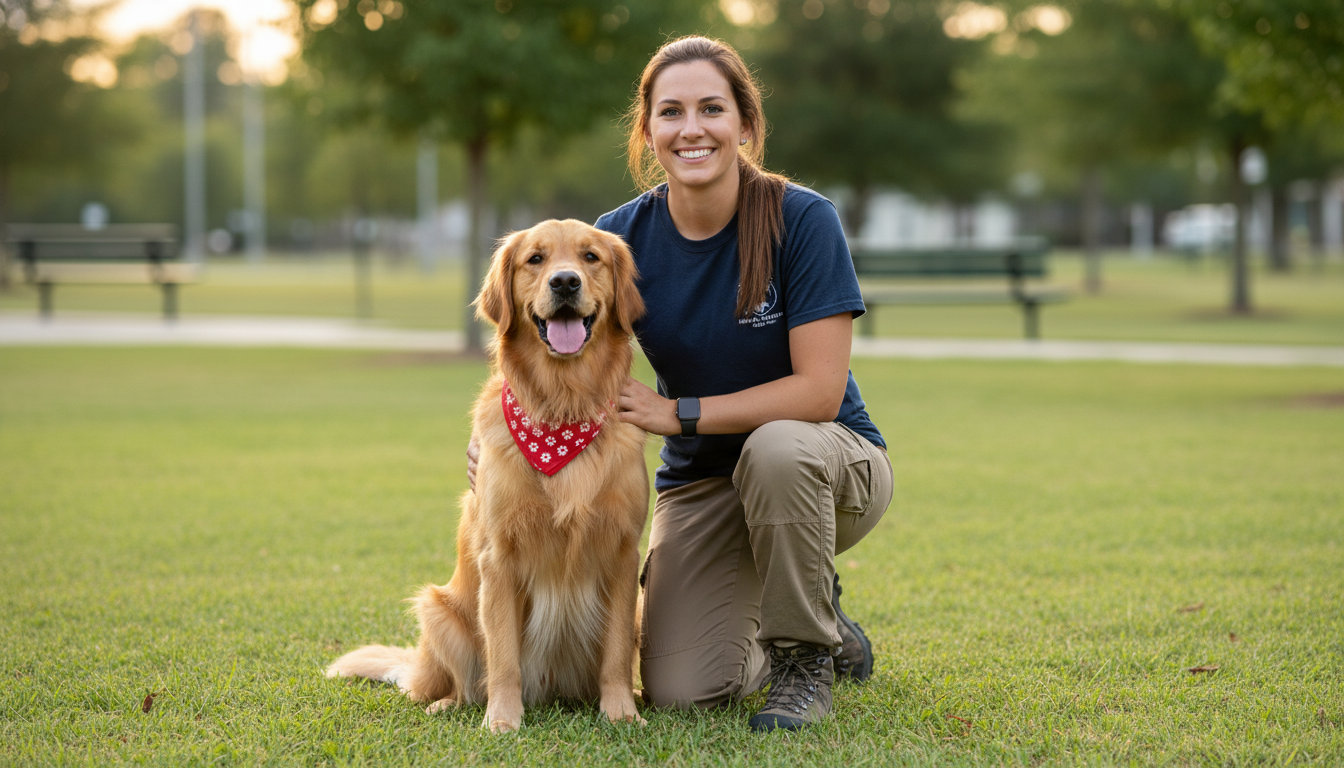
Reward-based training is the most effective and humane choice. It focuses on teaching your dog what to do instead of punishing unwanted behavior, creating a confident and willing partner.
Basic obedience covers sit, down, stay, come, and loose-leash walking. These are the essential tools for keeping your dog safe on county roads, during visits to nearby towns like Washington or Culpeper, and on outdoor adventures.
Puppy training in a rural area must include safe socialization to diverse sights and sounds, bite inhibition, crate training, and a solid start on potty training tailored to your home setup.
Behavior modification addresses issues like fear of farm equipment, reactivity to other animals, or separation anxiety through careful, structured plans. Given the remote nature of the area, a trainer’s ability to provide clear homework is vital.
Private, in-home lessons allow for customization to your daily routine and property. Day training or board and train programs can accelerate learning, especially for foundational skills.
Group classes, typically held in neighboring communities, provide a controlled environment to practice obedience around other dogs and people, which is a key part of any well-rounded training program.
Specialized training for service or therapy dogs requires a structured, goal-oriented program with a trainer experienced in public access skills and task training.
It is important to avoid trainers who rely on intimidation, fear, or pain. These methods can exacerbate behavioral problems, damage your bond with your dog, and are unnecessary for achieving reliable results.
Average Cost of Dog Training in Sperryville, VA (Updated for 2026)
Pricing in Rappahannock County and the surrounding region reflects the rural setting, with many trainers traveling significant distances. Costs are influenced by the trainer’s experience, session length, and program type.
| Service Type | Average Cost (Sperryville/Region) |
|---|---|
| Puppy Class Series (4-6 weeks) | $140 – $250 total |
| Group Obedience Class (4-6 weeks) | $150 – $275 total |
| Private Lesson (60-90 min) | $90 – $160 per session |
| In-Home Package (4-6 sessions) | $400 – $850 total |
| Day Training (per week) | $450 – $900 per week |
| Behavior Consultation | $140 – $225 initial |
| Board and Train (2-4 weeks) | $2,200 – $4,800 total |
Travel fees are common for in-home services in Rappahannock County. Always confirm what is included in a package, how progress is measured, and if a free consultation is offered.
Questions to Ask a Potential Dog Trainer
- What is your primary training philosophy, and how do you ensure sessions are positive for my dog?
- What professional credentials, such as CPDT-KA, do you hold, and how do you stay current with your education?
- How do you tailor programs for dogs living in a rural setting with wildlife and livestock?
- Do you offer in-home services given our location, and what are your travel policies?
- How will we track progress and communicate between sessions?
- Can you provide proof of liability insurance?
- For behavior issues, are you willing to collaborate with my veterinarian?
- What does your fee structure include, and what is your cancellation policy?
Local Sperryville Rules and Considerations
Rappahannock County operates under Virginia state law and county ordinances designed for its rural character. Understanding these helps keep your dog safe and maintains good relations with neighbors.
Dogs must be under the owner’s control at all times. While there is no universal county leash law, dogs are not permitted to run at large. This means if your dog leaves your property unsupervised, you can be liable. A solid recall is not just convenient; it’s a critical safety and legal necessity.
Virginia state law requires all dogs over four months old to be vaccinated against rabies by a licensed veterinarian. A rabies tag must be attached to the dog’s collar.
Excessive barking that disturbs neighbors can be considered a nuisance. Working on alert barking and providing adequate enrichment can prevent complaints.
Virginia does not mandate specific licensing for dog trainers. Trainers should operate as a legitimate business, and those offering board and train services from a facility may need to comply with local zoning and state kennel regulations if they board a certain number of dogs.
Professional dog trainers are strongly advised to carry general liability insurance. While not a state law, it is a standard business practice that protects both the trainer and the client.
Local Sperryville Resources for Dog Owners
These locations provide excellent settings to practice training in real-world environments. Always follow posted rules and practice good etiquette.
- Shenandoah National Park (Thornton Gap Entrance): A premier location for practicing on-leash hiking skills amidst distractions. Dogs must be leashed at all times on trails.
- Rappahannock County Parks: While small, local parks are great for practicing leash skills and focus in a public setting.
- Country Roads and Trails: The extensive network of quiet rural roads and publicly accessible trails in the county is ideal for building duration in leash walking and recall practice in controlled, low-traffic areas.
FAQs
How much does in-home dog training cost?
In the Sperryville area, a single in-home session typically costs between $90 and $160. Packages for multiple sessions often provide better value, with behavior work usually at the higher end of the scale.
Is in-home dog training worth it?
Yes, especially in a rural area. A trainer can address specific challenges on your property, such as boundary training, wildlife reactivity, and door-dashing, in the exact environment where they happen.
Can you pay someone to house train your dog?
Many trainers offer puppy programs that include structured potty training plans. Day training services can also implement a consistent schedule to accelerate the house training process.
What is the 3-3-3 rule for dog training?
This is a guideline for adopted dogs: 3 days to decompress, 3 weeks to learn your routines, and 3 months to feel at home. A good trainer will design a plan that respects this adjustment period.
How long will it take to reach my training goals?
For basic manners and puppy training, consistent practice over 4-8 weeks yields strong results. More complex behavior modification for fear or reactivity often requires a longer-term commitment of several months.
What should I bring to group classes?
Bring a well-fitting collar or harness, a 6-foot leash, high-value treats, and your dog’s vaccination records. Avoid retractable leashes in a class setting for everyone’s safety.
What’s the leash law in Sperryville?
Rappahannock County does not have a blanket leash law but prohibits dogs from running at large. This means your dog must be under your direct control, which in most public situations is safest and most practical with a leash.
Do I need a dog license in Sperryville or county?
Rappahannock County does not issue general dog licenses. However, Virginia state law requires a current rabies vaccination, and the rabies tag must be on your dog’s collar.
What shots does my dog need in county or Virginia?
Rabies vaccination is legally required. Your veterinarian will also recommend a core vaccine series (DHPP) and may suggest others like leptospirosis or bordetella based on your dog’s exposure risk in a rural environment.
Are dog trainers required to be licensed in Sperryville or county or Virginia?
Virginia does not require a specific license to be a dog trainer. Trainers should have a local business license. Those operating a boarding kennel as part of a board and train service must comply with Virginia Department of Agriculture and Consumer Services kennel regulations.
Where can I practice off-leash recall?
Secure, fenced areas are the only safe and legal places for off-leash work. These are limited in the immediate area, so many residents use their own securely fenced property or seek out designated fenced dog parks in neighboring towns.
Which dog parks allow training around Sperryville?
There are no public dog parks within Rappahannock County. The closest dedicated dog parks are in nearby towns like Culpeper or Warrenton. These can be useful for socialization and training in a controlled, fenced environment.
What trails allow dogs for training?
Leashed dogs are welcome on all trails in Shenandoah National Park, which offers unparalleled training opportunities around natural distractions. Always keep your dog on a leash no longer than 6 feet.
How should I handle wildlife encounters during training?
A professional trainer can help you build a strong “leave it” and recall cue. It’s crucial to always be aware of your surroundings, keep your dog leashed in areas with known wildlife, and avoid training near active livestock unless you have explicit permission.