Your Complete Guide to Choosing a Dog Trainer in Washington, DC
Living with a dog in Washington, DC, means navigating bustling sidewalks, crowded Metro stations, and serene parks all in one walk. Your dog needs to handle the stimuli of Dupont Circle, the quiet focus required for a patio in Georgetown, and the self-control needed near the National Mall. A professional dog trainer who understands this unique urban environment can make all the difference for creating a well-behaved dog that thrives in the city.
The District of Columbia operates as both a city and a state, with its own set of laws and agencies. Choosing a trainer familiar with DC's specific regulations ensures your training plan aligns with local requirements, from leash laws to noise ordinances.
How to Choose the Right Trainer
In a dense city like DC, your dog’s behavior directly impacts your neighbors and community. Look for a trainer who prioritizes *positive reinforcement* training and can create a plan for your specific DC lifestyle. This means skills for calm elevator entries in your apartment building, polite greetings in tight spaces, and a solid “leave it” for sidewalk chicken bones.
Checking a trainer’s professional credentials is a smart first step. Look for certifications like the CPDT-KA or KPA-CTP, which indicate a commitment to science-based methods. For serious behavior issues like aggression or severe anxiety, seek out a specialist with credentials such as an IAABC-CDBC or CBCC-KA.
In-home sessions are invaluable for addressing behaviors in your actual living space, like door-dashing in a row house or barking in a condo. Group classes are excellent for proofing skills around other dogs and people, which is essential before visiting busy spots like The Wharf or Eastern Market.
Common Dog Training Methods Explained
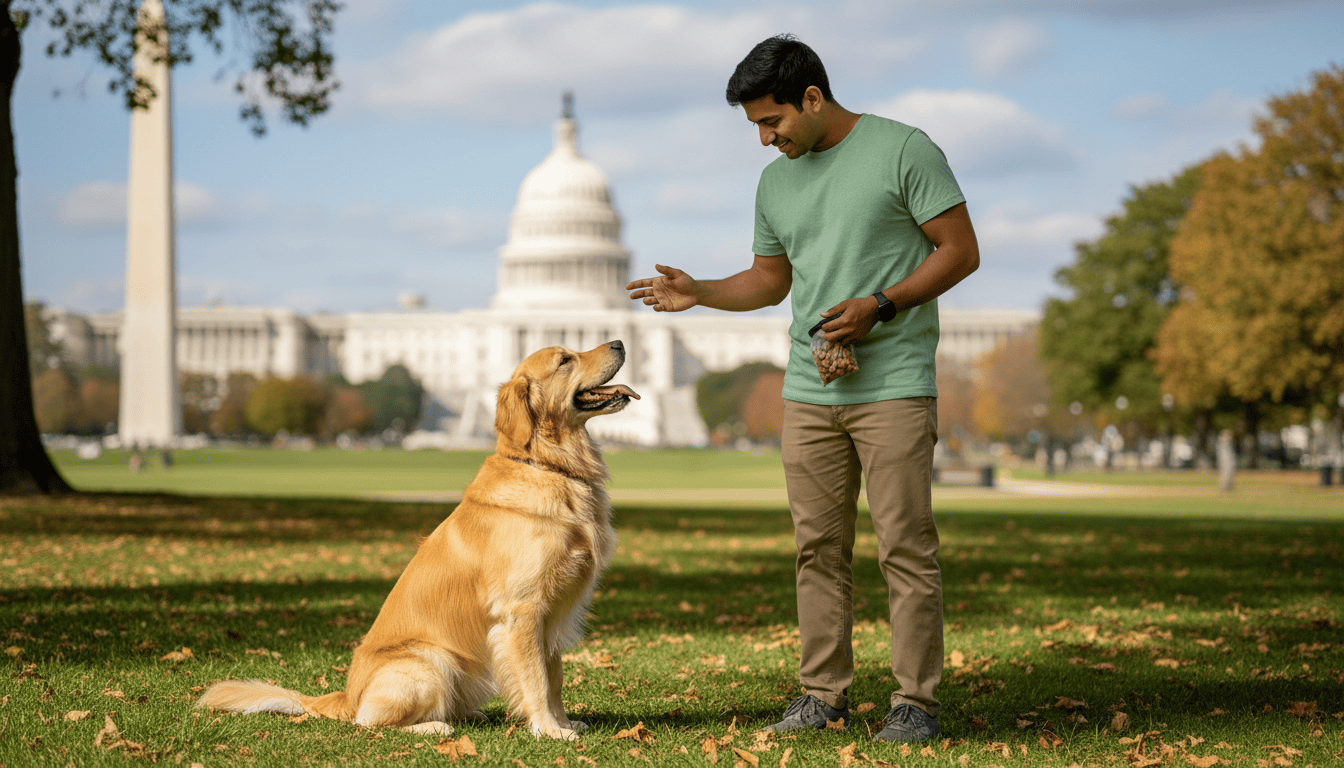
Modern, reward-based methods are not only the most humane choice but also the most effective for building reliable behaviors in a distracting city. These methods help ensure your dog can meet DC’s expectations for public comportment.
Basic obedience training**** forms the foundation for city living. A solid sit, down, stay, and recall are non-negotiable for safety near traffic and in shared spaces. Loose-leash walking is perhaps the most critical skill for enjoyable daily life.
Puppy training in DC must focus heavily on positive socialization to sounds, surfaces, and diverse groups of people. Early bite inhibition, crate training for apartment life, and establishing potty training routines on a schedule are also key focuses.
Behavior modification addresses issues like leash reactivity on crowded trails, barrier frustration from windows, or separation anxiety in high-density housing. This work often involves careful desensitization and should be done with a trainer who may collaborate with your vet.
Private lessons offer the most customization for your home and neighborhood. Day training programs can accelerate learning for busy professionals. Group classes provide a controlled setting to practice manners around distractions, which is directly applicable to DC’s social scene.
Specialized training, such as therapy dog training or service dog training, requires meticulous preparation for public access in museums, government buildings, and restaurants, all under DC’s specific guidelines.
It is crucial to avoid trainers who use fear, intimidation, or pain-based tools. These methods increase stress and risk, which can lead to bigger problems in an urban setting and potential violations of DC’s animal welfare laws.
Average Cost of Dog Training in Washington, DC (Updated for 2026)
As a major metropolitan area, dog training services in Washington, DC, tend to be at a premium compared to national averages. Prices reflect the high cost of living and business operations in the District. Below is a summary of current typical costs for professional dog training services.
| Service Type | Average Cost (DC Metro) |
|---|---|
| Puppy Class (6 sessions) | $200 – $350 |
| Group Obedience Class (6 sessions) | $225 – $400 |
| Private Lesson (60 min) | $120 – $220 |
| In-Home Training Package (4-6 sessions) | $500 – $1,200 |
| Day Training (per week) | $600 – $1,100 |
| Behavior Consultation (initial) | $175 – $300 |
| Board and Train (2 weeks) | $2,500 – $5,500 |
Many trainers serving DC neighborhoods like Capitol Hill, Navy Yard, and Adams Morgan may charge travel fees. Always ask what is included in a quoted price and what the policy is for follow-up support.
Questions to Ask a Potential Dog Trainer
- What is your primary training philosophy, and how do you implement positive reinforcement?
- What professional dog trainer certifications do you hold, and how do you pursue continuing education?
- Can you provide a sample plan for a goal relevant to DC, like walking past a busy construction site calmly?
- Do you offer in-home, group, or day training, and which do you recommend for my situation?
- How do you measure progress and adjust the training program?
- What is your full fee structure, including any travel charges or package details?
- Do you carry professional liability insurance, and can you provide proof?
- For behavior issues, are you willing to collaborate with my veterinarian?
- What will my homework be between sessions?
Local DC Rules and Considerations
DC has specific animal control laws designed for urban cohabitation. A good trainer will help you navigate these rules seamlessly.
DC law requires dogs to be on a leash no longer than 4 feet when on public property, including all sidewalks, parks (unless in a designated off-leash area), and trails. Retractable leashes are often impractical for this rule.
All dogs four months and older must be vaccinated against rabies and licensed with the DC Department of Health (DOH). The license tag must be worn on your dog’s collar. This is a mandatory legal requirement, not an option.
Excessive barking that disturbs the peace is considered a noise violation. Training for alert barking and separation anxiety is important for maintaining good relationships in apartments and row houses.
The District does not require a specific license to operate as a dog trainer. However, all businesses must have a Basic Business License (BBL) from the DC Department of Licensing and Consumer Protection (DLCP). Reputable trainers should also carry general liability insurance.
The DC Department of Parks and Recreation (DPR) manages the official dog parks and requires permits for any commercial activity, including training classes, within their parks.
Local DC Resources for Dog Owners
These locations provide excellent environments to practice training in real-world settings. Always observe posted rules and practice good etiquette.
- Shaw Dog Park and S Street Dog Park (Dupont Circle) offer fully fenced areas for safe off-leash play and recall practice.
- National Mall and Memorial Parks: Leashed dogs are welcome on the vast lawns and pathways, offering unparalleled distraction-proofing opportunities around monuments, tourists, and squirrels.
- Rock Creek Park: Miles of trails allow for long-line training and decompressing walks in nature, all within the city. Leashes are required in most sections.
- The Yards Park: A great location to practice calm behavior around water features, crowds, and other dogs on-leash.
- District Dogs and similar local businesses often host community “yappy hours” or socialization events, which can be good controlled environments for social dogs.
FAQs
How much does in-home dog training cost?
In Washington, DC, a single in-home session typically costs between $120 and $220. Most trainers offer packages of 4-6 sessions, which range from $500 to $1,200, providing better value for addressing multiple behavior goals.
Is in-home dog training worth it?
For DC residents, it is often essential. It addresses problems exactly where they happen: door-dashing in a row house, counter-surfing in a small kitchen, or reactive barking out a window. The trainer can also immediately work on leash skills on your specific, busy sidewalk.
Can you pay someone to house train your dog?
Yes. Many trainers offer puppy programs that include a structured potty training schedule, crate training, and accident management. Some day training services will also work on this during their sessions with your dog.
What is the 3-3-3 rule for dog training?
It’s a guideline for a newly adopted dog’s adjustment: 3 days to decompress from the shelter, 3 weeks to learn your routine, and 3 months to feel fully at home. A good training plan respects this timeline and builds trust slowly.
How long will it take to reach my training goals?
For basic obedience and manners, most dogs show significant improvement with consistent practice over 6-8 weeks. Complex behavior modification for reactivity or anxiety often requires a longer-term commitment of several months.
What should I bring to group classes?
Bring a standard 4-6 foot leash (not retractable), a well-fitting collar or harness, high-value treats, your dog’s vaccination records, and water. Wear comfortable shoes as classes are often held in parks or on paved surfaces.
What’s the leash law in DC?
Dogs must be on a leash no longer than 4 feet when on public property, including all sidewalks, streets, and parks (unless in a signed, designated off-leash area). This law is strictly enforced.
Do I need a dog license in DC?
Yes. All dogs four months and older must be licensed with the DC Department of Health. You must provide proof of a current rabies vaccination to obtain the license, and the tag must be worn on your dog’s collar.
What shots does my dog need in DC?
Rabies vaccination is legally required. Your veterinarian will also strongly recommend the core DHPP (distemper, hepatitis, parvo, parainfluenza) vaccine. Bordetella (kennel cough) and leptospirosis vaccines are often advised due to the social and urban environment.
Are dog trainers required to be licensed in DC?
DC does not have a specific “dog trainer license.” However, anyone operating a training business must have a DC Basic Business License (BBL). Reputable trainers will also carry liability insurance.
Where can I practice off-leash recall?
Use the DC Department of Parks and Recreation's official, fenced dog parks, such as Shaw Dog Park or the dog park at Walter Pierce Park. These are the only legal, safe places for off-leash activity within the District.
Which dog parks allow training around DC?
All DC DPR dog parks allow you to work on training within the fenced area during open hours. For on-leash training and proofing behaviors, the perimeter of the National Mall or quieter sections of Rock Creek Park are excellent.
What beaches or trails allow dogs for training?
While DC doesn’t have beaches, many nearby trails welcome leashed dogs. The C&O Canal Towpath in Georgetown and the trails in Rock Creek Park are perfect for building focus and endurance around natural distractions. Always keep your dog on a 4-foot leash as required.