Your Complete Guide to Choosing a Dog Trainer in Arlington
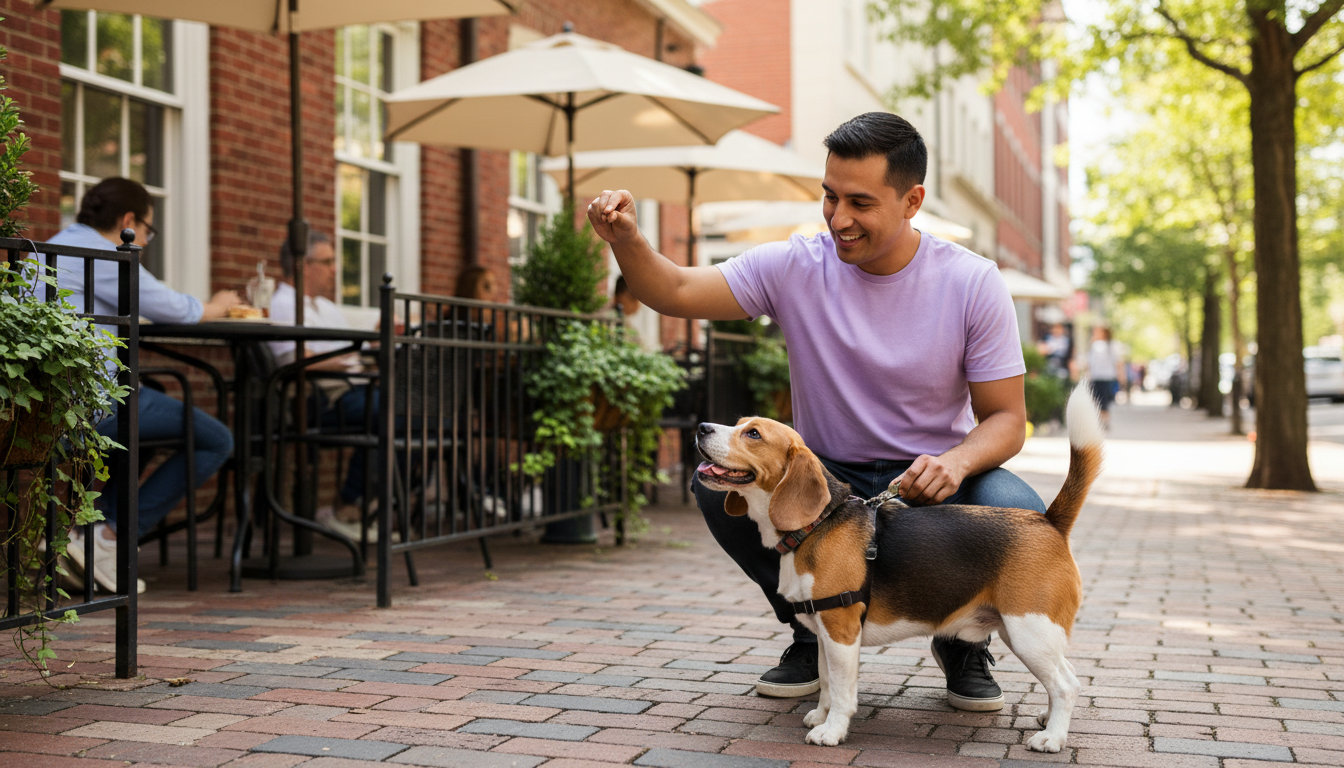
Life in Arlington means navigating a unique mix of urban density and suburban parks. Your dog will encounter crowded Metro station sidewalks, busy patio dining in Clarendon, and the many trails along the Potomac. Effective dog training here builds the manners and focus needed to handle these everyday situations calmly and safely.
As an independent city, Arlington operates its own animal control and sets local ordinances. A trainer familiar with these rules can help you avoid fines and build a training plan that respects your neighbors and community spaces. The right training program turns challenges like elevator rides or passing scooters on the Mount Vernon Trail into opportunities for success.
How to Choose the Right Trainer
Look for a professional dog trainer who understands the specific pressures of Arlington living. Your dog needs to learn to ignore distractions in bustling neighborhoods like Ballston, walk politely on a leash through Columbia Pike markets, and settle calmly in a high-rise apartment. A trainer’s methods should be based on positive reinforcement to build a confident, well-behaved dog.
Credentials offer a reliable measure of a trainer’s education and commitment. Look for certifications like the CPDT-KA or KPA-CTP. For serious behavior issues like aggression or severe anxiety, seek out a trainer with a CBCC-KA or IAABC-CDBC credential.
In-home sessions are excellent for addressing behaviors specific to your living space, like door-dashing in a condo or barking in a shared yard. Group classes provide vital practice for learning to focus around other dogs and people, a must before visiting places like the Ballston Quarter outdoor mall.
Common Dog Training Methods Explained
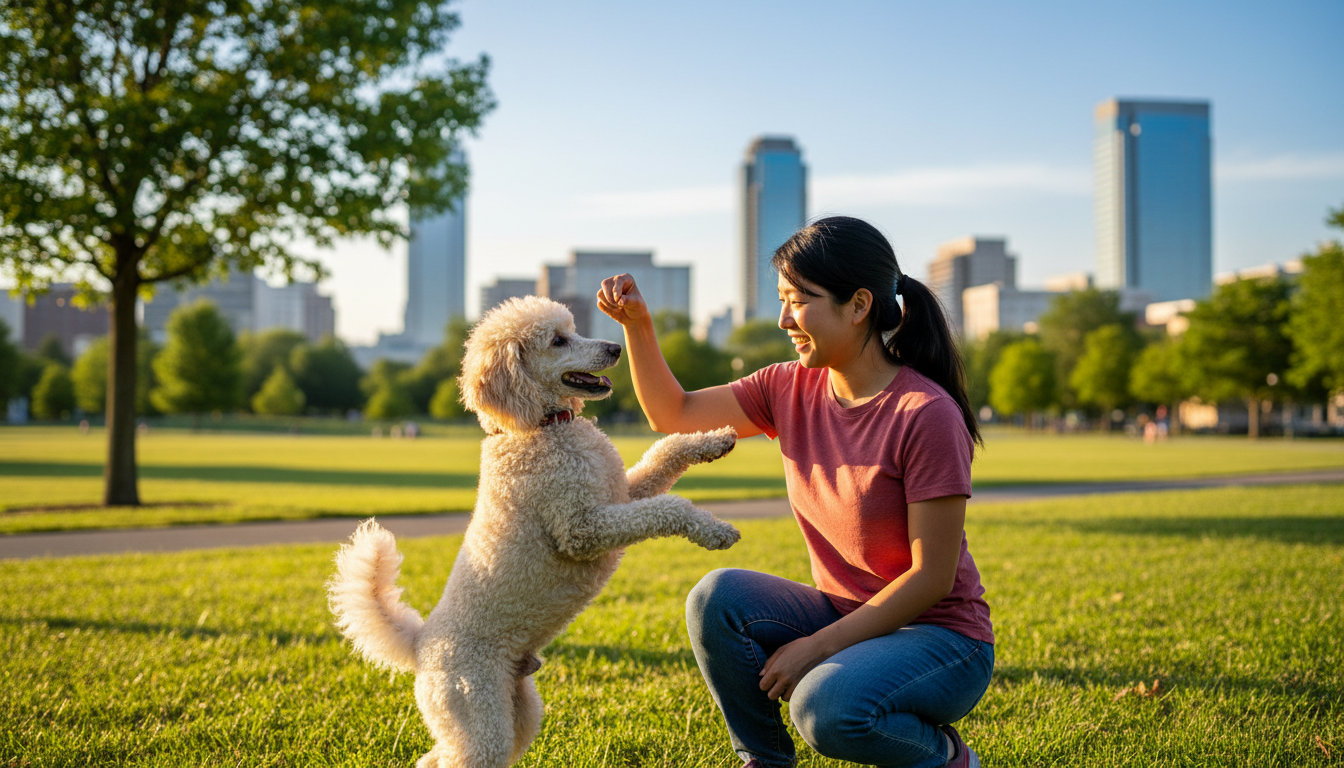
Reward-based training is the most effective and humane approach. It strengthens your bond with your dog and helps ensure they can be a good neighbor in close-quarters living. This is especially important for complying with local noise and leash laws.
Basic obedience covers sit, down, stay, loose-leash walking, and a reliable recall. These skills are non-negotiable for safely enjoying Arlington’s many parks and outdoor cafes.
Puppy training focuses on critical socialization, potty training for apartment life, bite inhibition, and crate training. Starting early prevents problem behaviors from becoming ingrained habits.
Behavior modification addresses issues like leash reactivity, separation anxiety, or fear of loud noises through structured desensitization. For complex cases, a qualified trainer should be willing to collaborate with your veterinarian.
Private lessons offer personalized attention for specific goals. Day training programs can accelerate learning for busy professionals. Group classes teach your dog to work politely around distractions in a controlled setting.
Specialized training, such as therapy dog training or service dog training, requires a trainer with specific expertise in public access skills and the relevant legal standards.
Avoid any trainer who uses methods based on fear, intimidation, or physical corrections. These outdated techniques can worsen behavior problems, increase stress, and damage the human-animal bond.
Average Cost of Dog Training in Arlington, VA (Updated for 2026)
The cost of dog training services in Arlington reflects its urban location and higher cost of living. Prices vary based on the trainer’s experience, the type of service, and the complexity of your dog’s needs.
| Service Type | Average Cost in Arlington |
|---|---|
| Puppy Class (6-week session) | $200 – $350 |
| Group Obedience Class (6 weeks) | $220 – $400 |
| Private Lesson (60 min) | $120 – $220 |
| In-Home Training Package (4-6 sessions) | $500 – $1,100 |
| Day Training (per week) | $500 – $1,000 |
| Behavior Consultation (initial) | $175 – $300 |
| Board and Train (2-3 weeks) | $2,500 – $5,500 |
Many trainers offer a free consultation or evaluation to discuss your goals and their approach before you commit. Be sure to ask what is included in any package price and if there are travel fees for in-home visits to different Arlington neighborhoods.
Questions to Ask a Potential Dog Trainer
- What is your primary training philosophy, and can you describe a typical training session?
- What professional dog trainer certifications do you hold, and how do you pursue continuing education?
- How do you tailor your training program for dogs living in an urban environment like Arlington?
- What experience do you have with issues common to city dogs, such as leash reactivity or separation anxiety?
- Do you offer in-home, group, or day training, and which do you recommend for my situation?
- What is your process for tracking progress and communicating between sessions?
- Are you insured, and can you provide proof of liability insurance?
- Will you collaborate with my veterinarian if medication or a health evaluation is needed for a behavior issue?
Local Arlington Rules and Considerations
Arlington County enforces ordinances designed to keep people, pets, and wildlife safe. A good trainer will help you meet these standards.
Dogs must be on a leash and under their owner’s control at all times when not on private property. The only exceptions are inside the fenced areas of designated dog parks. A 6-foot leash is standard and recommended for control.
Virginia state law and Arlington County Code require all dogs four months and older to be vaccinated against rabies. You must keep the vaccination certificate and ensure your dog wears its rabies tag.
Excessive, continuous barking that disturbs the peace is considered a nuisance. Training can help manage alert barking, which is important in densely populated neighborhoods and apartment buildings.
Professional dog trainers operating a business in Arlington must obtain a Business License from the county. While Virginia does not require a specific “dog trainer license,” carrying general liability insurance is a standard and crucial business practice for any reputable trainer.
Local Arlington Resources for Dog Owners
These locations provide excellent environments to practice your training in real-world settings. Always follow posted rules and practice good etiquette.
- Shirlington Dog Park: A popular, fully fenced park with separate areas for large and small dogs, and a stream for water play.
- Glencarlyn Dog Park: A well-maintained, wooded park offering a more natural setting for off-leash play and training.
- The Potomac River and its Trails: The sections of the Mount Vernon Trail and Four Mile Run Trail that run through Arlington are perfect for practicing long-line recalls and structured loose-leash walking with many distractions.
- Bon Air Park Rose Garden: While dogs must be leashed, the beautiful, controlled environment is ideal for proofing “settle” and polite greetings around people.
FAQs
How much does in-home dog training cost?
In Arlington, a single in-home private lesson typically costs between $120 and $220. Most trainers offer packages of 4 to 6 sessions, which can reduce the per-session cost.
Is in-home dog training worth it?
Yes, especially in Arlington. An in-home trainer can address behaviors exactly where they happen—jumping on guests in your condo, barking at hallway noises, or reacting to dogs from your balcony. They can then take the training directly to your neighborhood sidewalks and parks.
Can you pay someone to house train your dog?
Yes. Many trainers offer puppy packages that include a customized potty training schedule and routine. Day training programs are also effective for establishing consistent habits.
What is the 3-3-3 rule for dog training?
This is a guideline for adopted dogs. It suggests 3 days to decompress from the transition, 3 weeks to start learning your routines, and 3 months to feel fully secure in their new home. A good trainer will design a plan that supports this adjustment period.
How long will it take to reach my training goals?
For basic obedience and manners, most dogs show significant improvement within 6-8 weeks of consistent practice. Addressing fear or reactivity is a longer process, often requiring several months of dedicated behavior modification.
What should I bring to group classes?
Bring a well-fitted harness or flat collar, a 6-foot leash, high-value treats, and your dog’s vaccination records if required by the trainer. Do not use retractable leashes in class.
What’s the leash law in Arlington?
Arlington County law requires dogs to be on a leash no longer than 8 feet and under the owner’s control at all times when off their own property. The only legal off-leash areas are the fenced sections of official county dog parks.
Do I need a dog license in Arlington?
Arlington County does not issue a general dog license. However, you are required by law to keep your dog’s current rabies vaccination tag on its collar at all times.
What shots does my dog need in Virginia?
Rabies vaccination is legally mandated. Your veterinarian will also recommend core vaccines (DAPP) and may suggest others like Bordetella based on your dog’s exposure risk at parks, daycares, or boarding facilities.
Are dog trainers required to be licensed in Virginia?
The state of Virginia does not have a specific license for dog trainers. Trainers must comply with standard business licensing requirements in their city or county. Arlington requires a Business License to operate.
Where can I practice off-leash recall?
The only safe and legal places for off-leash practice are inside the fenced areas of county-designated dog parks, such as Shirlington or Glencarlyn Dog Parks.
Which dog parks allow training around Arlington?
All of Arlington’s official dog parks allow you to work on training within the fenced areas. Using these spaces during off-peak hours can provide a better environment for focused practice.
What trails allow dogs for training?
Leashed dogs are welcome on all Arlington County parks trails, including the extensive Four Mile Run Trail and the Mount Vernon Trail. These are excellent for practicing focus around joggers, bikers, and wildlife.