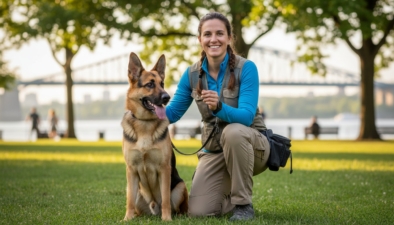
Your Complete Guide to Choosing a Dog Trainer in Astoria and surrounding areas
Finding a dog trainer in Astoria means preparing your dog for a specific lifestyle. You’ll navigate crowded sidewalks on Broadway, enjoy off-leash play at the Astoria Park Dog Run, and live in close quarters with neighbors. A good trainer helps your dog thrive in this urban Queens environment, from calm greetings in apartment hallways to polite behavior on the Steinway Street subway platform.
Since Astoria is part of New York City, all local regulations follow NYC’s strict codes. A trainer familiar with these rules can tailor your sessions to meet city requirements while improving your daily life.
How to Choose the Right Trainer
Look for a professional dog trainer who uses *positive reinforcement* training and understands the challenges of city living. Your dog needs to learn to ignore food scraps on the sidewalk, walk calmly on a short leash past busy restaurants, and be comfortable with the sounds of constant traffic and sirens.
Credentials from recognized programs like the CPDT-KA or KPA-CTP show a commitment to education. For serious issues like fear or aggression, a certification like the IAABC-CDBC indicates specialized knowledge in behavior modification.
In-home sessions are ideal for addressing apartment-specific issues like door-dashing, barking at hallway noises, and potty training routines. Group classes are valuable for building focus around other dogs and people, a must before visiting popular local spots.
Common Dog Training Methods Explained
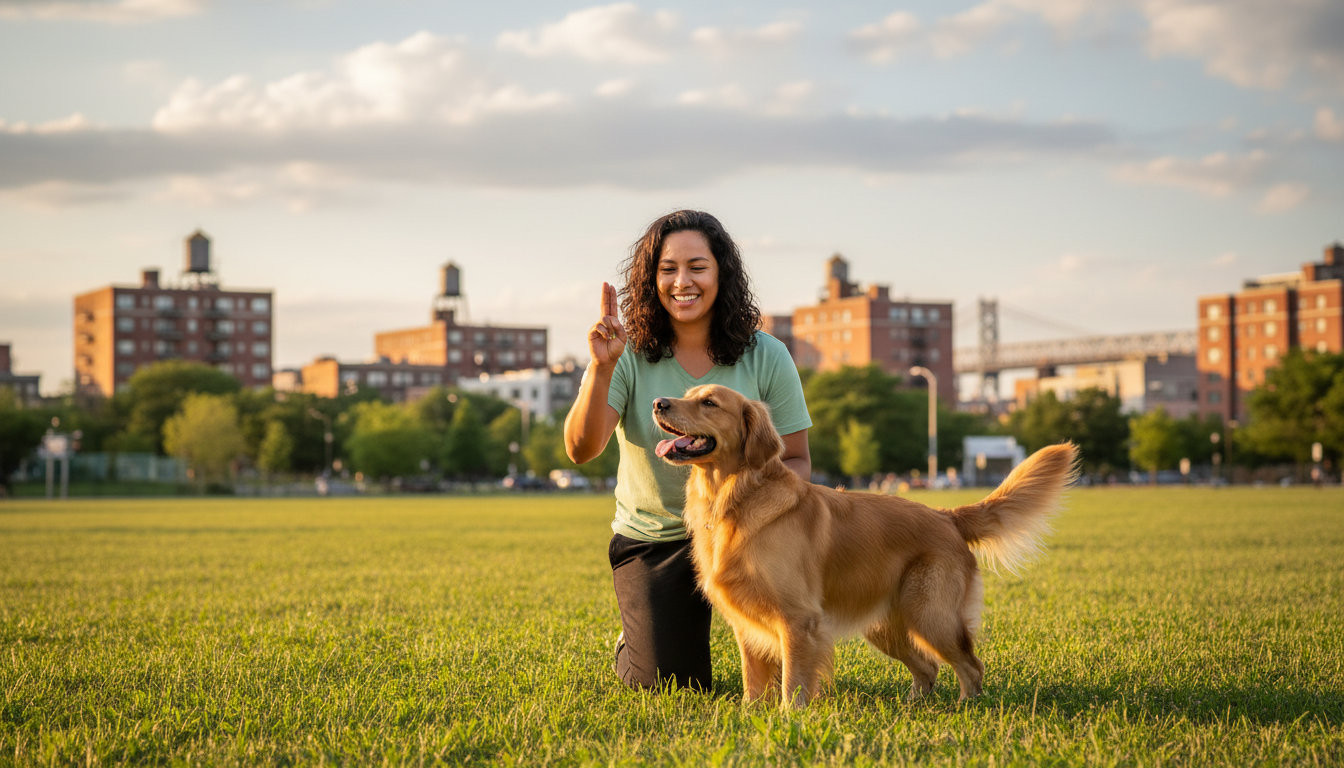
Humane, reward-based methods are not only effective but also help you comply with NYC’s strict animal control laws. These techniques build a trusting relationship and create lasting change, which is essential in a dense neighborhood.
Basic obedience covers sit, down, stay, a solid recall, and loose-leash walking. These skills are non-negotiable for safe walks in Astoria Park and elevator rides in your building.
Puppy training focuses on crucial early socialization, bite inhibition, crate training, and establishing a reliable potty schedule in an apartment setting. Starting early prevents problems that are harder to fix later.
Behavior modification addresses issues like leash reactivity, separation anxiety, or resource guarding through structured desensitization. Given the close living quarters, working on alert barking is often a priority for Astoria residents.
Private lessons offer customized solutions for your home and schedule. Day training can accelerate progress for busy owners. Group classes provide a controlled environment to practice manners around distractions.
Specialized training, like therapy dog or service dog training, requires a meticulous program to teach advanced public access skills for NYC’s demanding environment.
It is important to avoid trainers who use intimidation, fear, or physical corrections. These outdated methods can worsen behavioral problems, increase stress, and lead to violations of local nuisance laws.
Average Cost of Dog Training in Astoria, NY (Updated for 2026)
Pricing in Astoria and the greater Queens area reflects NYC’s cost of living. Rates vary based on the trainer’s expertise, session length, and travel within the borough.
| Service Type | Average Cost (Astoria/Queens) |
|---|---|
| Puppy classes (6 weeks) | $200–$350 total |
| Group obedience classes (6 weeks) | $220–$400 total |
| Private lessons (60 min) | $120–$180 per session |
| In-home training packages (4-6 sessions) | $500–$1,100 total |
| Day training (per week) | $600–$1,200 |
| Behavior consultation (initial) | $175–$300 |
| Board and train (2-3 weeks) | $2,500–$5,500 total |
Many trainers charge a travel fee for locations beyond a certain radius in Queens. Complex behavior cases typically start at the higher end of the price range.
Questions to Ask a Potential Dog Trainer
- What is your philosophy, and how do you ensure training is low-stress and positive?
- What professional credentials, such as CPDT-KA, do you hold? Do you pursue continuing education like CPDT-KSA?
- How will you adapt the training plan for an apartment-dwelling dog in Astoria?
- Do you offer in-home, group, or day training, and which do you recommend for my goals?
- How do you measure progress and help generalize skills to busy streets?
- What is the total cost, including any NYC travel fees? What is your cancellation policy?
- Do you carry professional liability insurance? Can you provide proof?
- For behavior issues, are you willing to collaborate with my veterinarian?
- What homework will I have between sessions to help my dog succeed?
Local Astoria Rules and Considerations
New York City has uniform regulations that all Astoria dog owners must follow. These rules directly influence the goals of your training program.
All dogs must be on a leash no longer than six feet in any public place, including sidewalks, parks (unless in a designated dog run), and playgrounds. A reliable loose-leash walk is not just a nicety; it’s a legal requirement.
NYC law mandates that all dogs be vaccinated against rabies and licensed with the NYC Department of Health. You must attach both the rabies tag and the NYC dog license tag to your dog’s collar. Failure to comply can result in significant fines.
Excessive barking that disturbs neighbors is considered a violation of the city’s noise code. Training focused on alert barking and separation anxiety can help maintain good neighbor relations in apartment buildings.
While New York State does not issue a specific license for dog trainers, any professional operating in NYC must have a general business license. They should also carry liability insurance to protect you, your dog, and themselves during sessions.
Local Astoria Resources for Dog Owners
These local spots are excellent for practicing training skills in real-world settings. Always follow posted rules and practice good etiquette.
- Astoria Park Dog Run: A large, fenced area perfect for practicing off-leash recalls and socialization in a controlled setting.
- Rainey Park Dog Run: A smaller, often less crowded fenced run in nearby Long Island City, good for initial training outings.
- Socrates Sculpture Park: Leashed dogs are welcome in this outdoor art space, offering great distraction training around unique sights.
- Gantry Plaza State Park: A short trip into LIC, this waterfront park with leashed access is ideal for practicing focus around crowds and scenic views.
- Queens-based Dog Owner Groups: Local social media groups and meetups can provide community support and controlled playdate opportunities.
FAQs
How much does in-home dog training cost?
In Astoria, a single in-home session typically costs between $120 and $180. Most trainers offer package discounts, bringing the per-session rate down for multi-session commitments.
Is in-home dog training worth it?
For Astoria residents, in-home training is extremely valuable. It addresses behaviors exactly where they happen—jumping on guests in your apartment, barking at the doorbell, or reacting to other dogs in your building’s hallway. The trainer can also immediately work on leash skills on your specific block.
Can you pay someone to house train your dog?
Yes, many trainers offer puppy programs that include a customized potty training schedule, crate training, and management strategies for apartment living. Some day training services can also accelerate this process.
What is the 3-3-3 rule for dog training?
This is a guideline for adopted dogs. It suggests 3 days to decompress, 3 weeks to learn your routines, and 3 months to feel fully at home. A good trainer will design a plan that respects this adjustment period.
How long will it take to reach my training goals?
For basic obedience and manners, expect to see significant improvement within 4-8 weeks with consistent daily practice. More complex behavior modification for issues like reactivity or severe anxiety often requires a longer-term commitment of several months.
What should I bring to group classes?
Bring a well-fitting harness or flat collar, a 6-foot leash, high-value treats, water, and your dog’s vaccination records. Retractable leashes are not suitable for group class settings.
What’s the leash law in Astoria?
New York City law requires dogs to be leashed with a lead no longer than six feet in all public areas. The only exceptions are inside officially designated and enclosed dog runs.
Do I need a dog license in Astoria or county?
Yes. All dogs in New York City must be licensed by the NYC Department of Health. You must renew the license periodically and attach the tag to your dog’s collar.
What shots does my dog need in county or New York?
Rabies vaccination is legally required for all dogs in New York State and NYC. Your veterinarian will also recommend core vaccines (DAPP) and others like Bordetella based on your dog’s exposure risk in the city.
Are dog trainers required to be licensed in Astoria or county or New York?
New York State does not have a specific professional license for dog trainers. However, trainers operating a business in NYC must have a general business license. Those offering board and train services must comply with NYC’s strict boarding kennel regulations.
Where can I practice off-leash recall?
The only safe and legal places are inside enclosed dog runs like the one at Astoria Park or Rainey Park. Always practice during less busy times when starting out.
Which dog parks allow training around Astoria?
The Astoria Park Dog Run and Rainey Park Dog Run are the primary fenced areas where you can practice off-leash skills. For on-leash training around distractions, the perimeter paths of Astoria Park are excellent.
How do I find a trainer who understands apartment living?
Ask potential trainers directly about their experience working with clients in apartments. They should have specific strategies for potty training without a yard, managing barking in shared walls, and desensitizing dogs to elevator and hallway noises.