Your Complete Guide to Choosing a Dog Trainer in Elbert and Surrounding Areas
Life with a dog in Elbert, Colorado is defined by wide-open spaces, stunning High Plains vistas, and a quiet, rural lifestyle. Your daily routine might involve walks along dirt roads, encounters with wildlife like prairie dogs or deer, and trips into nearby towns for supplies. Training a dog here means preparing them for a unique set of challenges, from staying calm around livestock and ignoring ground squirrels to being a polite visitor in less crowded public spaces.
Elbert is the seat of Elbert County, and local regulations are typically set at the county level. Understanding these rural considerations is key when selecting a professional dog trainer who can tailor a program for your land and lifestyle.
How to Choose the Right Trainer
Look for a trainer who uses positive reinforcement methods and understands the realities of rural Elbert County. This means your dog should learn reliable recall for off-property adventures, calm behavior around trucks and farm equipment, and polite manners for when you visit places like the Elbert County Fairgrounds or the post office.
Credentials help you gauge a trainer’s commitment to modern, science-based methods. Look for recognized dog trainer certifications such as the KPA-CTP or CPDT-KA. For serious behavioral concerns like fear of thunderstorms or livestock chasing, a certification like IAABC-CDBC indicates specialized knowledge.
In-home sessions are particularly valuable in Elbert for addressing property-specific issues like boundary training, wildlife reactivity, and greeting manners for infrequent visitors. Group classes may be found in larger nearby towns and are excellent for proofing skills around other dogs and people.
Common Dog Training Methods Explained
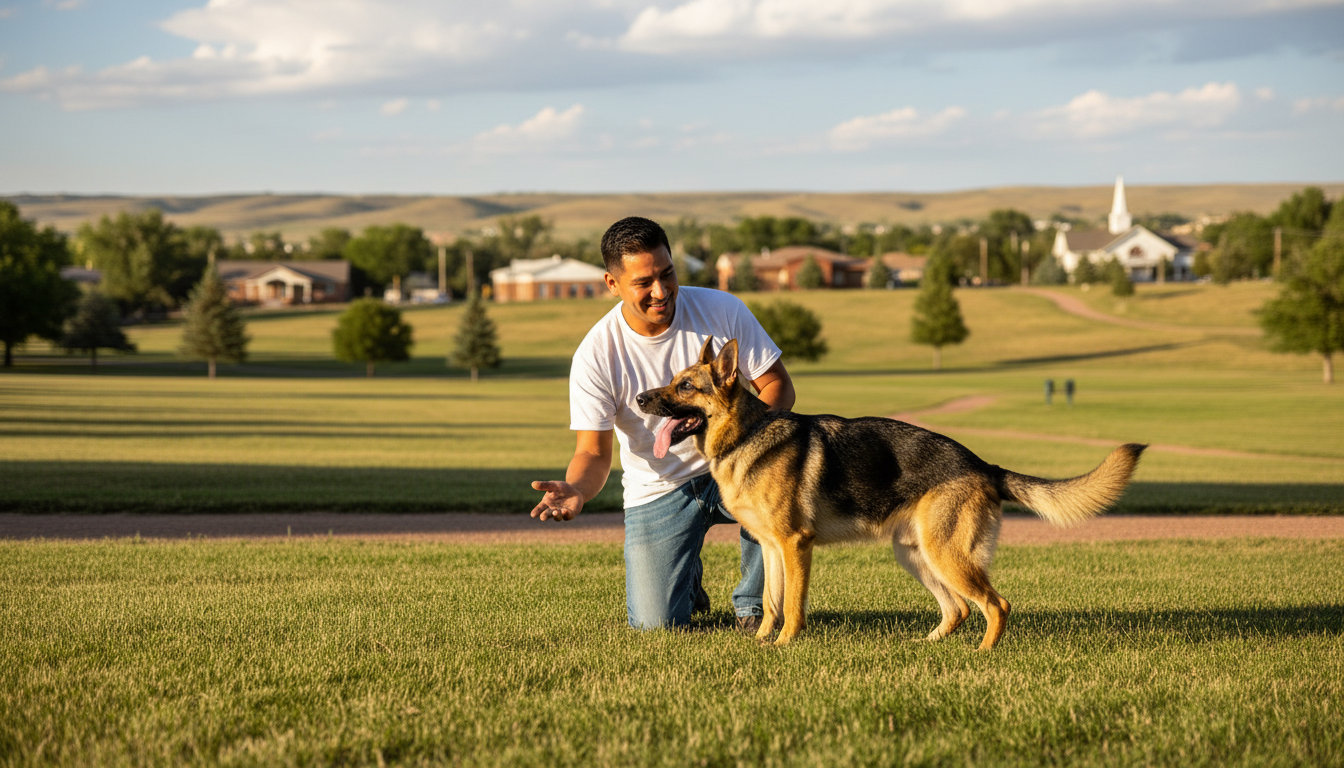
Reward-based training builds a strong bond and reliable behaviors, which is essential for keeping your dog safe on large properties and in compliance with county laws. This method focuses on teaching your dog what to do, rather than punishing what not to do.
Basic obedience covers sit, down, stay, recall, and loose-leash walking. These skills are the foundation for safely enjoying your land and any visits to community areas.
Puppy training prioritizes socialization, potty training, bite inhibition, and crate training. Early, positive exposure to rural sights and sounds helps create a confident adult dog.
Behavior modification addresses issues like separation anxiety, fear of vehicles, or prey drive through structured desensitization. In rural areas, working with a trainer who understands these common challenges is crucial.
Private lessons allow for a fully customized plan for your home and land. Board and train programs can provide intensive immersion, while group classes offer controlled environments for practicing around distractions.
Specialized training, such as service dog training or therapy dog training, requires a trainer with a proven, step-by-step curriculum for teaching complex tasks and public access skills.
Avoid trainers who rely on fear, intimidation, or pain-based tools. These methods can increase anxiety and aggression, creating more danger in an open, rural setting.
Average Cost of Dog Training in Elbert, CO (Updated for 2026)
Pricing in Elbert County and the surrounding Eastern Plains region is often more affordable than in the Denver metro area, but it varies based on the trainer’s travel distance and expertise. Many trainers service Elbert from nearby cities.
| Service Type | Average Cost (Elbert County Region) |
|---|---|
| Puppy Classes (6 weeks) | $120 – $200 total |
| Group Obedience Classes (6 weeks) | $140 – $220 total |
| Private Lessons (60 min) | $80 – $130 per session |
| In-Home Training Packages (4-6 sessions) | $350 – $700 total |
| Day Training (per week) | $400 – $750 |
| Behavior Consultation | $120 – $200 initial |
| Board and Train (2-3 weeks) | $1,500 – $3,000 total |
Travel fees for in-home services are common due to the large geographic area. Always ask what is included in a quoted price and if there is a free consultation.
Questions to Ask a Potential Dog Trainer
- What is your primary training philosophy, and how do you use positive reinforcement?
- What professional certifications, like CPDT-KA, do you hold? Do you pursue continuing education, such as CPDT-KSA?
- Do you have experience with common rural dog behaviors like livestock chasing, wildlife alertness, or barrier frustration on large properties?
- What types of training programs do you offer, and which do you recommend for my specific goals in Elbert?
- How do you structure and measure progress in your training program?
- What are your total fees, including any travel charges for coming to Elbert?
- Do you carry professional liability insurance?
- For behavior issues, are you willing to collaborate with my veterinarian?
- What will my homework be between sessions to ensure consistency?
Local Elbert Rules and Considerations
Elbert County operates under Colorado state law and county resolutions for animal control. The vast, open nature of the area makes understanding these rules important for responsible ownership.
Dogs must be under the owner’s control at all times. While there is no universal county-wide leash law, dogs are prohibited from running at large. This means if your dog leaves your property without permission, you can be liable for any damage or nuisance caused.
Colorado state law requires all dogs and cats to be vaccinated against rabies by a licensed veterinarian. A rabies tag must be attached to the dog’s collar.
Excessive barking that disturbs neighbors can be considered a nuisance under county ordinances. Training for alert barking is wise, especially on properties with spaced-out homes.
Colorado does not mandate specific licenses for dog trainers. Trainers should operate as legitimate businesses, and those offering board and train services from a facility may need to comply with Colorado's Pet Animal Care Facilities Act (PACFA) licensing.
The Elbert County Sheriff's Office Animal Control division handles complaints and can provide specific information on local regulations.
Local Elbert Resources for Dog Owners
These locations provide opportunities to practice training in different environments. Always verify current rules and clean up after your pet.
- Elbert County Fairgrounds: While not a dog park, the perimeter and open areas (when events are not occurring) can be good for structured leashed walks with distractions.
- Founders Village Park (Nearby Parker): A well-maintained park with paved trails, suitable for practicing leash skills in a more suburban setting.
- Pine Lane Ranch Open Space (Nearby Parker): Offers trails where leashed dogs are welcome, providing a natural environment for training focus around wildlife and other hikers.
- Chatfield State Park (Littleton): A larger drive, but offers extensive trails and a designated off-leash dog area (requires a daily or annual pass) for advanced recall and socialization practice.
FAQs
How much does in-home dog training cost?
In the Elbert area, expect to pay between $80 and $130 per private in-home session, with potential travel fees. Multi-session packages often reduce the per-session cost.
Is in-home dog training worth it?
Yes, especially in a rural area. A trainer can address behaviors right where they happen—like barking at the fence line, chasing wildlife from your porch, or reacting to delivery trucks on your long driveway.
Can you pay someone to house train your dog?
Many trainers include potty training in puppy programs or day training services. They can establish a schedule and teach you how to maintain consistent habits.
What is the 3-3-3 rule for dog training?
This guideline sets expectations for a newly adopted dog: 3 days to decompress, 3 weeks to learn routines, and 3 months to feel fully settled. Training should be gentle and supportive during this adjustment.
How long will it take to reach my training goals?
For basic obedience and manners, 6-8 weeks of consistent practice is common. More ingrained behaviors, like strong prey drive or fearfulness, often require a longer-term behavior modification plan.
What should I bring to group classes?
Bring a flat collar or harness, a 6-foot leash, high-value treats, and your dog’s vaccination records. Avoid retractable leashes for the safety of all participants.
What’s the leash law in Elbert?
Elbert County does not have a blanket leash law but prohibits dogs from “running at large.” This means your dog must be under your direct control, which typically requires a leash or flawless voice control when off your private property.
Do I need a dog license in Elbert or county?
Elbert County does not require a general dog license. However, a current rabies vaccination and tag are mandatory under Colorado state law.
What shots does my dog need in county or Colorado?
Rabies vaccination is legally required. Your veterinarian will also recommend core vaccines (DHPP) and others like bordetella or leptospirosis based on your dog’s exposure risk in rural environments.
Are dog trainers required to be licensed in Elbert or county or Colorado?
No, dog trainers do not need a specific state license. They should operate as a registered business. Those who board dogs as part of a “board and train” must typically be licensed under Colorado’s PACFA regulations.
Where can I practice off-leash recall?
The safest place is on your own securely fenced property. For public spaces, the designated off-leash area at Chatfield State Park is a fully fenced option, though it requires a fee.
Which dog parks allow training around Elbert
There are no public, dedicated dog parks within Elbert town limits. For training around other dogs, you may need to visit facilities in nearby Parker, Castle Rock, or the Chatfield State Park off-leash area.
What trails allow dogs for training?
Pine Lane Ranch Open Space and the various trails within Chatfield State Park (on-leash) are excellent nearby options for practicing leash skills and focus in natural settings with distractions.