
Your Complete Guide to Choosing a Dog Trainer in Floral Park and Surrounding Areas
Life in Floral Park means enjoying quiet, tree-lined streets and community events at Floral Park Memorial Park. Your dog needs to fit seamlessly into this neighborhood vibe, walking politely past historic homes and staying calm during local gatherings. Finding the right local expert can make all the difference for your life in this close-knit village.
As part of Nassau County, local dog rules follow a combination of village ordinances and county-wide public health regulations. A trainer familiar with this area will help you navigate these specifics, ensuring your dog is a good neighbor whether you’re near the Long Island Rail Road station or in a quiet cul-de-sac.
How to Choose the Right Trainer
Look for a professional dog trainer who uses *positive reinforcement* training methods. They should understand the local context, like practicing loose-leash walking on Floral Park’s sidewalks or building calmness for visits to Tulip Avenue businesses. Your goals might include reliable recall for safe backyard play or polite greetings for when neighbors stop to chat.
Checking a trainer’s credentials is a smart first step. Reputable dog trainer certifications to look for include the CPDT-KA for knowledge-assessed skills or the KPA-CTP for a hands-on approach. For serious behavior issues like aggression or severe anxiety, a credential like the CBCC-KA or IAABC-CDBC indicates specialized knowledge.
In-home dog training is highly effective for addressing behaviors in your specific environment, like barking at passersby or door-dashing. Group classes are excellent for proofing skills around other dogs, which is crucial before visiting busier county parks.
Common Dog Training Methods Explained
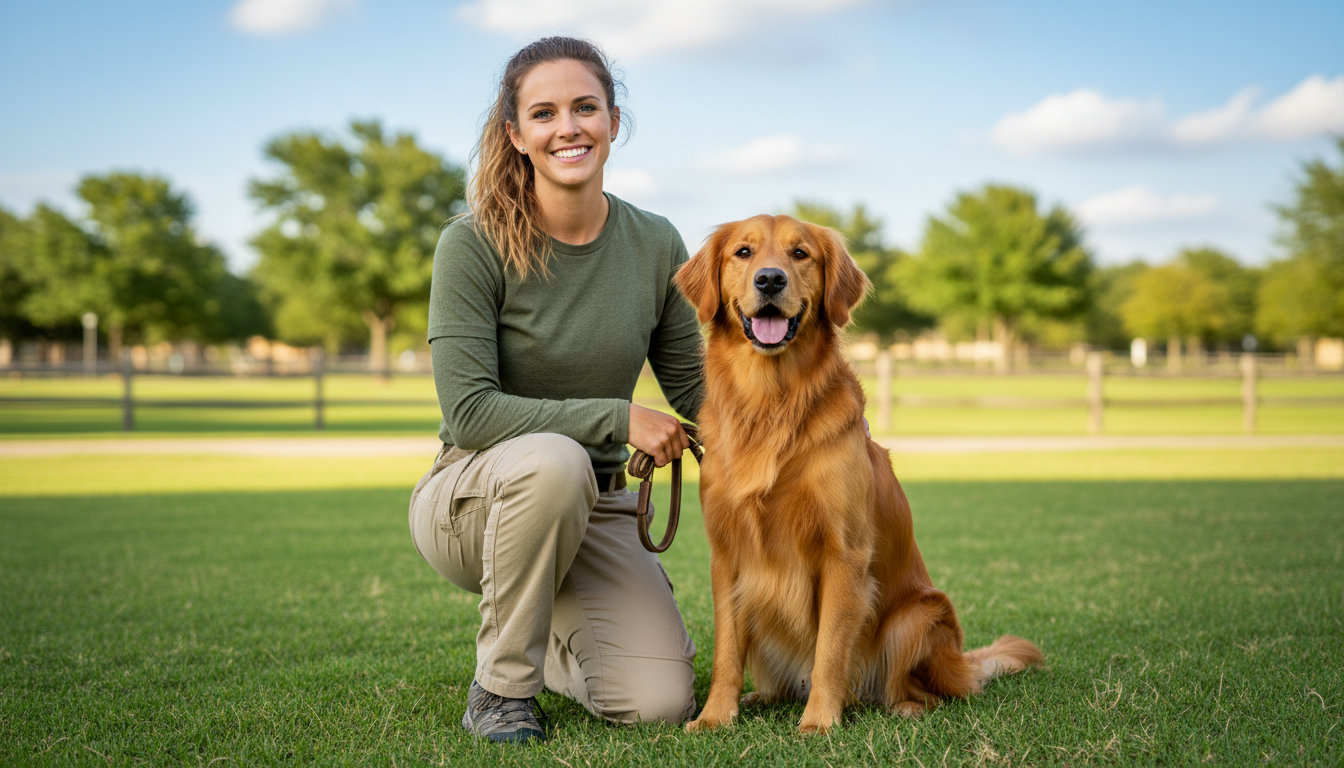
Modern, reward-based training is the standard for ethical professionals. This approach builds a trusting relationship with your dog and aligns with local expectations for well-mannered pets. It’s the foundation for all effective training programs.
Basic obedience covers sit, down, stay, come, and loose-leash walking. These skills are essential for daily life in Floral Park, ensuring safe and enjoyable walks through the neighborhood.
Puppy training focuses on critical early lessons. This includes socialization to new sights and sounds, potty training, bite inhibition, and crate training. Starting early prevents problems from becoming ingrained habits.
Behavior modification addresses more complex issues like fear, leash reactivity, or separation anxiety. A skilled trainer will use desensitization and counterconditioning to change your dog’s emotional response to triggers.
Private lessons offer personalized attention for your dog’s unique needs. Day training programs can accelerate learning if your schedule is tight. Group classes provide a controlled setting to practice obedience around distractions.
Specialized training, such as therapy dog training or service dog training, requires advanced skills and public access preparation. Ensure any trainer offering this has a proven, structured curriculum.
Always avoid trainers who use intimidation, fear, or physical corrections. These outdated methods can worsen behavioral problems and damage your dog’s quality of life.
Average Cost of Dog Training in Floral Park, NY (Updated for 2026)
Pricing in Floral Park and Nassau County reflects the higher cost of living in the region. Costs vary based on the trainer’s experience, the type of service, and the complexity of your dog’s needs.
| Service Type | Average Cost (Nassau County) |
|---|---|
| Puppy Class (6-week series) | $200–$350 |
| Group Obedience Class (6-week series) | $220–$400 |
| Private Lesson (60 min) | $120–$220 |
| In-Home Training Package (4-6 sessions) | $500–$1,200 |
| Day Training (per week) | $600–$1,100 |
| Behavior Consultation | $175–$300 |
| Board and Train (2-3 weeks) | $2,500–$5,500 |
Many trainers offer a free consultation or evaluation to discuss your dog and their recommended approach. Be sure to ask about any additional travel fees for in-home services within the village.
Questions to Ask a Potential Dog Trainer
- What is your training philosophy, and can you explain how you use positive reinforcement?
- What professional credentials do you hold, such as CPDT-KA or KPA-CTP?
- How do you create a customized training plan for my dog’s specific behavior and our family’s routine?
- Do you offer in-home sessions, group classes, or both? What do you recommend for my goals?
- How do you measure progress and what does your follow-up support look like?
- Can you provide a clear breakdown of all costs and your cancellation policy?
- Do you carry professional liability insurance? Can you provide proof?
- For behavior issues, are you willing to collaborate with my veterinarian?
Local Floral Park Rules and Considerations
Floral Park has local ordinances designed to keep the community peaceful and safe. Nassau County also enforces New York State public health laws.
Dogs must be leashed at all times when not on your private property. The village code requires dogs to be under the control of a competent person using a leash not exceeding six feet in length. This applies everywhere, including parks, unless in a designated off-leash area.
New York State and Nassau County law require all dogs to be vaccinated against rabies. You must keep the rabies tag on your dog’s collar. Nassau County also issues a separate dog license, which is mandatory.
Excessive barking is considered a nuisance. Training can help manage alert barking, which is especially important in Floral Park’s dense residential neighborhoods to maintain good relations with neighbors.
New York State does not require a specific license to operate as a dog trainer. However, any trainer running a business in the Village of Floral Park must have a general business license. Reputable trainers should also carry liability insurance to protect themselves and their clients.
Local Floral Park Resources for Dog Owners
These local spots are great for practicing skills and providing enrichment. Always follow posted rules and practice good etiquette.
- Floral Park Memorial Park: While dogs must be leashed, the park’s paths are perfect for practicing focused walks and handling distractions like children playing or sports games.
- Nassau County Dog Parks: Nearby options include the Wantagh Park Dog Run and Christopher Morley Park Dog Run. These fenced areas are ideal for safe off-leash play and recall practice.
- Valley Stream State Park: A short drive away, this park offers extensive leashed trail walking, excellent for building duration and focus in nature settings.
- Hempstead Lake State Park: Another nearby option for long, structured leashed walks to work on obedience around wildlife and other park visitors.
FAQs
How much does in-home dog training cost?
In Floral Park and Nassau County, a single in-home session typically costs between $120 and $220. Most trainers offer discounted multi-session packages, which brings the per-session price down.
Is in-home dog training worth it?
Yes, for many situations. In-home training addresses behaviors exactly where they happen, like jumping on guests, counter surfing, or reactivity at your front window. The trainer can also help you practice leash skills on your own street.
Can you pay someone to house train your dog?
Many trainers offer puppy programs that include a house training plan. Some day training services can also implement the routine for you, while teaching you how to maintain it consistently.
What is the 3-3-3 rule for dog training?
It’s a general timeline for a newly adopted dog: 3 days to decompress, 3 weeks to learn your routines, and 3 months to feel fully at home. A good trainer will tailor their approach to this adjustment period.
How long will it take to reach my training goals?
For basic manners and puppy training, expect to see reliable results within 6-8 weeks of consistent practice. For fear, reactivity, or aggression, behavior modification is a longer process, often taking several months of dedicated work.
What should I bring to group classes?
Bring a well-fitted collar or harness, a 6-foot non-retractable leash, high-value treats, and your dog’s vaccination records. Your trainer will likely require proof of rabies and other core vaccines.
What’s the leash law in Floral Park?
Floral Park Village Code mandates that dogs be kept on a leash not exceeding six feet in length whenever they are off the owner’s private property. There are no public, village-operated off-leash areas.
Do I need a dog license in Floral Park or county?
Yes. All dogs in Nassau County must be licensed with the county. You must provide a current rabies certificate to obtain or renew the license. The license tag must be worn by the dog along with its rabies tag.
What shots does my dog need in county or NY?
New York State requires the rabies vaccine. Nassau County and most trainers also require DHPP (distemper/parvo) and Bordetella vaccines for group class participation. Always consult your veterinarian.
Are dog trainers required to be licensed in Floral Park or county or NY?
New York State does not have a specific professional license for dog trainers. However, they must comply with local business licensing in the Village of Floral Park. Trainers offering boarding services must be licensed by the NYS Department of Agriculture and Markets.
Where can I practice off-leash recall?
The safest and only legal places are fully fenced public dog runs, like those at Wantagh Park or Christopher Morley Park in Nassau County. Always check park rules before visiting.
Which dog parks allow training around Floral Park?
The designated dog runs at Wantagh Park and Christopher Morley Park allow off-leash activity inside their fenced areas. These are suitable for practicing recalls and commands in a controlled, off-leash setting.
What beaches or trails allow dogs for training?
Dogs are generally prohibited on Long Island ocean beaches during the summer season. For leashed trail training, nearby state parks like Valley Stream and Hempstead Lake are excellent options outside of peak beach months.