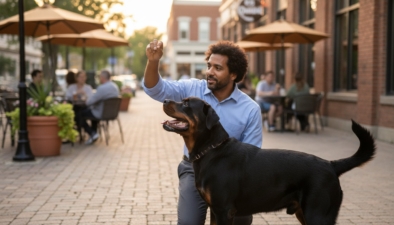
Your Complete Guide to Choosing a Dog Trainer in Holderness and Surrounding Areas
Life with a dog in Holderness is special. Your days likely include walks along quiet roads, adventures on the trails around Squam Lake, and quiet evenings in a close-knit community. A well-trained dog is essential here, whether navigating the seasonal bustle of the Squam Lakes Natural Science Center path or behaving politely when wildlife wanders into the yard.
Finding a trainer who understands this specific environment can make all the difference. They’ll help you build skills that work for local trails, respect your neighbors, and keep your dog safe in a rural setting. This guide focuses on what Holderness and Grafton County dog owners need to know when searching for professional dog training services.
How to Choose the Right Trainer
Start by looking for a professional dog trainer who uses humane, science-based methods like *positive reinforcement* training. Your goal is a dog that can walk calmly on a leash past grazing horses, come when called even with squirrels darting about, and feel comfortable during visits to places like the Ashland or Plymouth town centers.
Good credentials are a strong indicator of a trainer’s knowledge. Look for certifications such as CPDT-KA or KPA-CTP. For dogs with fear, reactivity, or aggression, a certification like IAABC-CDBC shows specialized knowledge in behavior modification.
Consider what format fits your life. In-home sessions are perfect for tackling specific household issues or starting puppy training. Group classes are excellent for practicing basic obedience around distractions once your dog has some foundational skills. Many trainers in the area also offer private lessons at a local park or field.
Common Dog Training Methods Explained
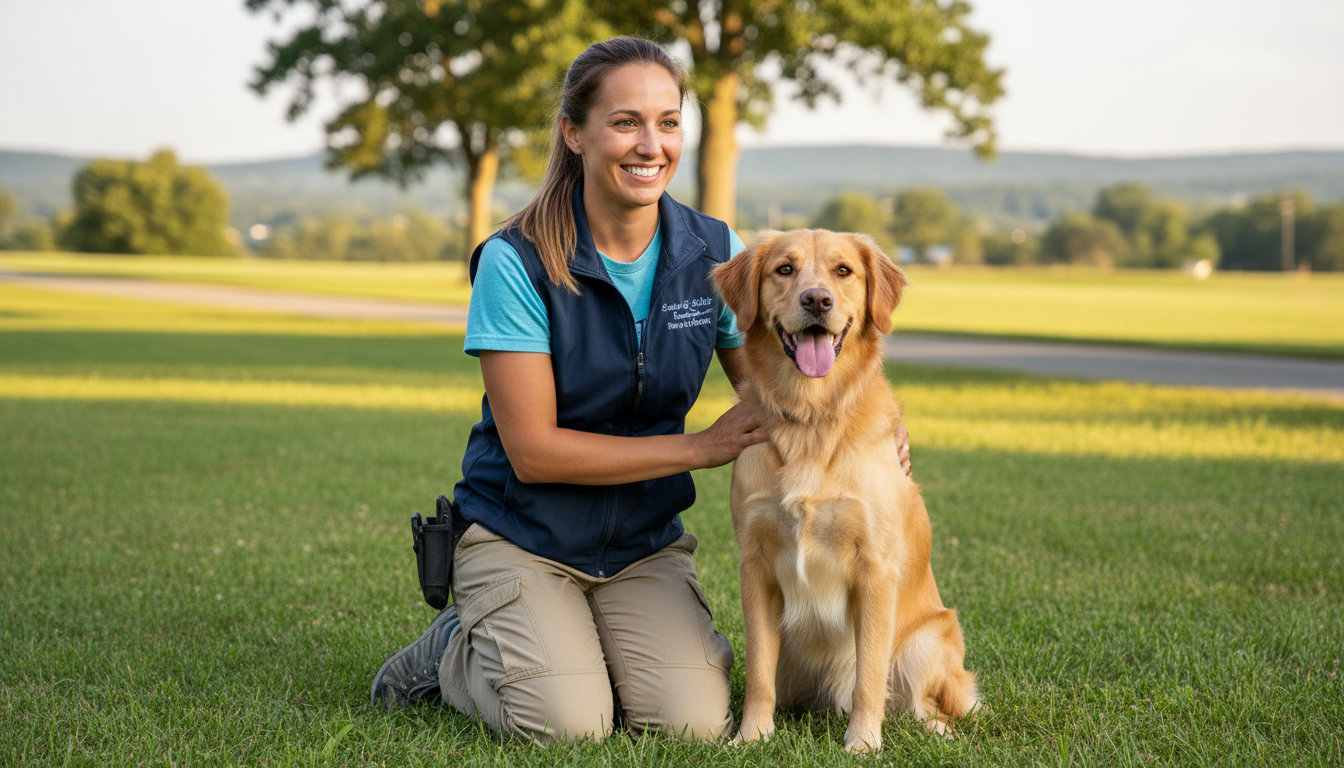
Modern, reward-based training is the most effective and ethical path to a well-behaved dog. It builds a strong bond and helps ensure your dog can meet local expectations for quiet and control.
Basic obedience training**** covers skills like sit, stay, come, and loose-leash walking. These are the building blocks for safely enjoying all that the Lakes Region offers.
Puppy training focuses on critical early lessons: socialization, potty training, bite inhibition, and crate training. Starting early prevents problems before they become habits.
Behavior modification addresses more complex issues like separation anxiety, fear of loud noises (common with rural machinery), or leash reactivity. This work requires patience and a careful, structured plan.
Private lessons offer one-on-one attention for customized goals. Group classes provide a controlled setting for your dog to learn around other people and dogs. Board and train programs, where the trainer works with your dog intensively, are also an option, though less common locally than in-home coaching.
It’s important to avoid any trainer who relies on fear, intimidation, or pain to force compliance. These outdated methods can damage your dog’s trust and worsen behavioral problems, which is not ideal for a peaceful community like Holderness.
Average Cost of Dog Training in Holderness, NH (Updated for 2026)
Pricing in the Holderness area and wider Grafton County reflects the local economy and trainer expertise. Costs are generally comparable to other parts of New Hampshire outside the denser southern region. Here is an average look at 2026 pricing.
| Service Type | Average Cost (Holderness/Grafton County Area) |
|---|---|
| Puppy Classes (4–6 weeks) | $140–$250 total |
| Group Obedience Classes (6 weeks) | $175–$300 total |
| Private Lessons (60 min) | $90–$150 per session |
| In-Home Training Packages (4–6 visits) | $400–$850 total |
| Day Training (per week) | $400–$800 |
| Initial Behavior Consultation | $140–$225 |
| Board and Train (2 weeks) | $1,800–$3,500 |
Travel fees may apply for in-home services depending on your distance from the trainer’s base. Always ask for a clear breakdown of costs and what is included in any package.
Questions to Ask a Potential Dog Trainer
- What is your primary training philosophy, and can you describe a typical training session?
- What professional dog trainer certifications do you hold, and how do you continue your education?
- How do you tailor a training program for a dog living in a rural/lakes region environment?
- Do you offer in-home dog training, group classes, or both? Which do you recommend for my goals?
- What does your process look like for addressing issues like wildlife-chasing or alert barking?
- Can you provide proof of liability insurance?
- Will you collaborate with my veterinarian if we are addressing anxiety or other medical concerns?
- What is your policy on cancellations and rescheduling?
Local Holderness Rules and Considerations
Holderness follows New Hampshire state statutes and local ordinances designed to keep people, pets, and wildlife safe. A good trainer will help you navigate these rules seamlessly.
Dogs must be under control at all times. While there is no statewide leash law, towns and specific areas have regulations. Dogs are prohibited from being at large, meaning they cannot roam unsupervised off your property. In public spaces like town docks or conserved lands, a leash is the safest and most legally sound way to maintain control.
New Hampshire state law requires all dogs to be vaccinated against rabies. You must keep the certificate of vaccination and ensure your dog wears a rabies tag. Grafton County does not issue a separate general dog license.
Excessive barking that disturbs the peace can be considered a nuisance. Training for appropriate alert barking is a smart investment for rural living.
New Hampshire does not require a specific state license to operate as a dog trainer. Reputable trainers should carry their own liability insurance. If a trainer offers board and train services from a facility, that facility may need to comply with state kennel licensing rules.
Local Holderness Resources for Dog Owners
These local spots are wonderful places to practice your training in real-world settings. Always check current rules before visiting.
- Sculptured Rocks Natural Area in Groton: A stunning geological site where leashed dogs are welcome. It’s a great spot for practicing leash skills on uneven terrain and around water.
- West Rattlesnake Mountain Trailhead: Offers rewarding hikes with leashed dogs. It’s an excellent location for building focus and a solid recall amidst natural distractions.
- Squam Lakes Association Trails: Many trails around the lake permit leashed dogs. These are perfect for practicing long-duration stays during a picnic or calm greetings with other trail users.
- White Mountain National Forest: A short drive away, offering endless leashed hiking opportunities to proof obedience commands in a wilder setting.
FAQs
How much does in-home dog training cost?
In the Holderness area, a single in-home training session typically costs between $90 and $150. Most trainers offer discounted multi-session packages for common goals like puppy training or basic obedience.
Is in-home dog training worth it?
For many Holderness residents, yes. It allows the trainer to see your home environment, address specific issues like counter-surfing or door-dashing, and tailor a plan for your property. They can also help you practice skills on your own quiet road before heading to busier areas.
Can you pay someone to house train your dog?
Yes. Many trainers include potty training as a core part of their puppy training programs. They can create a tailored schedule, teach you the signals to watch for, and help solve any setbacks quickly.
What is the 3-3-3 rule for dog training?
This is a general guideline for a newly adopted dog’s adjustment period. It suggests 3 days to decompress, 3 weeks to learn your routines, and 3 months to feel fully at home. A good trainer will work with this timeline, not against it.
How long will it take to reach my training goals?
For foundational skills like basic obedience, consistent practice over 6-8 weeks usually yields reliable results. More complex behavior modification, such as for fear or reactivity, often requires a longer-term commitment of several months.
What should I bring to group classes?
Bring a standard 6-foot leash, a comfortable flat collar or harness, plenty of small, high-value treats, and your dog’s vaccination records if required by the trainer. Leave retractable leashes at home.
What’s the leash law in Holderness?
Holderness does not have a town-wide leash ordinance, but New Hampshire law prohibits dogs from running “at large.” This means your dog must be under your direct control at all times when off your property. Using a leash is the simplest way to ensure compliance and safety, especially near Squam Lake and on trails.
Do I need a dog license in Holderness or Grafton County?
New Hampshire does not have a general dog license. The only mandatory requirement is a valid rabies vaccination and tag, which must be worn by your dog.
What shots does my dog need in New Hampshire?
Rabies vaccination is required by state law. Your veterinarian will also recommend a core vaccine schedule for distemper, parvovirus, and adenovirus, which is crucial for dogs that may encounter wildlife or other animals in rural areas.
Are dog trainers required to be licensed in Holderness or New Hampshire?
No, the state does not license dog trainers. It is a self-regulated industry. You should seek trainers with independent certifications and ask for proof of liability insurance for your protection.
Where can I practice off-leash recall?
The safest option is a securely fenced private yard. For public practice, you must have exceptional verbal control. Some trainers rent or know of secured fields for this purpose. Always ensure you have permission and that it is legally permissible.
Which dog parks allow training around Holderness?
The closest dedicated dog parks are in larger towns like Plymouth (Plymouth Dog Park) or Laconia. These fenced areas can be useful for practicing socialization and recall in a controlled, off-leash setting.
What beaches or trails allow dogs for training?
Leashed dogs are permitted on most trails in the White Mountain National Forest and on many Squam Lakes Association conservation lands. Dogs are generally not allowed on public swimming beaches. Always verify specific trailhead rules before you go.