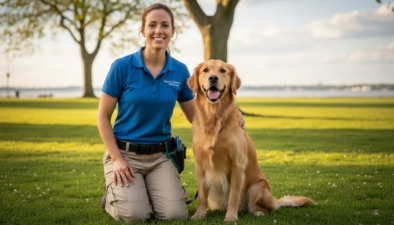
Your Complete Guide to Choosing a Dog Trainer in Howard Beach
Living in Howard Beach means enjoying quiet canals, walks along the water, and close-knit community streets. Your dog needs to navigate this unique environment calmly, from staying composed during loud plane approaches from JFK to walking politely on narrow sidewalks near Cross Bay Boulevard.
Howard Beach is located in Queens County, and all local dog regulations follow New York City's comprehensive laws. A trainer familiar with NYC’s specific rules and the neighborhood’s character can provide a training program that works for your home and your outings to local spots.
How to Choose the Right Trainer
Look for a professional dog trainer who uses *positive reinforcement* training and understands the realities of life in Howard Beach. This means preparing your dog for distractions like jet noise, loose-leash walking in crowded areas like the Broadway Market, and behaving calmly around the wildlife often seen near the water.
Credentials help verify a trainer’s knowledge. Reputable dog trainer certifications to look for include CPDT-KA or IAABC-CDBC for serious behavior issues. For basic obedience and puppy training, a strong educational background in humane methods is key.
In-home sessions are ideal for addressing specific household manners, door-dashing, and creating a foundation for neighborhood walks. Group classes are excellent for proofing skills around other dogs, which is crucial before visiting any of NYC’s busy parks.
Common Dog Training Methods Explained
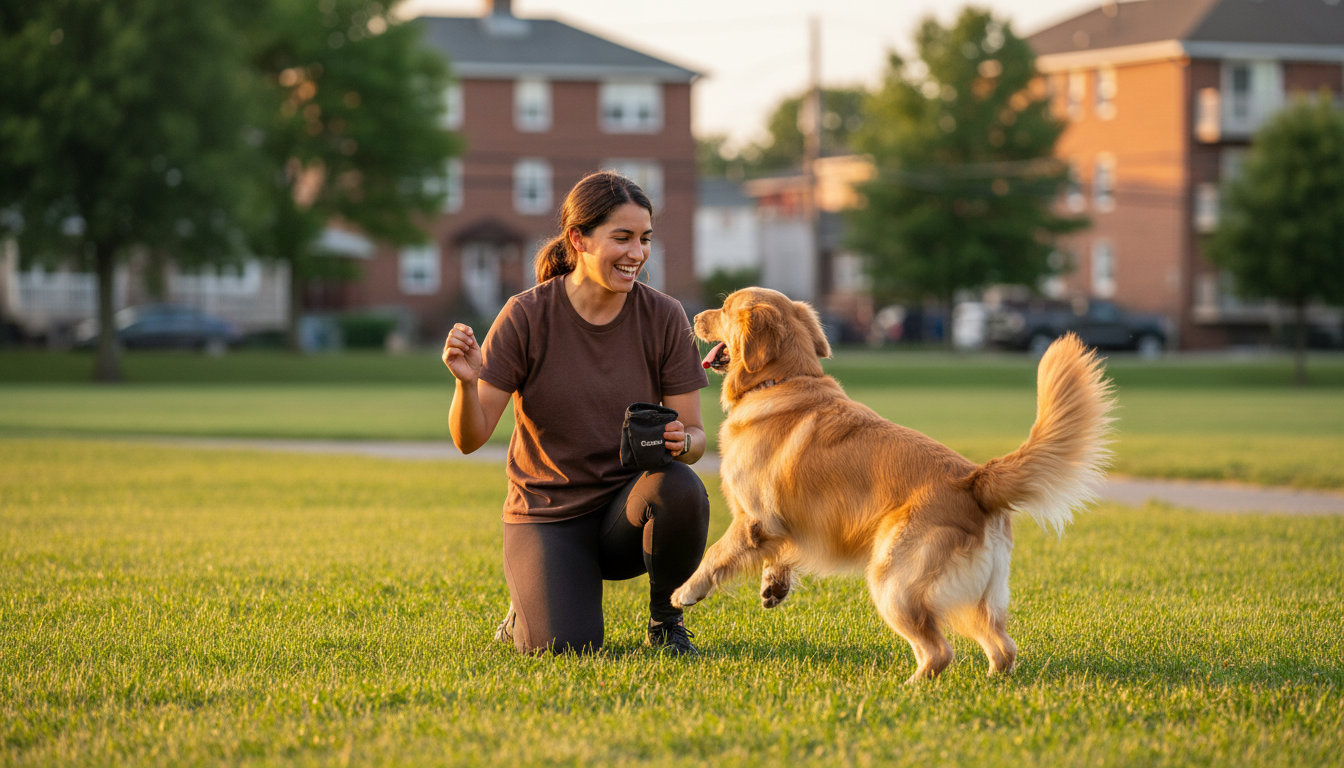
Reward-based methods build a trusting relationship with your dog and create reliable behaviors that comply with NYC’s strict animal control laws. This approach is effective for everything from basic obedience to complex behavior modification.
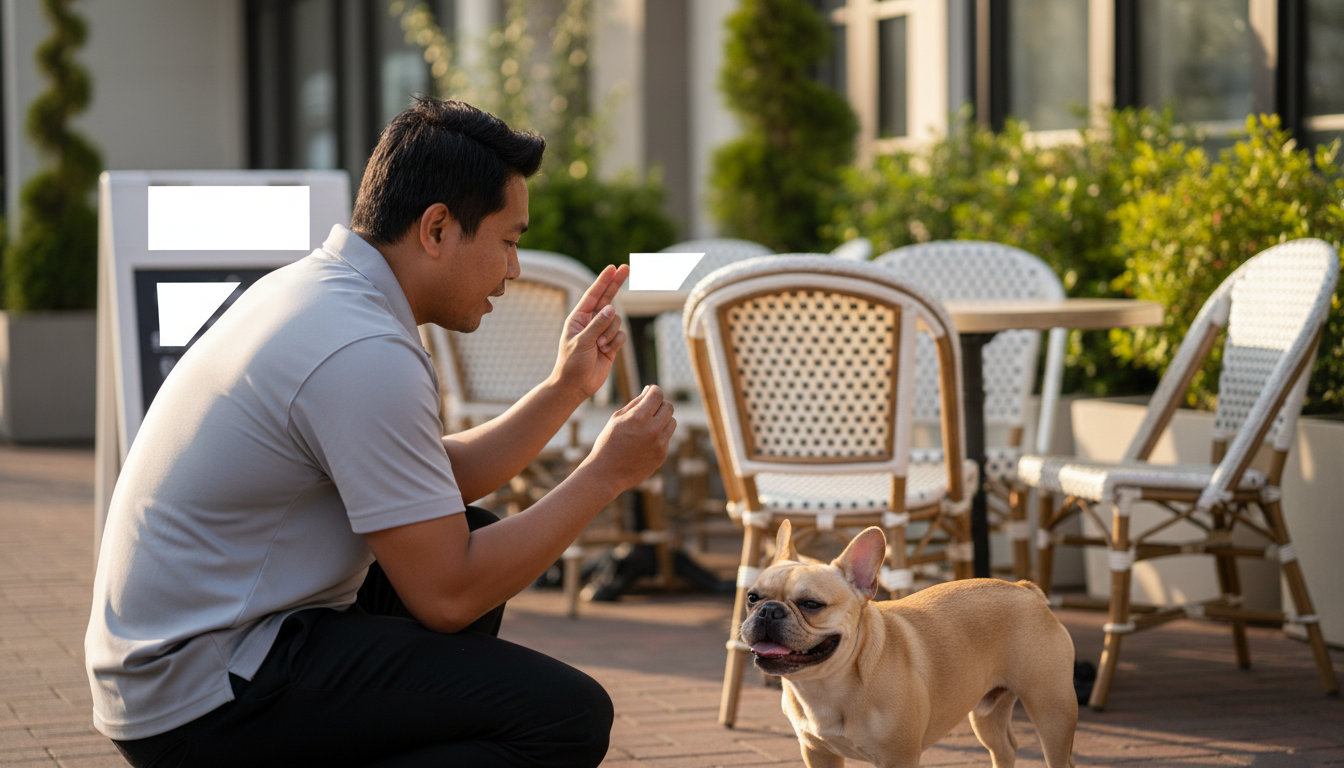
Basic obedience includes skills like sit, down, stay, and a solid recall. These are essential for safely enjoying leashed walks in Howard Beach Park or sitting at a local restaurant patio.
Puppy training focuses on critical socialization, bite inhibition, potty training, and crate training. Starting early prevents common problems and helps your puppy become a confident adult dog in the city.
Behavior modification addresses issues like fear of loud noises, leash reactivity on crowded paths, or separation anxiety. A skilled trainer will use desensitization techniques and may recommend working with your veterinarian.
Private lessons offer personalized attention for your dog’s specific challenges. Day training programs can accelerate learning for busy households, while group classes provide practice around controlled distractions.
Specialized training, such as therapy dog training or service dog training, requires a trainer with specific experience in public access skills and task training.
It’s important to avoid trainers who rely on fear, intimidation, or pain-based tools. These methods can worsen behavioral problems, increase stress, and often violate the spirit of NYC’s animal welfare provisions.
Average Cost of Dog Training in Howard Beach, NY (Updated for 2026)
Pricing in Howard Beach and the broader Queens area reflects NYC’s cost of living and the expertise of the trainer. Services are often priced per session or as package deals. Below is a general overview of 2026 market rates.
| Service Type | Average Cost (Howard Beach/Queens) |
|---|---|
| Puppy Classes (6 weeks) | $200–$350 |
| Group Obedience Classes (6 weeks) | $220–$400 |
| Private Lessons (1 hour) | $120–$220 |
| In-Home Training Package (4-6 sessions) | $500–$1,200 |
| Day Training (per week) | $600–$1,100 |
| Behavior Consultation | $175–$300 |
| Board and Train (2 weeks) | $2,500–$5,500 |
Many trainers charge a travel fee for in-home services, which can vary depending on your exact location within Howard Beach or other Queens neighborhoods.
Questions to Ask a Potential Dog Trainer
- What is your philosophy and what methods do you primarily use?
- What professional certifications, such as CPDT-KA, do you hold? How do you pursue continuing education?
- How will you tailor the training plan for my dog’s needs and my Howard Beach lifestyle?
- Do you offer in-home, group, or day training, and what do you recommend for my goals?
- How do you measure progress and what does communication look like between sessions?
- What is your total fee structure, including any travel fees or package details?
- Do you carry professional liability insurance?
- For behavior issues, are you willing to collaborate with my veterinarian?
- What “homework” will you provide to ensure consistency?
Local Howard Beach Rules and Considerations
New York City law governs all animal regulations in Howard Beach. Understanding these rules is a key part of responsible dog ownership and informs what skills your dog needs to learn.
Dogs must be leashed at all times when on public property, unless in a designated dog run. The leash cannot exceed six feet in length. A reliable loose-leash walk is not just a nicety; it’s a legal requirement.
All dogs in NYC must be licensed with the Department of Health and Mental Hygiene (DOHMH). You must also have proof of a current rabies vaccination, which is mandated by New York State law.
Excessive barking that disturbs the peace can result in a noise violation complaint. Training for alert barking and settling quietly is important for maintaining good relationships with close neighbors.
New York City does not have a specific licensing requirement for dog trainers operating as individual professionals. However, any business must have the appropriate NYC business license. Professional dog trainers are strongly advised to carry liability insurance. If a trainer offers board and train services from a residential location, they must comply with NYC's zoning and kennel regulations, which are restrictive in residential areas like Howard Beach.
Local Howard Beach Resources for Dog Owners
These local spots provide excellent environments to practice your dog’s training in real-world settings. Always follow posted rules and practice good etiquette.
- Howard Beach Park: While not a dog run, the park’s perimeter and paths are perfect for practicing structured leashed walks with distractions like bikes and children.
- Frank M. Charles Memorial Park (S. Conduit Ave): This park offers open spaces for leashed walking training and exposure to different environments.
- Broad Channel Park: A short drive away, this park features a dedicated, fenced dog run for safe off-leash play and recall practice.
- Gateway National Recreation Area (Jacob Riis Park/Fort Tilden): Leashed dogs are welcome on most trails and beaches outside the summer swimming season (typically after September 15th). This is a fantastic, expansive area for training focus around wildlife, wind, and other visitors.
FAQs
How much does in-home dog training cost?
In Howard Beach, a single in-home training session typically costs between $120 and $220. Most trainers offer discounted packages for multiple sessions, which is common for a complete training program.
Is in-home dog training worth it?
Yes, especially for addressing behaviors that happen specifically at home, like jumping on guests, counter surfing, or reactions to outdoor noises. It also allows the trainer to see your dog’s environment and tailor strategies directly to your living space and immediate neighborhood.
Can you pay someone to house train your dog?
Many trainers include potty training as a core part of puppy training packages. For adult dogs, house training can be a focus of private in-home sessions, where the trainer will establish a consistent schedule and management plan.
What is the 3-3-3 rule for dog training?
This is a general guideline for a newly adopted dog’s adjustment period: 3 days to decompress, 3 weeks to learn your routine, and 3 months to feel fully at home. A good trainer will work with this timeline, setting appropriate expectations for learning.
How long will it take to reach my training goals?
For basic obedience and manners, consistent practice over 6-8 weeks often yields strong results. More complex behavior modification, like fear or reactivity, is a longer-term process that can take several months of dedicated work.
What should I bring to group classes?
Bring a well-fitting harness or flat collar, a 6-foot non-retractable leash, high-value treats, and your dog’s vaccination records as required by the training facility. Always check with your specific trainer for their list.
What’s the leash law in Howard Beach?
New York City leash law applies. Dogs must be on a leash no longer than 6 feet at all times when in public, unless inside a designated, signed dog run area.
Do I need a dog license in Howard Beach or county?
Yes. All dogs in New York City (Queens County) must be licensed by the NYC Department of Health. The license must be renewed regularly and your dog must have a current rabies vaccination to obtain it.
What shots does my dog need in county or NY?
New York State and NYC require a rabies vaccination. Your veterinarian will also strongly recommend core vaccines like DHPP (distemper/parvo) and may advise others like bordetella based on your dog’s exposure risk.
Are dog trainers required to be licensed in Howard Beach or county or NY?
New York City does not issue a specific “dog trainer license.” Trainers must operate a legitimate business in compliance with NYC regulations. There is no state-level license for trainers, but those offering boarding services must follow applicable kennel regulations.
Where can I practice off-leash recall?
The only legal places for off-leash activity are inside officially designated NYC dog runs. The closest options to Howard Beach include the dog runs at Broad Channel Park and many others scattered throughout Queens and Brooklyn.
Which dog parks allow training around Howard Beach?
The dog run at Broad Channel Park is the nearest dedicated facility. Using a dog run during off-peak hours is an excellent way to practice recalls and engagement around mild distractions in a safely enclosed space.
Are there any breed-specific laws in NYC?
New York City does not have breed-specific legislation (BSL) that bans particular breeds. However, all dogs are subject to the city’s leash and muzzle laws if deemed a nuisance or dangerous by the Department of Health.