Your Complete Guide to Choosing a Dog Trainer in Lawrence and Surrounding Areas
Life with a dog in Lawrence is full of character. From walks along the historic canals and Spicket River Greenway to navigating the busy sidewalks of downtown, your dog needs to be a calm and confident companion. Finding a local trainer who understands the specific rhythms of this city can make all the difference in creating a harmonious life together.
Lawrence is located in Essex County, and many local regulations are guided by both city ordinances and county-level public health guidelines. A professional dog trainer who is familiar with this landscape can help you navigate everything from proper socialization in dense neighborhoods to managing distractions near the busy Common.
How to Choose the Right Trainer
Start your search by looking for a trainer whose philosophy aligns with creating a trusting, stress-free relationship with your dog. In a city environment like Lawrence, this means your dog should learn to walk politely on a leash past busy shops, remain calm around diverse sounds and people, and be a good neighbor.
Credentials are a helpful indicator of a trainer’s commitment to education and ethical practices. Look for professionals who hold certifications such as CPDT-KA or KPA-CTP. For serious behavioral concerns like aggression or severe anxiety, a certification like IAABC-CDBC signifies specialized knowledge.
In-home training sessions are exceptionally valuable for addressing behaviors specific to your home and immediate neighborhood, like door-dashing or reactivity on your street. Group classes are excellent for proofing obedience skills around other dogs and people, which is crucial for visits to places like Den Rock Park.
Common Dog Training Methods Explained
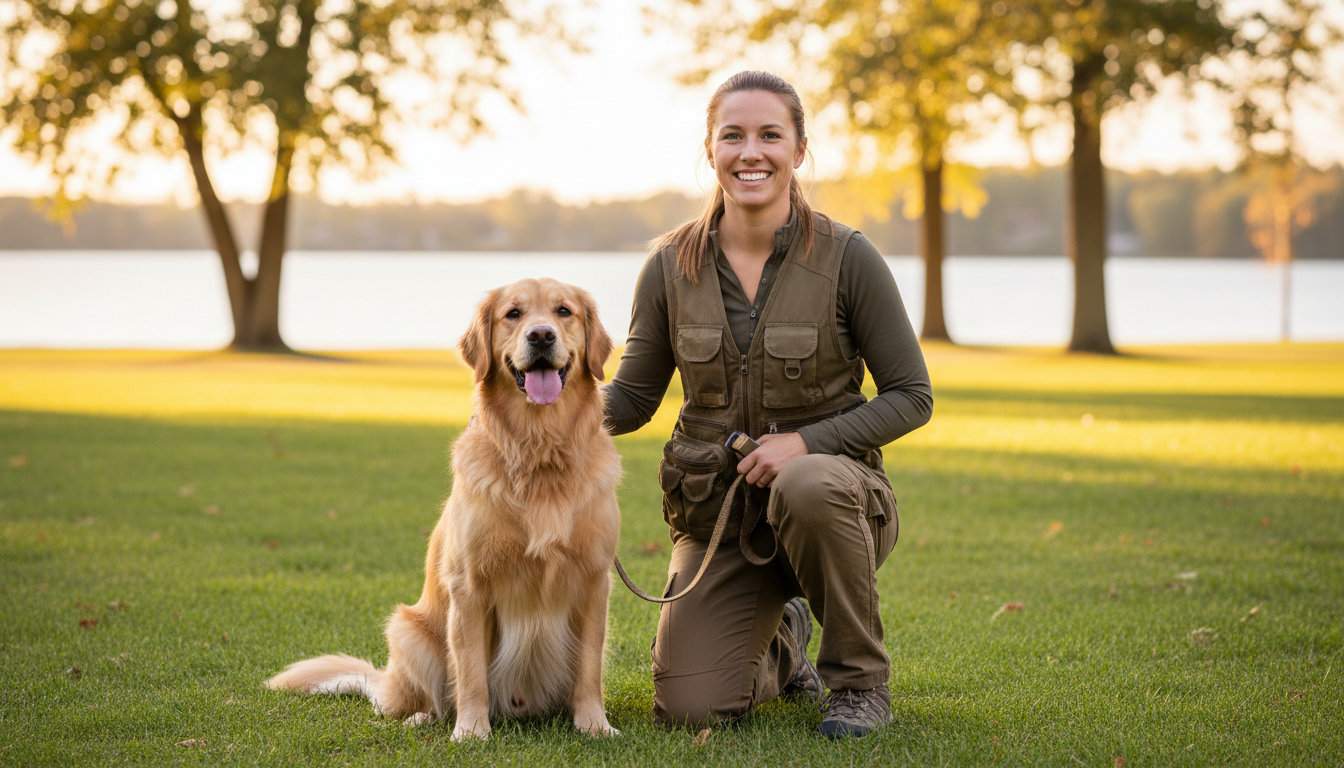
Modern dog training focuses on positive reinforcement to build desired behaviors willingly. This method is not only the most humane but also highly effective for creating a reliable, well-behaved dog that can thrive in an urban setting.
Basic obedience training**** covers essential cues like sit, down, stay, and a solid recall. These skills are the foundation for safety and good manners during every walk in Lawrence.
Puppy training prioritizes early socialization, bite inhibition, potty training, and crate acclimation. Starting early helps prevent common behavior issues from developing.
Behavior modification addresses problems like fear, leash reactivity, or separation anxiety through carefully managed techniques. For complex cases, a qualified trainer will often collaborate with your veterinarian.
Private lessons offer a customized approach for your dog’s unique needs and your schedule. Day training programs can accelerate learning for busy owners.
Group classes provide a controlled environment to practice skills around distractions, which is vital for city living. Look for classes that manage class size and dog proximity carefully.
Specialized training, such as service dog or therapy dog preparation, requires a structured program with clear goals for public access and task performance.
It is important to avoid trainers who rely on intimidation, fear, or physical corrections. These outdated methods can worsen behavioral problems and damage the human-animal bond, which is counterproductive to building a calm companion for city life.
Average Cost of Dog Training in Lawrence, MA (Updated for 2026)
Pricing for dog training services in the Lawrence and Essex County area varies based on the trainer’s experience, the type of service, and the complexity of your dog’s needs. The following table reflects current local averages.
| Service Type | Average Cost (Lawrence/Essex County) |
|---|---|
| Puppy Class (4-6 weeks) | $160–$300 total |
| Group Obedience Class (4-6 weeks) | $175–$325 total |
| Private Lesson (60 min) | $90–$160 per session |
| In-Home Training Package (4-6 sessions) | $400–$850 total |
| Day Training (per week) | $500–$1,000 |
| Behavior Consultation | $150–$275 initial |
| Board and Train (2-3 weeks) | $2,200–$4,800 total |
Packages often provide better value than single sessions. Always ask what is included, how progress is measured, and if the trainer offers a free initial consultation.
Questions to Ask a Potential Dog Trainer
- What is your primary training methodology, and how do you ensure sessions are positive for my dog?
- What professional certifications, like CPDT-KA, do you hold? Do you pursue continuing education?
- Can you create a customized plan for my dog’s challenges and my goals for living in Lawrence?
- Do you offer in-home, group, or day training, and which do you recommend for my situation?
- How do you track progress and help us generalize skills to real-world settings?
- What are your total fees, including any travel charges for my neighborhood? What is your cancellation policy?
- Do you carry professional liability insurance?
- For behavior issues, are you willing to collaborate with my veterinarian?
- What will my homework be between sessions?
Local Lawrence Rules and Considerations
Understanding local regulations helps you be a responsible dog owner and informs the goals of your training program.
Dogs must be leashed and under control in all public spaces unless in a designated off-leash area. A standard 6-foot leash is recommended for control on crowded pathways.
Massachusetts state law requires all dogs to be vaccinated against rabies. A current rabies tag must be attached to your dog’s collar. Essex County public health agencies enforce this.
Excessive barking can be considered a nuisance under city ordinances. Training can help manage alert barking and separation anxiety proactively.
The Commonwealth of Massachusetts does not require a specific state license for dog trainers operating as a business. However, all businesses in Lawrence must obtain a city business license. Trainers offering board and train services from a facility must comply with state kennel regulations.
Professional dog trainers are strongly advised to carry general liability insurance. While not a city mandate, it protects both the business and the client.
Local Lawrence Resources for Dog Owners
These local spots provide excellent opportunities to practice training in real-world environments.
- Den Rock Park: Offers wooded trails perfect for practicing structured walks and leash skills on varying terrain.
- Spicket River Greenway: A paved linear park ideal for working on loose-leash walking with steady foot and bicycle traffic.
- Methuen Dog Park (in nearby Methuen): A fully fenced, off-leash park for safe recall practice and socialization during off-peak hours.
- Harold Parker State Forest (in nearby Andover/North Andover): Leashed dogs are welcome on miles of trails, offering high-level distraction training around nature.
FAQs
How much does in-home dog training cost?
In the Lawrence area, a single in-home session typically costs between $90 and $160. Most trainers offer discounted packages of 4 to 6 sessions, which brings the average total cost to between $400 and $850.
Is in-home dog training worth it?
Yes, especially in a city like Lawrence. An in-home trainer can address behaviors exactly where they happen—jumping on guests, barking at hallway noises, or pulling on your specific staircase. They can then move the training directly to your sidewalk to work on real-world leash skills.
Can you pay someone to house train your dog?
Many trainers include potty training as a core part of their puppy programs. Through day training or in-home coaching, they can establish a routine and teach your dog the appropriate behavior, while showing you how to maintain consistency.
What is the 3-3-3 rule for dog training?
This is a general guideline for a newly adopted dog’s adjustment period: 3 days to decompress, 3 weeks to learn your routine, and 3 months to feel fully at home. A good trainer will design a program that respects this timeline.
How long will it take to reach my training goals?
For basic obedience and manners, most dogs show significant improvement with consistent practice over 6 to 8 weeks. Addressing fear, reactivity, or aggression is a longer process, often requiring several months of dedicated behavior modification.
What should I bring to group classes?
Bring a well-fitted collar or harness, a 6-foot leash, high-value treats, and your dog’s vaccination records as requested by the trainer. Leave retractable leashes at home.
What’s the leash law in Lawrence?
Lawrence requires dogs to be on a leash and under the owner’s control in all public areas, unless in a specifically designated off-leash zone like a dog park.
Do I need a dog license in Lawrence or Essex County?
The City of Lawrence requires all dogs to be licensed annually. You must provide proof of a current rabies vaccination to obtain the license. This is separate from the rabies tag.
What shots does my dog need in Essex County or Massachusetts?
Rabies vaccination is legally required by the state. Your veterinarian will also recommend a core vaccine schedule (like DAPP) and may suggest others like bordetella based on your dog’s lifestyle.
Are dog trainers required to be licensed in Lawrence or Essex County or Massachusetts?
Massachusetts does not have a specific state-level license for dog trainers. Trainers must obtain a standard business license from the City of Lawrence to operate legally. Those who board dogs may need a kennel license from the state.
Where can I practice off-leash recall?
The safest and only legal places are fully fenced, designated dog parks. The Methuen Dog Park is a nearby option for practicing in a secure, off-leash environment.
Which dog parks allow training around Lawrence?
While dog parks are for play, you can use them during quiet times to practice specific skills like recalls. The Methuen Dog Park is the primary fenced option in the immediate area for this type of practice.
What beaches or trails allow dogs for training?
While ocean beaches have seasonal restrictions, many nearby state parks allow leashed dogs. Harold Parker State Forest offers extensive trail systems perfect for training focused walks and building duration around natural distractions.