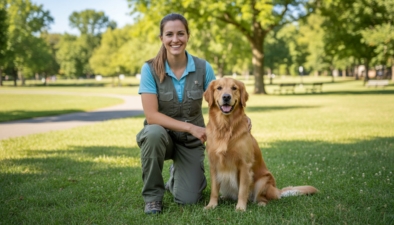
Your Complete Guide to Choosing a Dog Trainer in Little Neck and Surrounding Areas
Life with a dog in Little Neck offers quiet, tree-lined streets and quick access to the vibrant energy of Queens. Your daily walks might take you past the Little Neck Parkway shops, through the fields at Udalls Cove Park, or along the bustling sidewalks near the Long Island Railroad station. A well-trained dog makes these experiences enjoyable, ensuring they can navigate narrow sidewalks calmly, ignore the squirrels in Alley Pond Park, and be a polite neighbor in this close-knit community.
As a neighborhood within the borough of Queens, all local rules follow New York City regulations. Finding a professional dog trainer who understands the unique pressures of NYC living—from crowded spaces to strict leash laws—is key to your success. They can tailor a training program to help your dog thrive in this specific environment.
How to Choose the Right Trainer
Begin your search for a dog trainer who uses *positive reinforcement* training methods. This approach builds a trusting relationship with your dog, which is crucial for managing distractions like traffic on Northern Boulevard or off-leash dogs in the distance at a local park. Look for a trainer who can set goals for your Little Neck lifestyle, such as polite greetings in your building’s lobby or a calm settle during a coffee run.
Credentials help you identify a trainer’s level of education. Look for a certified dog trainer with credentials like the CPDT-KA or KPA-CTP. For serious behavior issues like aggression or severe anxiety, a specialist with an IAABC-CDBC or CBCC-KA is recommended. In-home dog training sessions are excellent for addressing behaviors in your own space, while group classes provide vital practice around other dogs and people, simulating the density of Queens.
Common Dog Training Methods Explained
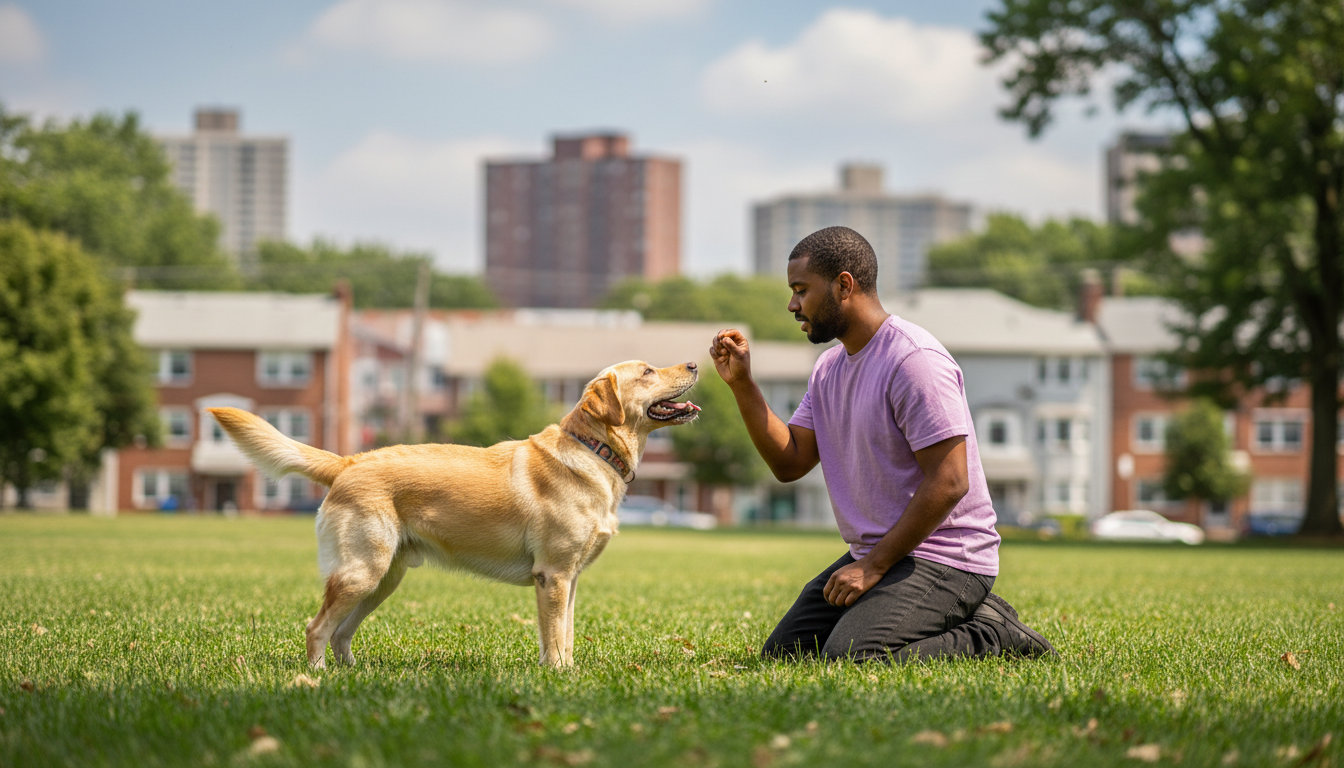
Reward-based training is the most effective and humane way to create a well-behaved dog. It focuses on teaching your dog what to do, rather than punishing unwanted behaviors. This method is especially important in a city setting where a dog’s stress or fear can lead to bigger problems.
Basic obedience covers essential cues like sit, down, stay, and a reliable recall. These skills are the foundation for safety on busy streets and in shared outdoor spaces. Leash training is critical for navigating the neighborhood’s sidewalks without pulling.
Puppy training focuses on early socialization, bite inhibition, and potty training. Starting early in Little Neck helps your puppy become comfortable with the sounds of trains, delivery trucks, and diverse groups of people.
Behavior modification addresses issues like fear, reactivity, or separation anxiety through structured desensitization. This is often necessary for dogs who struggle with the confined spaces and high stimulus of urban life.
Private lessons allow for personalized attention, while group classes teach your dog to focus despite distractions. Specialized training like therapy dog training requires proofing skills in countless public settings.
Always avoid any trainer who uses fear, intimidation, or pain-based tools. These methods are unethical, can worsen behavior problems, and are entirely unsuitable for city living where a dog must feel secure.
Average Cost of dog training in Little Neck, NY (Updated for 2026)
Pricing for dog training services in Little Neck and the greater Queens area reflects NYC’s higher cost of living. Costs vary based on the trainer’s experience, the type of service, and travel within the borough.
| Service Type | Average Cost (Little Neck/Queens) |
|---|---|
| Puppy classes (6 weeks) | $200–$350 total |
| Group obedience classes (6 weeks) | $220–$400 total |
| Private lessons (60 min) | $120–$220 per session |
| In-home coaching packages (4-6 visits) | $500–$1,100 total |
| Day training (per week) | $550–$1,100 |
| Behavior consultation | $175–$300 |
| Board and train programs | $2,500–$6,000+ |
Many trainers serving Little Neck may charge a travel fee for in-home visits. Always ask what is included in a package and their policy on follow-up support.
Questions to Ask a Potential Dog Trainer
- What is your philosophy and what training methods do you primarily use?
- What professional certifications, like CPDT-KA, do you hold? How do you continue your education?
- How do you customize training plans for clients living in NYC apartments and neighborhoods?
- Do you offer in-home, group, or day training, and which do you recommend for my goals?
- How do you measure progress and what does your communication with clients look like?
- What are your total fees, including any travel charges within Queens?
- Do you carry professional liability insurance? Can you provide proof?
- For behavior issues, will you collaborate with my veterinarian?
- What “homework” will you give me to practice between our training sessions?
Local Little Neck Rules and Considerations
Little Neck follows all New York City laws and ordinances. Being aware of these helps you be a responsible owner and informs the skills your dog needs to learn.
Dogs must be on a leash no longer than six feet in all public spaces, including parks, unless in a designated off-leash area during specified hours. This is strictly enforced.
New York City requires all dogs to be licensed with the NYC Department of Health and Mental Hygiene. You must also provide proof of a current rabies vaccination to obtain the license.
Excessive barking that disturbs neighbors can lead to noise complaints. Training can help manage alert barking and separation anxiety proactively.
New York State does not require a specific license to be a dog trainer. However, any business operating in NYC must have a general business license. Responsible professional dog trainers should carry liability insurance to protect themselves and their clients, especially when working in public spaces.
Local Little Neck Resources for Dog Owners
These local spots are great for practicing training skills, socializing, and providing exercise. Always follow posted rules and practice good etiquette.
- Udalls Cove Park: Leashed dogs are welcome on the trails. This is an excellent location for practicing leash skills and building focus around wildlife and natural distractions.
- Alley Pond Park: A short drive away, this massive park offers miles of leashed trail walking. The Adventure Course area has open fields suitable for long-line recall practice in less crowded sections.
- Little Bay Park (Nearby): Features a designated, fenced dog run where dogs can be off-leash legally. Ideal for practicing recalls in a controlled, safe environment.
- Cross Island Parkway Dog Run (In Alley Pond Park): Another fully fenced off-leash area perfect for socialization and supervised play.
- Queens County Farm Museum: Leashed dogs are allowed on the grounds (except in animal barns). This is a unique, low-stress environment to practice obedience around families and farm animals.
FAQs
How much does in-home dog training cost?
In Little Neck and Queens, expect to pay between $120 and $220 for a single in-home private lesson. Most trainers offer discounted packages of 4-6 sessions, which brings the per-session cost down.
Is in-home dog training worth it?
For many Little Neck residents, it is extremely valuable. An in-home trainer can address behaviors exactly where they happen—jumping on guests in your living room, barking at hallway noises, or pulling on your specific building’s staircase. They can then transition training to your local sidewalk.
Can you pay someone to house train your dog?
Yes, many trainers offer puppy programs that include structured potty training plans. Some day training services will also work on this skill as part of a broader training program, while teaching you the maintenance routine.
What is the 3-3-3 rule for dog training?
This is a guideline for adopted dogs. It suggests it takes about 3 days to decompress from the shelter, 3 weeks to learn your routines, and 3 months to feel fully at home. A good trainer will pace their program to support this adjustment.
How long will it take to reach my training goals?
For basic obedience and manners, consistent practice over 6-8 weeks typically shows strong results. More complex behavior modification for reactivity or anxiety is a longer-term process, often taking several months of dedicated work.
What should I bring to group classes?
Bring a well-fitted collar or harness, a 6-foot leash, high-value treats, and your dog’s vaccination records. Retractable leashes are not allowed in most group class settings for safety.
What’s the leash law in Little Neck?
New York City law requires dogs to be leashed (max 6 feet) in all public places, including all parks, unless in a designated off-leash area during posted hours. Little Neck has no separate local ordinance.
Do I need a dog license in Little Neck or county?
Yes. All dogs in New York City (the five boroughs) must be licensed by the NYC Department of Health. You must renew the license periodically and keep the tag on your dog’s collar.
What shots does my dog need in county or NY?
New York City and State require a current rabies vaccination. Your veterinarian will also strongly recommend the core DHPP (distemper/parvo) vaccine. Bordetella (kennel cough) is often recommended for dogs that will be in group classes or daycares.
Are dog trainers required to be licensed in Little Neck or county or NY?
No specific “dog trainer” license exists in New York State. Trainers must comply with standard NYC business licensing. Those offering board and train services from a facility may need to adhere to local kennel or boarding regulations.
Where can I practice off-leash recall?
The only legal places are inside designated dog runs, like those at Alley Pond Park or Little Bay Park. Always check posted rules for hours. Never let your dog off-leash in regular park areas or on streets.
Which dog parks allow training around Little Neck
The fenced dog runs at Alley Pond Park (Cross Island Parkway run) and Little Bay Park are designed for off-leash play and are suitable for practicing recalls and commands in a controlled, enclosed space.
What beaches or trails allow dogs for training?
Within NYC, leashed dogs are allowed on most park trails, like those in Alley Pond or Forest Park. For beaches, NYC beaches prohibit dogs from May 1st to September 30th. In the off-season, leashed dogs are permitted on most NYC beaches, such as Fort Tilden in the Rockaways.