
Your Complete Guide to Choosing a Dog Trainer in Long Island City
Life with a dog in Long Island City is a unique blend of waterfront strolls, busy subway entrances, and navigating crowded sidewalks. Your dog needs to be comfortable with the sounds of construction, the sight of delivery scooters, and the close quarters of a neighborhood elevator. Finding a local dog trainer who understands this specific urban environment is key to building a confident, well-mannered companion for city living.
As part of Queens County, Long Island City follows all New York City regulations. A trainer familiar with these rules can help you navigate them seamlessly, ensuring your dog is a good neighbor in your apartment building and a polite citizen in public spaces.
How to Choose the Right Trainer
Look for a professional dog trainer who uses *positive reinforcement* training and has experience with urban challenges. This means your dog should learn to ignore sidewalk distractions, enter buildings calmly, and ride politely in rideshares or pet-friendly cabs. A good training program will be tailored to your daily life in LIC, Astoria, or Sunnyside.
Credentials help verify a trainer’s knowledge. Look for professionals with certifications like the CPDT-KA or KPA-CTP. For serious behavior issues like aggression or severe anxiety, a certification such as the IAABC-CDBC indicates specialized expertise.
In-home sessions are invaluable for addressing apartment-specific issues like doorbell reactivity, crate training in a small space, or proper potty training on a schedule. Group classes are excellent for proofing obedience skills around the distractions of other dogs and people, a must for visits to Gantry Plaza.
Common Dog Training Methods Explained
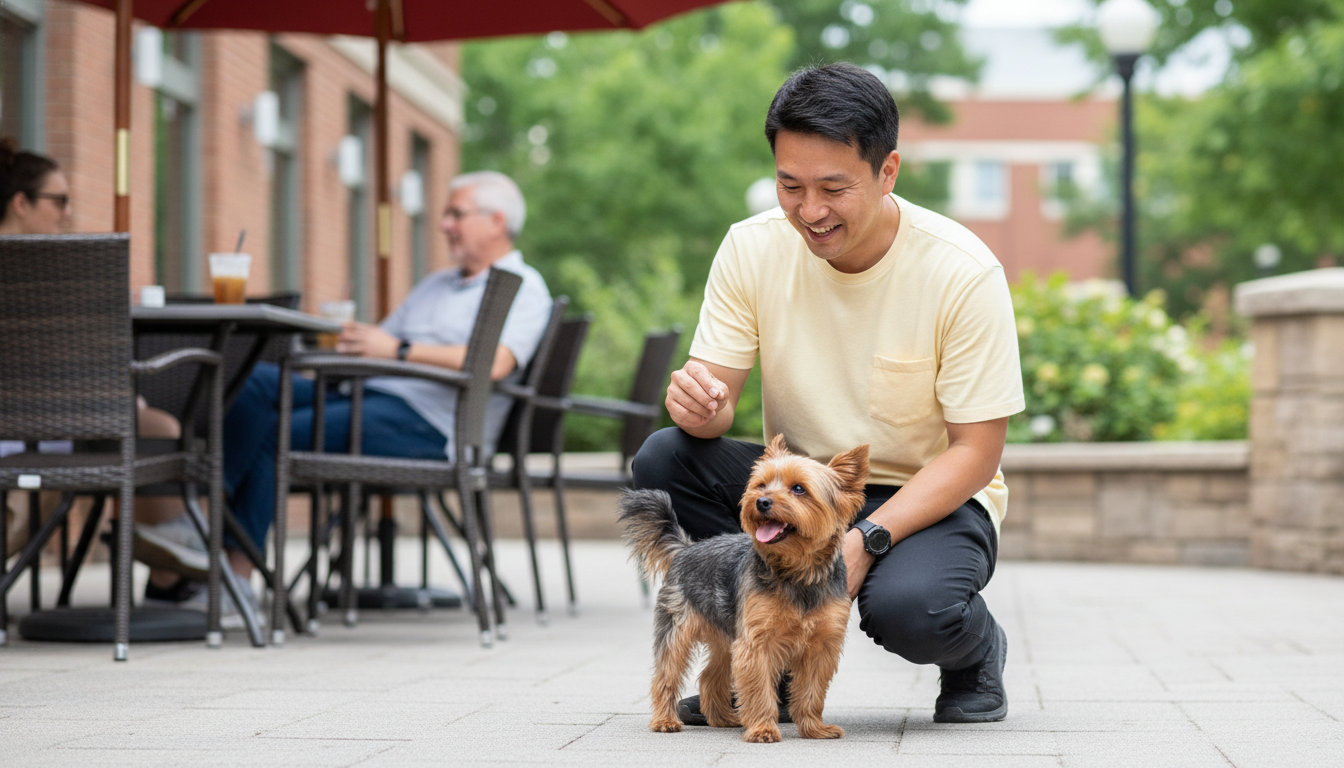
Humane, reward-based methods are the most effective and ethical way to help your dog learn. These methods align with NYC's strict animal control laws and help maintain peace in multi-unit buildings.
Basic obedience includes sit, down, stay, a solid recall, and loose-leash walking. These are non-negotiable skills for safely navigating neighborhood blocks and enjoying outdoor cafes.
Puppy training in the city focuses heavily on proper socialization to sights and sounds, bite inhibition, and establishing reliable potty routines when a yard isn’t an option.
Behavior modification addresses issues like leash reactivity to other dogs on narrow paths, separation anxiety in apartments, or fear of loud noises. This work often requires a careful, structured approach.
Private lessons offer personalized attention for your specific goals. In-home dog training tackles problems right where they happen. Day training programs can accelerate learning for busy owners.
Group classes provide a controlled setting to practice skills around distractions. The best classes manage the environment carefully to set every dog up for success.
Be wary of any trainer who relies on intimidation, fear, or pain. These outdated methods can worsen behavior problems and damage your dog’s trust, which is especially risky in a dense urban setting.
Average Cost of Dog Training in Long Island City, NY (Updated for 2026)
Pricing in Queens reflects NYC’s higher cost of living and the expertise required for urban dog training. Rates vary based on the trainer’s experience, session length, and location.
| Service Type | Average Cost (LIC/Queens) |
|---|---|
| Puppy Class (6 weeks) | $220–$400 |
| Group Obedience Class (6 weeks) | $250–$450 |
| Private Lesson (60 min) | $120–$200 |
| In-Home Package (4-6 sessions) | $500–$1,100 |
| Day Training (per week) | $600–$1,200 |
| Behavior Consultation | $175–$300 |
| Board and Train (2 weeks) | $2,500–$5,500 |
Many trainers serving Long Island City and surrounding areas may charge a travel fee. Always clarify what is included in a package and their policy for follow-up support.
Questions to Ask a Potential Dog Trainer
- What is your experience training dogs in dense, urban environments like Long Island City?
- What certifications, like CPDT-KA, do you hold, and how do you continue your education?
- Can you create a plan for my dog’s specific challenges, such as elevator manners or sidewalk reactivity?
- Do you offer in-home, group, or day training, and which do you recommend for my goals?
- How do you measure progress and when do you increase difficulty, like moving from my lobby to a busier street?
- What are your total fees, including any travel charges within Queens?
- Do you carry professional liability insurance? Can you provide proof?
- For behavior issues, are you willing to collaborate with my veterinarian?
- What will my homework be between sessions to ensure my dog keeps learning?
Local Long Island City Rules and Considerations
NYC has clear laws designed to keep people, pets, and the city running smoothly. A good trainer will help you comply effortlessly.
Dogs must be leashed on all public sidewalks, in parks (unless in a designated off-leash area during specified hours), and inside most business areas. Retractable leashes are often discouraged for safety.
New York City law mandates a rabies vaccination for all dogs over four months old. You must attach the official NYC rabies tag to your dog’s collar. The NYC Health Department provides detailed information.
Excessive barking that disturbs the peace can lead to noise complaints. Training can help manage alert barking, which is crucial in apartment buildings.
New York State does not require a specific license to be a dog trainer. However, any business operating in NYC typically needs a general business license. Reputable professional dog trainers should carry liability insurance to protect themselves and their clients.
Local Long Island City Resources for Dog Owners
These locations are perfect for practicing the skills learned in your training sessions. Always follow posted rules and practice good etiquette.
- Gantry Plaza State Park: Leashed dogs are welcome on the piers and pathways. It’s an excellent spot for practicing heelwork with waterfront distractions.
- Rainey Park: A local neighborhood park good for practicing settled behavior on a blanket and polite leash walks.
- Queensbridge Park: Offers space for leashed walks with views of the city skyline, providing unique distractions for training.
- Hunter’s Point South Park: Features long, paved paths ideal for building focus and duration on loose-leash walking.
- Astoria Park (nearby): Has vast green spaces and sidewalks perfect for graduated training around people, cyclists, and other dogs.
FAQs
How much does in-home dog training cost?
In Long Island City, expect to pay between $120 and $200 for a single in-home session. Most trainers offer package discounts, bringing the per-session cost down.
Is in-home dog training worth it?
For urban living, it’s often essential. A trainer can address specific issues like barking at hallway noises, jumping on guests in a small space, or creating a potty station routine that actually works for your apartment layout.
Can you pay someone to house train your dog?
Yes. Many trainers offer puppy packages that include a structured potty training plan. Some day training programs can also implement the routine for you, teaching your dog the desired behavior faster.
What is the 3-3-3 rule for dog training?
It’s a guideline for adopted dogs: 3 days to decompress, 3 weeks to learn your routines, and 3 months to feel at home. A good trainer will design a plan that respects this adjustment period.
How long will it take to reach my training goals?
For foundational obedience, 6-8 weeks of consistent practice is common. For more complex behavior modification like fear or reactivity, a longer-term plan of several months is more realistic.
What should I bring to group classes?
Bring a flat collar or harness, a 6-foot non-retractable leash, high-value treats, and your dog’s vaccination records. Your trainer will likely require proof of rabies and other core vaccines.
What’s the leash law in Long Island City?
New York City law requires dogs to be on a leash no longer than 6 feet in all public places, unless in a designated off-leash park during permitted hours.
Do I need a dog license in Long Island City or county?
Yes. All dogs in New York City must be licensed by the NYC Department of Health. You must renew the license periodically and attach the tag to your dog’s collar.
What shots does my dog need in NYC?
Rabies vaccination is legally required. Your vet will also strongly recommend distemper, parvovirus, and adenovirus (DAPP) and bordetella vaccines due to the high level of dog contact in the city.
Are dog trainers required to be licensed in NYC or New York State?
No specific “dog trainer” license exists. Trainers must comply with standard NYC business licensing. Those offering board and train services must operate from a licensed boarding kennel facility.
Where can I practice off-leash recall?
Use the designated off-leash hours in NYC parks. In Queens, areas like the Astoria Park field (when permitted) or the enclosed run at Rainey Park allow for safe, legal off-leash practice during early morning and late evening hours.
Which dog parks allow training around Long Island City?
The fenced dog run at Rainey Park is a good option for practicing off-leash cues around other dogs in a controlled space. Always go during less busy times for focused training sessions.
What beaches or trails allow dogs for training?
While not a beach, the paved paths along the Anable Basin and Gantry Plaza are excellent for on-leash training with distractions. For trails, Forest Park in nearby Woodhaven offers a more natural, leashed environment for building focus.