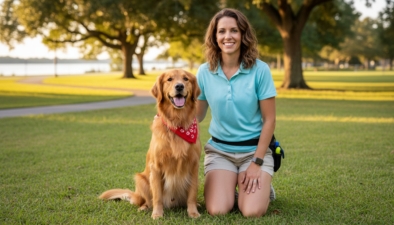
Your Complete Guide to Choosing a Dog Trainer in St. Johns and Surrounding Areas
Life with a dog in St. Johns means enjoying the quiet neighborhoods near Julington Creek, the community events at Good Times Park, and the natural trails that wind through the county. Your dog needs to be a good neighbor here, from walking politely past homes on County Road 210 to staying calm at the St. Johns County Agricultural Center during weekend markets.
St. Johns is the county seat of St. Johns County, so local animal control rules are consistent. A trainer familiar with this area can help you navigate the specific expectations for pets in our community, from leash rules to managing barking in our suburban settings.
How to Choose the Right Trainer
Look for a professional dog trainer who uses *positive reinforcement* training methods. This approach builds a trusting relationship and is very effective for teaching dogs to ignore squirrels on the Aberdeen trail or stay settled when guests arrive.
A trainer’s credentials offer a snapshot of their education. Common dog trainer certifications include the CPDT-KA for knowledge or the IAABC-CDBC for complex behavior issues. For foundational skills, a certification like KPA-CTP shows a commitment to modern, force-free methods.
Consider your daily life in neighborhoods like Julington Creek Plantation or Fruit Cove. In-home dog training is excellent for addressing specific issues like door-dashing or counter-surfing right where they happen. Group classes are great for polishing skills around other dogs before a visit to a busier park.
Common Dog Training Methods Explained
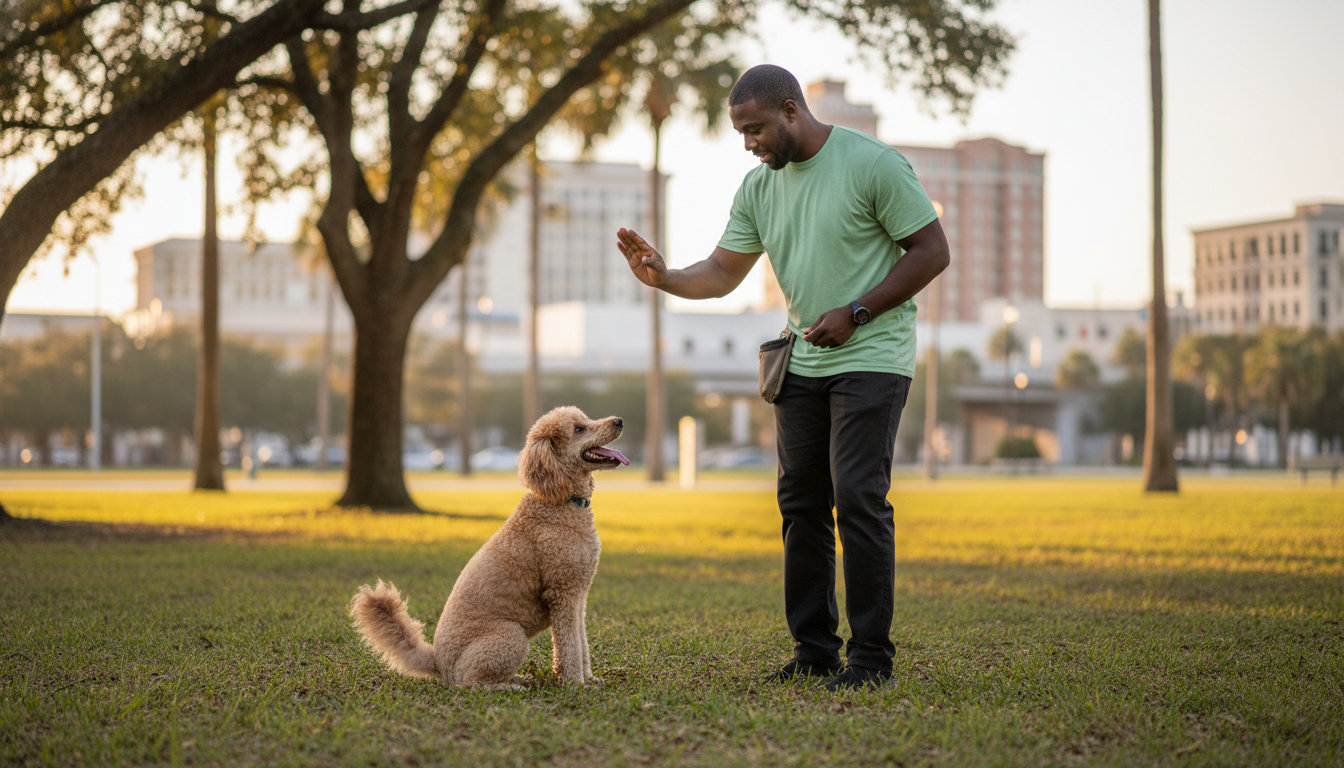
Reward-based training focuses on encouraging the behaviors you want. This method aligns well with creating a well-behaved dog that can handle St. Johns County’s public spaces without stress.
Basic obedience covers sit, down, stay, and a reliable recall. These are the building blocks for leash training and polite manners at pet-friendly stores or outdoor cafes.
Puppy training is crucial for early socialization and potty training. It sets your new family member up for success by preventing common problems before they start.
Behavior modification addresses issues like fear, reactivity, or separation anxiety. This requires a careful, structured plan, often developed in partnership with your veterinarian for severe cases.
Private lessons provide one-on-one attention for specific goals. Board and train programs can offer intensive learning, but it’s vital the trainer uses humane methods and thoroughly involves you in the process.
Group classes help your dog learn to listen around distractions. A good class will teach calm behavior and provide controlled socialization opportunities.
Specialized training, like service dog training or therapy dog training, requires a trainer with specific experience in public access skills and detailed task training.
Avoid any trainer who uses harsh corrections or intimidation. These outdated methods can worsen fear and aggression, damaging your dog’s trust and making your life harder.
Average Cost of Dog Training in St. Johns, FL (Updated for 2026)
Dog training services in St. Johns County vary in price based on the trainer’s experience, the type of program, and your dog’s needs. The following table reflects average costs for the local area.
| Service Type | Average Cost in St. Johns County |
|---|---|
| Puppy Class (6-week series) | $175 – $250 |
| Group Obedience Class (6-week series) | $200 – $300 |
| Private Lesson (1 hour) | $100 – $150 |
| In-Home Training Package (4-6 sessions) | $450 – $850 |
| Day Training (per week) | $500 – $800 |
| Behavior Consultation | $150 – $250 |
| Board and Train (2-week program) | $2,200 – $3,500 |
Many professional dog trainers offer a free consultation to discuss your dog and their training program. Always ask what is included in the quoted price and if there are any additional travel fees for your specific area.
Questions to Ask a Potential Dog Trainer
- What is your primary training philosophy, and can you describe a typical training session?
- What professional certifications, like CPDT-KA or KPA-CTP, do you hold? How do you pursue continuing education, such as the CPDT-KSA?
- Can you create a customized training plan for my dog’s breed, age, and the specific challenges of my St. Johns neighborhood?
- What services do you offer (private, group, day training) and which do you recommend for my goals?
- How do you measure progress and what does communication look like between sessions?
- Can you provide a clear breakdown of all costs and your cancellation policy?
- Do you carry professional liability insurance? May I see a certificate of insurance?
- For behavior issues, are you willing to collaborate with my veterinarian?
- What “homework” will you provide to help my dog succeed between our sessions?
Local St. Johns Rules and Considerations
St. Johns County enforces ordinances designed to keep people, pets, and wildlife safe. Understanding these rules helps you train for real-life situations.
All dogs must be on a leash not exceeding six feet in length when off the owner’s property, unless in a designated dog park. A solid recall is important, but the leash law is strict for safety.
Florida state law requires all dogs four months and older to be vaccinated against rabies. You must keep the rabies vaccination tag on your dog’s collar. St. Johns County does not issue a separate general dog license.
Excessive or continuous barking that disturbs neighbors can be considered a nuisance. Training can help manage alert barking and separation anxiety before it becomes a neighborhood issue.
Florida does not have a state-level license required specifically for dog trainers. However, any trainer operating a business in St. Johns County must have a local business tax receipt. Trainers offering board and train services may need to comply with Florida's commercial kennel regulations and are strongly advised to carry liability insurance.
Local St. Johns Resources for Dog Owners
These local spots provide excellent environments to practice your dog’s new skills in real-world settings. Always observe posted rules and practice good etiquette.
- Treaty Park Dog Park in St. Augustine offers separate large and small dog fenced areas, ideal for safe off-leash play and recall practice.
- Alpine Groves Park features beautiful riverfront trails where you can practice focused, loose-leash walking amid mild distractions.
- The St. Johns County Pet Center provides county animal services, including low-cost rabies vaccination clinics and microchipping.
- The Nocatee Barking Lot in the nearby Nocatee community is a popular, well-maintained dog park for social dogs.
- St. Johns County Public Libraries often host “Paws to Read” programs, which can be a good, controlled environment for practicing calm behavior around children.
FAQs
How much does in-home dog training cost?
In the St. Johns area, a single in-home session typically costs between $100 and $150. Most trainers offer discounted packages for multiple sessions, which brings the average total for a package to between $450 and $850.
Is in-home dog training worth it?
Yes, especially for addressing behaviors that are specific to your home environment. A trainer can help with jumping on guests, barking at the mail carrier, or potty training challenges right where they occur, leading to faster and more lasting results.
Can you pay someone to house train your dog?
Many trainers include potty training as a core part of their puppy training programs. Some day training or board and train services also focus on establishing a reliable routine, but success always depends on the owner maintaining consistency after the program ends.
What is the 3-3-3 rule for dog training?
This is a guideline for adopted dogs. It suggests it takes about 3 days to decompress from the shelter, 3 weeks to learn your routine, and 3 months to feel at home. A good training plan respects this adjustment period.
How long will it take to reach my training goals?
For basic obedience and manners, most dogs show significant improvement within 6 to 8 weeks of consistent practice. More complex behavior modification for reactivity or anxiety often requires a longer-term commitment of several months.
What should I bring to group classes?
Bring a well-fitted flat collar or harness, a 6-foot non-retractable leash, high-value treats, and your dog’s vaccination records if required by the trainer. Bring a hungry dog ready to learn.
What’s the leash law in St. Johns?
St. Johns County law requires dogs to be on a leash no longer than six feet and under the owner’s control whenever they are off the owner’s private property, unless in a designated off-leash dog park.
Do I need a dog license in St. Johns or county?
St. Johns County does not issue a general pet license. The only mandatory tag is the rabies vaccination tag provided by your veterinarian, which must be worn at all times.
What shots does my dog need in county or Florida?
Rabies vaccination is legally required. Your vet will also strongly recommend core vaccines like DHPP (distemper/parvo) and others based on your dog’s lifestyle and risk factors.
Are dog trainers required to be licensed in St. Johns or county or Florida?
Florida does not have a specific state license for dog trainers. However, they must obtain a local business tax receipt from St. Johns County. Those offering boarding services must comply with commercial kennel regulations.
Where can I practice off-leash recall?
The only legal places for off-leash activity are fully fenced, designated dog parks like Treaty Park Dog Park or The Nocatee Barking Lot. Always ensure your dog has reliable recall before going off-leash, even in these areas.
Which dog parks allow training around St. Johns?
Both Treaty Park Dog Park and The Nocatee Barking Lot are fenced facilities where you can practice off-leash recalls and supervised play. Visit during less crowded times for the best training environment.
What beaches or trails allow dogs for training?
Dogs are prohibited on most St. Johns County beaches. However, many county parks like Alpine Groves Park allow leashed dogs on their trails, providing excellent settings for structured walks and building focus around nature.