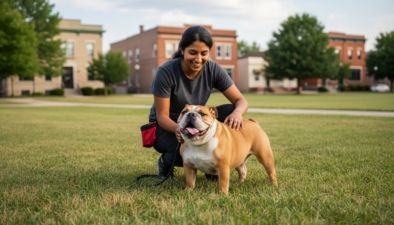
Your Complete Guide to Choosing a Dog Trainer in Dorchester Center
Life with a dog in Dorchester Center means navigating bustling sidewalks, enjoying the parks of Boston’s largest neighborhood, and finding peaceful moments in the urban landscape. Your dog needs to be a calm and confident companion for daily walks down Dorchester Avenue, polite greetings in local parks, and quiet coexistence in multi-family homes and apartments. Finding a professional dog trainer who understands this unique urban environment is the first step toward a harmonious life together.
As part of the City of Boston in Suffolk County, all local rules and regulations are governed by city ordinances. A trainer familiar with Boston’s specific requirements can help you build a training program that keeps your dog safe, your neighbors happy, and you in compliance with the law.
How to Choose the Right Trainer
Start by looking for a certified dog trainer who uses humane, science-based methods like *positive reinforcement* training. Your ideal trainer should help you set goals that fit the Dorchester Center lifestyle, such as walking politely past busy storefronts, settling calmly in a home with shared walls, and navigating public transit or busy intersections with confidence.
Checking a trainer’s credentials is a smart way to gauge their commitment to modern, effective methods. Look for professionals who hold recognized dog trainer certifications such as CPDT-KA, KPA-CTP, or IAABC-CDBC for serious behavior issues. For complex cases involving fear or aggression, a credential like CBCC-KA indicates specialized knowledge.
In-home sessions are highly effective for addressing behaviors that happen at home, like door-dashing, separation anxiety, or reactivity from a window. Group classes are excellent for proofing obedience skills around the distractions you’ll find in neighborhoods like Savin Hill, Fields Corner, or Uphams Corner.
Common Dog Training Methods Explained
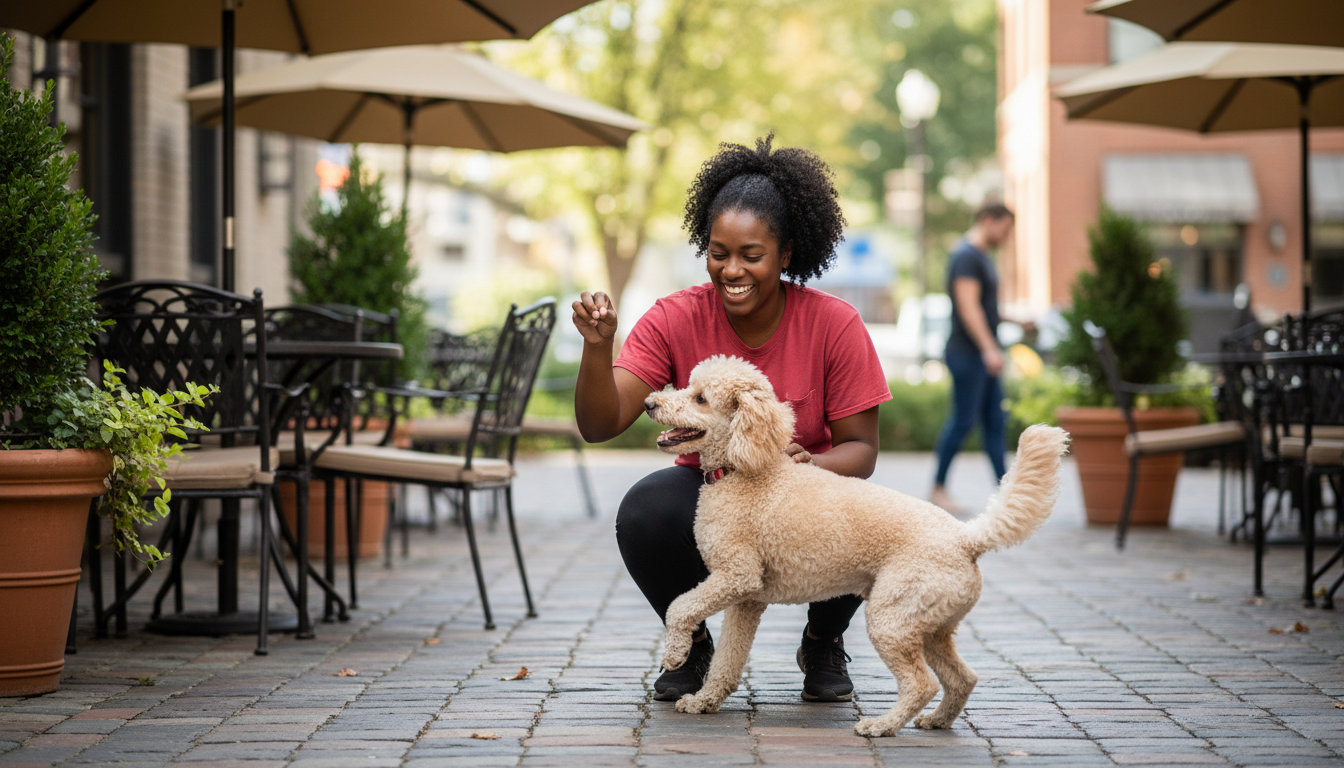
Reward-based training methods build a strong, trusting bond with your dog while effectively changing behavior. These methods align well with Boston’s emphasis on responsible pet ownership and control in densely populated areas.
Basic obedience training**** covers essential cues like sit, down, stay, and a reliable recall. These skills are non-negotiable for safety on city streets and in shared green spaces. Loose-leash walking is often a top priority for urban dog owners.
Puppy training focuses on critical early socialization, potty training for apartment living, bite inhibition, and crate training. Starting early prevents small issues from becoming big problems in a stimulating urban environment.
Behavior modification addresses issues like leash reactivity, noise sensitivity, resource guarding, or anxiety through structured desensitization. For severe cases, a qualified trainer should be willing to collaborate with your veterinarian.
Private lessons offer fully customized coaching for your home and routine. Day training programs can accelerate learning for busy residents. Group classes provide a controlled setting to practice manners around other dogs and people, which is vital for city life.
Specialized training, such as therapy dog training or service dog training, requires a trainer with specific expertise in public access skills and the rigorous standards needed for certification.
Avoid any trainer who relies on fear, intimidation, or pain to suppress behavior. These outdated methods can worsen anxiety and aggression, creating more danger in a crowded urban setting and potentially leading to violations of Boston’s strict animal control ordinances.
Average Cost of Dog Training in Dorchester Center, MA (Updated for 2026)
Dog training costs in Boston and Suffolk County reflect the area’s higher cost of living. Prices vary based on the trainer’s experience, the type of service, and the complexity of your dog’s needs. The table below outlines average rates for the region.
| Service Type | Average Cost (Boston/Suffolk County) |
|---|---|
| Puppy Classes (6 weeks) | $200–$350 total |
| Group Obedience Classes (6 weeks) | $225–$400 total |
| Private Lessons (60 min) | $120–$220 per session |
| In-Home Training Packages (4-6 sessions) | $500–$1,200 total |
| Day Training (per week) | $600–$1,100 |
| Behavior Consultation (initial) | $175–$300 |
| Board and Train (2-3 weeks) | $2,500–$5,500+ total |
Many trainers serving Dorchester Center may charge a travel fee. Always clarify what is included in a package, how progress is measured, and if a free consultation is offered before committing.
Questions to Ask a Potential Dog Trainer
- What is your primary training philosophy, and how do you ensure sessions are positive and stress-free for my dog?
- What professional credentials, such as CPDT-KA or KPA-CTP, do you hold? How do you stay current with your education, for example through CPDT-KSA?
- Can you create a customized plan for my dog’s challenges and my goals for living in Dorchester Center/Boston?
- What services do you offer (in-home, group classes, day training) and which do you recommend for my situation?
- How do you track progress and help us generalize skills to busy city environments?
- What are your total fees, including any travel charges? What is your cancellation policy?
- Do you carry professional liability insurance, and can you provide proof?
- For behavior issues, will you coordinate with my veterinarian if necessary?
- What will my homework be between sessions to ensure consistency?
Local Dorchester Center and Boston Rules and Considerations
Boston has clear ordinances designed to keep people, pets, and public spaces safe. A good trainer will help you meet these requirements through effective training.
All dogs must be on a leash no longer than 7 feet in any public place, including sidewalks, parks, and playgrounds, unless in a designated off-leash area. This makes leash training a critical skill.
Massachusetts state law and Boston city ordinance require all dogs over 6 months old to be vaccinated against rabies. The rabies tag must be attached to your dog’s collar or harness at all times.
Excessive barking that disturbs the peace is considered a nuisance. Working on alert barking and separation anxiety with a trainer can prevent neighbor complaints.
The City of Boston requires all dog owners to license their dogs annually. Licensing requires proof of a current rabies vaccination. You can complete this online or by mail through the city’s Animal Control page.
Massachusetts does not have a state-level license for dog trainers. However, any trainer operating a business in Boston must have a standard city business license. Trainers offering board and train services from a facility must comply with Massachusetts’ kennel licensing regulations under the Department of Agricultural Resources.
Professional dog trainers are not legally required to carry insurance in Massachusetts, but it is a critical marker of a reputable, responsible business. Liability insurance protects you, the trainer, and your dog in case of an accident.
Local Dorchester Center Resources for Dog Owners
These local spots provide excellent environments to practice your training in real-world settings. Always follow posted rules and practice good etiquette.
- Dorchester Park: Offers paved paths for practicing focused leash walks amidst moderate pedestrian traffic. Dogs must be leashed.
- Ron McCorkle Playground & Dog Park (formerly Peabody Square Dog Park): A fenced, off-leash area perfect for practicing recalls and supervised socialization.
- Pope John Paul II Park: Located nearby in Neponset, this large park has expansive fields (leash required) for practicing long-distance cues and focus around distractions.
- Malibu Beach & Savin Hill Beach: During off-season months (Labor Day to Memorial Day), leashed dogs are allowed on these Dorchester beaches, great for novelty training on different surfaces.
- Boston Common Frog Pond & Public Garden: While dogs are not allowed in these specific landmarks, walking the perimeter on the city sidewalks is an ultimate test of urban obedience training.
FAQs
How much does in-home dog training cost?
In the Boston area, a single in-home dog training session typically costs between $120 and $220. Most trainers offer package discounts for booking multiple sessions upfront, which is common for behavior modification plans.
Is in-home dog training worth it?
For urban dwellers, in-home training is incredibly valuable. It addresses problems exactly where they happen—jumping on guests, barking at hallway noises, or difficulty settling in an apartment. The trainer can then immediately transition to working on leash skills on your specific, busy street.
Can you pay someone to house train your dog?
Yes, many trainers offer potty training programs as part of puppy packages or day training services. They will establish a schedule, teach your dog where to go, and coach you on maintaining the routine, which is especially helpful for apartment living.
What is the 3-3-3 rule for dog training?
This is a guideline for adopted dogs: 3 days to decompress from the transition, 3 weeks to start learning routines, and 3 months to feel fully at home. A good trainer will design a program that respects this adjustment period while building positive habits.
How long will it take to reach my training goals?
For basic manners and puppy training, consistent practice over 6-8 weeks usually yields strong results. Addressing reactivity, severe fear, or separation anxiety is a longer process, often requiring 3-6 months of dedicated behavior modification.
What should I bring to group classes?
Bring a well-fitting harness or flat collar, a 6-foot leash (no retractables), high-value treats, and your dog’s vaccination records if required by the trainer. Bring your patience and a willingness to learn.
What’s the leash law in Dorchester Center?
Boston’s city-wide leash law applies. Dogs must be on a leash not exceeding 7 feet in length in all public areas. The only exceptions are officially designated, signed dog parks.
Do I need a dog license in Dorchester Center or county?
Yes. The City of Boston requires an annual dog license for all dogs. You must provide proof of a current rabies vaccination to obtain it. Suffolk County does not issue a separate license.
What shots does my dog need in Suffolk County or Massachusetts?
Rabies vaccination is legally required. Your veterinarian will also strongly recommend the core DHPP (distemper-parvo) vaccine. Vaccines for bordetella (kennel cough) and leptospirosis are often advised due to the urban environment and dog park use.
Are dog trainers required to be licensed in Dorchester Center or Suffolk County or Massachusetts?
No specific professional license exists for dog trainers in Massachusetts. Trainers must have a standard business license from the City of Boston. Those who board dogs as part of a “board and train” service must operate from a licensed kennel facility.
Where can I practice off-leash recall?
The safest and only legal places are within fenced dog parks. The Ron McCorkle Playground & Dog Park in Dorchester or other fenced parks in nearby neighborhoods like South Boston are your best options for safe recall practice.
Which dog parks allow training around Dorchester Center?
The Ron McCorkle Playground & Dog Park is the primary local off-leash area suitable for training. Other options in surrounding Boston neighborhoods, like the Peters Park Dog Run in the South End, also provide fenced spaces for practice.
What beaches or trails allow dogs for training?
During the off-season (post-Labor Day to pre-Memorial Day), leashed dogs are permitted on Dorchester’s Malibu Beach and Savin Hill Beach. The Neponset River Reservation trails and the expansive paths at Franklin Park (leashed) offer excellent trail-like settings for training around natural distractions.
Are there any breed-specific restrictions in Boston?
The City of Boston does not have any breed-specific legislation (BSL) banning particular breeds. However, all dogs, regardless of breed or size, are subject to the city’s leash and nuisance laws. Responsible ownership and training are emphasized for everyone.